-
-
-
Edmonton, Alberta, Canada
Mon – Sat: 8:00 AM – 7:00 PM
Please tap the button to book your appliance repair on WhatsApp.
Booking Enquiry on WhatsApp
FixNow Appliances provides fast, professional appliance repair across Edmonton, Sherwood Park, Beaumont, St. Albert, Stony Plain and nearby areas. Our licensed technicians repair fridges, washers, dryers, dishwashers, ovens, stoves and more using OEM parts and manufacturer-approved methods.
09
Nov
A freezer plays an important role in protecting food, reducing waste and keeping household routines organised. Whether you store frozen vegetables, meat, prepared meals or everyday essentials, you expect your freezer to maintain a consistently low temperature.
But what happens when ice starts accumulating on the walls, food becomes softer than usual or the freezer struggles to maintain its temperature?
For Calgary homeowners, these warning signs can indicate anything from a damaged door gasket to a faulty defrost system, evaporator fan or compressor.
The challenge is knowing which problems can be addressed through basic maintenance and which require professional freezer repair.
Understanding the symptoms early can help protect stored food, prevent additional appliance damage and make repair decisions easier.
This guide explains common freezer problems in Calgary, their possible causes, safe checks homeowners can perform and when to contact a professional freezer repair technician.
One of the most important signs of a freezer problem is inconsistent temperature.
A freezer should generally maintain approximately -18°C to keep frozen food properly stored.
If the temperature rises unexpectedly, food may begin to soften, ice cream may lose its texture and frozen items may become unsafe to store.
Common warning signs include:
Frozen food becoming softer than usual.
Ice cream partially melting.
Temperature display showing unexpected changes.
Freezer running continuously.
Food developing unusual ice crystals.
Alarm or temperature warning appearing.
Possible causes include:
Faulty temperature sensor.
Damaged thermostat.
Poor door sealing.
Restricted airflow.
Evaporator fan problems.
Compressor or refrigeration-system faults.
Use an appliance thermometer to verify the actual freezer temperature.
Check whether the door closes properly and make sure food packages are not blocking internal air vents.
If the freezer continues fluctuating despite correct settings and proper loading, arrange professional inspection.
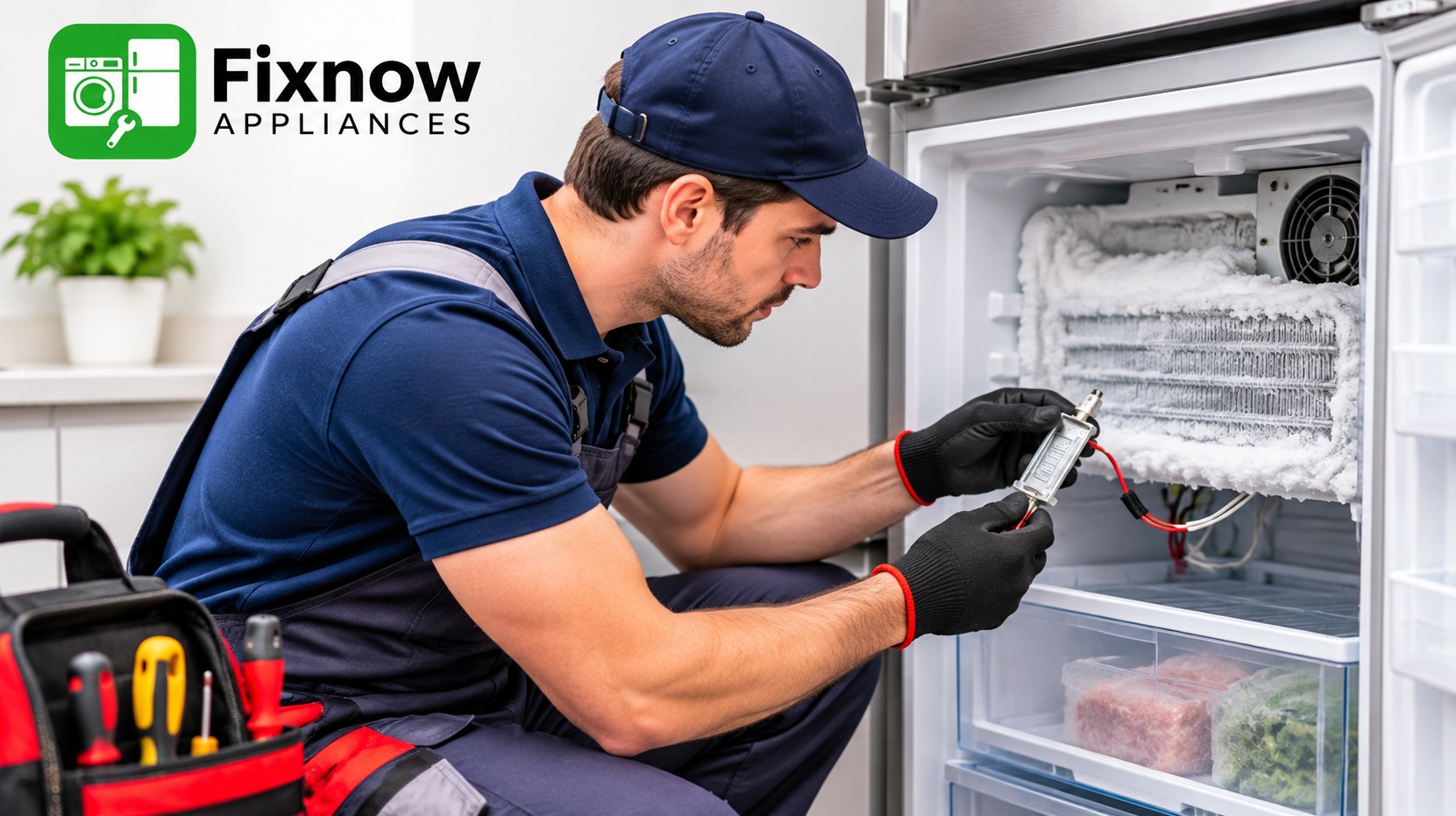
A small amount of frost may occur during normal operation, particularly in certain freezer designs. However, thick ice accumulation on the walls, shelves or around the evaporator area can indicate a problem.
Excessive frost can restrict airflow and reduce cooling performance.
Common symptoms include:
Thick ice forming on freezer walls.
Frost accumulating around the door.
Drawers becoming difficult to open.
Food packages sticking together.
Reduced storage space.
Freezer taking longer to maintain temperature.
Possible causes include:
Damaged door gasket.
Door not closing completely.
Frequent door opening.
Moist air entering the freezer.
Faulty defrost heater.
Defrost sensor or control problems.
Check whether the door gasket is visibly damaged and make sure nothing prevents the door from closing.
Avoid using knives, screwdrivers or sharp objects to remove ice. Never use an open flame or an unapproved heating device to speed up defrosting.
If thick frost keeps returning, a technician may need to inspect the automatic defrost system.
The freezer door gasket creates a seal that helps prevent warm, humid air from entering the compartment.
When the gasket becomes damaged, loose or deformed, outside air can enter and contribute to frost buildup and temperature fluctuations.
Warning signs include:
Visible gaps around the freezer door.
Frost forming near the door edges.
Moisture or condensation around the seal.
Door not closing securely.
Freezer running more frequently than usual.
Food packages or drawers positioned incorrectly can also prevent the door from closing completely.
Inspect the visible gasket for cracks, tears or deformation.
Make sure food containers are not obstructing the door.
Clean the accessible gasket according to the manufacturer's instructions.
If the seal is damaged or the door remains misaligned, professional repair may be necessary.
Most freezers cycle on and off to maintain the selected temperature.
If the compressor appears to run almost continuously, the appliance may be struggling to reach the required temperature.
Common reasons include:
Dirty condenser coils.
Poor ventilation around the appliance.
Damaged door gasket.
Excessive frost buildup.
Incorrect temperature settings.
Faulty temperature sensor.
Refrigeration-system problems.
A freezer may also run longer after a large amount of unfrozen food has been added or after the door has remained open for an extended period.
However, continuous operation combined with poor cooling should not be ignored.
A technician can inspect the airflow, temperature controls and refrigeration components to identify the underlying issue.
In some refrigerator-freezer combinations, the refrigerator compartment may remain cold while the freezer struggles to maintain its temperature.
This can indicate a problem affecting the freezer's individual cooling or airflow components.
Possible causes include:
Evaporator fan failure.
Blocked air passages.
Defrost-system malfunction.
Temperature sensor problems.
Control-board faults.
Refrigeration-system issues.
If your freezer is becoming warm while the refrigerator continues operating normally, avoid assuming that the entire appliance needs replacement.
A professional diagnosis can help identify whether the problem is limited to a specific component.
Some freezer sounds are normal. Compressors, fans and defrost systems can produce different operating noises.
However, sudden changes in sound may indicate a developing fault.
Pay attention to:
Repeated clicking near the compressor area.
Grinding or scraping sounds.
Loud buzzing.
Fan noise that changes unexpectedly.
Vibrations that become unusually strong.
Noise accompanied by temperature changes.
Possible causes include a fan obstruction, worn motor, compressor starting-component issue or loose internal component.
If the freezer is making unusual noises and is no longer cooling properly, arrange professional inspection.
Water collecting beneath or around a freezer can indicate a drainage, defrost or door-sealing problem.
Some frost-free freezers use a defrost drainage system to remove water produced during automatic defrost cycles.
If the drainage passage becomes blocked, water may collect inside or escape onto the floor.
Common symptoms include:
Water pooling beneath the appliance.
Ice forming near the freezer floor.
Water collecting under storage drawers.
Moisture around the freezer door.
Repeated leakage after defrost cycles.
Possible causes include:
Blocked defrost drain.
Damaged drain components.
Door gasket problems.
Incorrect appliance positioning.
Water-supply connection issues in applicable models.
If water is leaking near electrical components, avoid touching the wet area. Disconnect power only if it is safe to do so and arrange appropriate inspection.
Modern freezers use electronic controls to monitor temperature, sensors and operating conditions.
If the appliance detects an abnormal condition, it may display an error code or activate a temperature alarm.
Depending on the model, the warning may indicate:
High internal temperature.
Temperature sensor failure.
Evaporator fan problems.
Defrost-system faults.
Door left open.
Electronic control issues.
When an error appears:
Record the exact code or warning.
Check the appliance manual.
Follow the manufacturer's recommended instructions.
Monitor the freezer temperature.
Arrange professional inspection if the warning persists.
Avoid repeatedly resetting the appliance without understanding the cause.
If your freezer includes an automatic ice maker, problems with ice production may indicate a water-supply or ice-making-system issue.
Common symptoms include:
Ice maker producing very little ice.
Ice cubes becoming unusually small.
Ice production stopping completely.
Ice cubes freezing together.
Water leaking around the ice maker.
Possible causes include:
Restricted water supply.
Frozen water line.
Faulty water inlet valve.
Ice-maker component failure.
Temperature problems inside the freezer.
Check that the water supply is available and that the ice maker is switched on, following the manufacturer's instructions.
If ice production does not return to normal, a technician can inspect the water inlet and ice-making components.
Before arranging freezer repair in Calgary, you can perform a few basic checks without opening the appliance.
| What to check | Why it matters |
|---|---|
| Temperature setting | Incorrect settings may affect freezing |
| Door gasket | Damaged seals allow warm air inside |
| Door closure | Poor closure can cause frost and temperature changes |
| Internal air vents | Blocked vents restrict cold-air circulation |
| Food arrangement | Overloading can interfere with airflow |
| Condenser area | Dust may affect heat release |
| Error codes | Help identify the affected system |
| Appliance ventilation | Insufficient clearance can affect performance |
Always follow the manufacturer's instructions.
Do not remove electrical panels, handle exposed wiring, open refrigerant lines or attempt compressor repairs yourself.
If the breaker trips repeatedly, leave it off and arrange professional inspection.
When a freezer begins warming up, protecting the stored food should be a priority.
Follow these practical steps:
Keep the door closed: Opening the freezer repeatedly allows warm air to enter and can accelerate temperature increases.
Check the temperature: Use an appliance thermometer to determine whether the freezer is maintaining approximately -18°C.
Protect frozen food: If the freezer cannot maintain a safe temperature, transfer vulnerable food to another properly operating freezer or suitable cold storage.
Avoid repeatedly switching the appliance on and off: If you suspect an electrical or mechanical fault, follow the manufacturer's safety guidance.
Record the symptoms: Note when the problem started, any unusual noises and whether the appliance displays a warning.
For food safety, do not rely on smell or appearance alone to decide whether food is safe. Follow current food-safety guidance when assessing thawed or partially thawed items.
Some freezer issues can be related to simple operating conditions. However, persistent temperature problems and excessive frost often require professional diagnosis.
Consider arranging freezer repair if:
Freezer temperature remains above the recommended level.
Frozen food repeatedly becomes soft.
Thick frost keeps returning.
The compressor runs continuously.
Fan noises become unusual.
Water leaks from the appliance.
Error codes continue appearing.
The freezer stops cooling completely.
The door seal is visibly damaged.
Cooling performance does not improve after basic checks.
A technician can inspect the temperature-control system, fans, defrost components, compressor and other relevant parts.
Early diagnosis may help prevent additional appliance damage and reduce food loss.
Freezer repair costs in Calgary depend on the appliance brand, model, problem and replacement parts required.
A simple door-gasket replacement may involve less work than repairing a defrost system, fan motor or compressor-related fault.
Common cost factors include:
| Repair type | Factors affecting cost |
|---|---|
| Door gasket | Model compatibility and installation |
| Evaporator fan | Motor type and replacement work |
| Defrost heater | Component availability and diagnosis |
| Temperature sensor | Testing and replacement |
| Drainage system | Blockage accessibility and damaged components |
| Control board | Model-specific electronics |
| Compressor | Component cost and sealed-system work |
Before approving a repair, ask for a clear estimate covering diagnosis, parts, labour and applicable charges.
Comparing the complete repair scope is more useful than choosing a service provider based only on the lowest advertised price.
A freezer that develops frost or temperature problems does not automatically need replacement.
In many cases, replacing a faulty sensor, fan, gasket or defrost component may restore normal operation.
However, the right decision depends on the appliance's age, overall condition and repair estimate.
Repair may be worth considering when:
The freezer is relatively new.
The fault involves a replaceable component.
Suitable parts are available.
The appliance has been reliable otherwise.
The estimated repair cost is reasonable.
Replacement may be more practical when:
Multiple major components are failing.
The appliance has repeated breakdowns.
Essential parts are discontinued.
Compressor or sealed-system repairs are disproportionately expensive.
The freezer has significant overall wear.
A professional assessment can help you compare the repair and replacement options.
Regular maintenance can help maintain freezer performance and identify potential problems before they become serious.
Follow these practical habits:
Maintain the recommended freezer temperature.
Keep the door closed whenever possible.
Inspect door seals for visible damage.
Avoid blocking internal air vents.
Do not overload the freezer.
Keep the appliance properly ventilated.
Clean accessible condenser areas according to the manual.
Remove frost only according to manufacturer guidance.
Pay attention to unusual sounds.
Arrange professional inspection when temperature problems persist.
These habits can support reliable operation and help reduce avoidable appliance issues.
A freezer that cannot maintain the correct temperature can put stored food at risk and create unnecessary household inconvenience.
Whether the problem involves excessive frost, a faulty fan, temperature fluctuations, drainage issues or a defrost-system fault, identifying the underlying cause is essential.
FixNow Appliances provides appliance repair assistance for homeowners experiencing common household appliance problems.
If your freezer is not freezing properly, developing excessive frost or making unusual noises, keep the appliance brand, model number and symptoms ready when contacting the service team.
If you are in Calgary and need freezer repair assistance, contact FixNow Appliances to discuss the problem and confirm current service availability in your area.
Call: (587) 962-2861
Website: https://fixnowappliances.ca/
A freezer should generally maintain approximately -18°C to keep frozen food properly stored.
Common causes include a damaged door gasket, door not closing properly, humid air entering the compartment or a faulty automatic defrost system.
A damaged door seal, dirty condenser coils, restricted airflow, incorrect temperature settings or a refrigeration-system problem may cause continuous operation.
Temperature fluctuations may be related to a faulty sensor, defrost-system issue, blocked airflow or compressor-related problem.
A small amount of frost may occur depending on the freezer design and usage. Thick or repeatedly accumulating frost may indicate a door-sealing or defrost-system problem.
Yes. A damaged gasket allows warm, humid air to enter, which can cause frost accumulation and make it difficult to maintain the required temperature.
The decision depends on the appliance's age, condition, repair estimate and availability of replacement parts. A professional diagnosis can help you compare both options.
You can contact FixNow Appliances at (587) 962-2861 to discuss your freezer problem and confirm service availability in your area.
Leave A Reply
Your email address will not be published. Required fields are marked *