-
-
-
Edmonton, Alberta, Canada
Mon – Sat: 8:00 AM – 7:00 PM
Please tap the button to book your appliance repair on WhatsApp.
Booking Enquiry on WhatsApp
FixNow Appliances provides fast, professional appliance repair across Edmonton, Sherwood Park, Beaumont, St. Albert, Stony Plain and nearby areas. Our licensed technicians repair fridges, washers, dryers, dishwashers, ovens, stoves and more using OEM parts and manufacturer-approved methods.
23
Oct
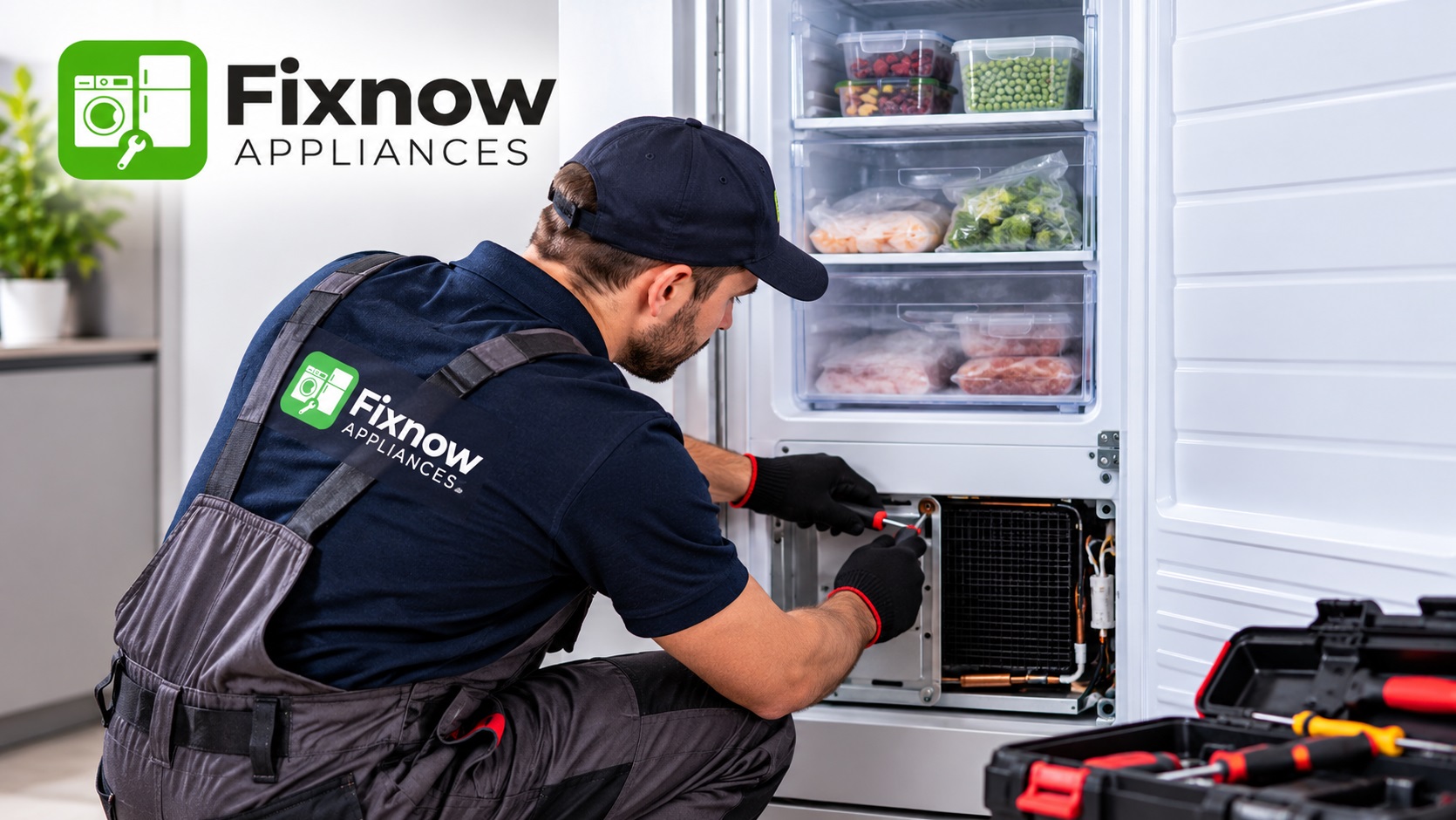
A freezer plays an essential role in keeping frozen food safe, reducing food waste and making everyday meal planning more convenient. When it suddenly stops cooling, however, frozen groceries can begin to thaw, ice cream can soften and valuable food supplies may be at risk.
For homeowners searching for freezer repair in Edmonton, knowing what to do when a freezer stops cooling can help protect food, identify possible causes and determine when professional assistance is necessary.
At FixNow Appliances, we understand how disruptive freezer problems can be for Edmonton households. Whether your freezer is not freezing properly, making unusual noises, developing excessive frost or showing signs of a temperature-control issue, recognizing the symptoms early can help you make a more informed repair decision.
In this guide, we explain common freezer problems, safe troubleshooting steps, food-storage precautions and when to contact a professional freezer repair service in Edmonton.
When a freezer stops cooling, protecting your food should be the first priority. Troubleshooting the appliance is important, but it should not come at the expense of food safety.
Follow these steps before investigating the cause.
1. Keep the freezer door closed. Opening the door repeatedly allows cold air to escape and can accelerate thawing.
2. Check the temperature. Use an appliance thermometer if available. A freezer should generally maintain a temperature of -18°C (0°F) or colder for long-term frozen food storage.
3. Check the power supply safely. Look for an obvious power interruption or a display that has switched off. Do not touch electrical connections with wet hands or near standing water.
4. Review the temperature setting. Confirm that the thermostat has not been adjusted accidentally and that the appliance has not entered a special mode that changes cooling operation.
5. Protect perishable food. If the freezer cannot maintain a safe temperature, move food to another functioning freezer or use an appropriate insulated cooler with sufficient ice when necessary.
Health Canada advises that food in a full freezer can generally remain frozen for about 48 hours during a power outage, or about 24 hours if the freezer is half full, provided the door remains closed. Actual conditions can vary.
Do not taste food to determine whether it is safe. When in doubt, follow official food-safety guidance.
A freezer that has stopped cooling completely may have a power-supply problem rather than a refrigeration-system failure.
Possible causes include a power outage, an unplugged cord, a tripped circuit breaker or a fault in the appliance's electrical system.
What you can check:
Confirm whether the freezer's interior light or display is operating.
Check whether other nearby appliances have power.
Inspect the visible power cord for damage without touching damaged wiring.
If a breaker has tripped, follow safe household electrical guidance and do not repeatedly reset it if it trips again.
If the freezer has power but remains inactive, the problem may involve a control board, thermostat, start relay or another internal component.
A qualified technician can diagnose the fault and determine whether repair is required.
Sometimes a freezer appears to be operating normally, but food begins to soften and the internal temperature rises.
Possible causes include blocked air vents, dirty condenser coils, a malfunctioning evaporator fan, a damaged door gasket or a problem with the compressor or sealed refrigeration system.
Practical checks:
Confirm that the temperature setting is appropriate.
Make sure food packages are not blocking internal air vents.
Check that the door closes completely.
Inspect the visible door gasket for damage or gaps.
Ensure that the appliance has the ventilation clearance recommended by its manufacturer.
If the freezer continues to run without reaching the correct temperature, professional diagnosis can help identify the underlying problem.
A thick layer of frost inside the freezer can restrict airflow and reduce cooling performance.
Common causes include a damaged door seal, frequent door opening, moisture entering the compartment or a malfunctioning automatic defrost system.
What you can do:
Check whether the door closes properly.
Inspect the visible gasket for damage or trapped debris.
Avoid placing food packages where they obstruct the door or air vents.
Follow the manufacturer's instructions for defrosting the appliance.
Never use knives, sharp objects or open flames to remove ice. These methods can damage internal components and create safety hazards.
If frost returns quickly after proper defrosting, a faulty defrost heater, sensor or control component may require professional attention.
A freezer normally produces some operating sounds as the compressor and fans operate. However, persistent clicking, grinding, buzzing or unusually loud rattling can indicate a problem.
Possible causes include:
A fan obstructed by ice.
A loose panel or vibrating component.
A malfunctioning fan motor.
A compressor-related fault.
An appliance that is not positioned securely.
Check that the freezer is stable and that nearby objects are not vibrating against it. Avoid dismantling internal components.
If unusual noises continue, especially when the freezer is warming up, arrange a professional inspection.
A freezer door that does not close tightly allows warm, humid air to enter the compartment. This can cause frost buildup, longer running times and poor temperature control.
Potential causes include a damaged gasket, obstructed shelves, overfilled storage compartments or a misaligned door.
Practical steps:
Make sure food packages do not prevent the door from closing.
Inspect the gasket for visible cracks or tears.
Clean the accessible seal according to the manufacturer's instructions.
Check whether the appliance is level, following its installation guidance.
If the door still fails to seal properly, a technician can assess the gasket, hinges or alignment.
A freezer that seems to run constantly may be struggling to maintain its target temperature.
Possible reasons include poor ventilation, dirty condenser coils, a damaged door seal, frequent door opening or a fault in the cooling system.
What you can check:
Verify the temperature setting.
Confirm that the door seals correctly.
Make sure the freezer has the recommended clearance around its exterior.
Clean accessible condenser coils only as directed by the manufacturer.
Continuous operation does not automatically mean the compressor has failed. However, if the freezer remains warm despite running constantly, a professional assessment is recommended.
If some areas of the freezer remain frozen while others become noticeably warmer, airflow or temperature distribution may be affected.
Possible causes include blocked vents, excessive loading, frost accumulation, a faulty fan or a temperature-control issue.
Try these basic steps:
Arrange food so that internal vents remain unobstructed.
Avoid overloading the compartment.
Check the temperature using an appropriate thermometer.
Confirm that the door closes securely.
If temperature differences persist, a technician can inspect the circulation system and relevant controls.
Edmonton experiences cold winters, but outdoor temperatures do not automatically guarantee that a freezer will operate correctly.
The appliance's performance depends on its design, installation environment, ventilation and operating temperature range.
A freezer installed in an unheated garage, for example, may be exposed to ambient temperatures outside the range specified by its manufacturer. Some models are designed for colder environments, while others are not.
For Edmonton homeowners, consider these precautions:
Check the manufacturer's recommended ambient operating range.
Avoid installing a freezer in an unsuitable outdoor or unheated location.
Keep ventilation openings clear.
Inspect door seals periodically.
Monitor the internal temperature rather than relying on outdoor conditions.
If the appliance is located in a garage or basement, confirm that the installation environment is suitable for that particular model.
Basic checks can help identify some minor problems, but persistent cooling issues often require specialist diagnosis.
Consider arranging professional freezer repair in Edmonton if:
The freezer cannot maintain approximately -18°C (0°F).
Food is beginning to thaw despite correct settings.
The appliance runs continuously without cooling properly.
Frost returns quickly after appropriate defrosting.
The compressor or fans make persistent unusual noises.
The appliance repeatedly trips a circuit breaker.
Water leaks from the appliance.
An error code continues to appear.
The freezer has power but will not start or cool.
Stop using the appliance and seek qualified assistance if you notice smoke, sparks or a burning electrical smell. Disconnect power only if it is safe to do so.
Do not attempt to repair sealed refrigeration systems or handle refrigerants without the required qualifications and equipment.
The cost of freezer repair in Edmonton depends on the appliance's make, model, fault, replacement-part availability and labour requirements.
A repair involving a door gasket or an accessible component may cost less than a compressor-related repair, a control-board replacement or work on the sealed refrigeration system.
Before approving a repair, ask the service provider about:
Diagnostic or service-call fees.
Labour charges and estimated repair time.
Replacement-part costs and availability.
Applicable parts and labour warranty.
The expected total cost before work begins.
Prices vary between appliances and service providers. A diagnosis and clear estimate can help you decide whether repair is the most practical option.
Repairing an existing freezer may be worthwhile when the appliance is in good condition and the estimated repair cost is reasonable.
Replacement may be worth considering when the freezer has recurring major failures, parts are difficult to obtain or the repair cost approaches the price of a suitable replacement.
Consider these factors before making a decision:
Age and condition: An older freezer with multiple recurring faults may require more maintenance than a newer, well-maintained appliance.
Repair estimate: Compare the complete repair cost with the purchase and installation cost of a replacement.
Energy efficiency: A newer model may offer improved efficiency, depending on the appliances being compared and how they are used.
Warranty coverage: Check whether the appliance or an existing extended warranty covers the fault.
Food-storage reliability: A freezer that repeatedly fails to maintain a safe temperature may no longer be suitable for reliable long-term storage.
A professional assessment can help you understand the fault and compare repair and replacement options.
Regular maintenance can help identify developing problems and support consistent freezer performance throughout the year.
Follow these practical recommendations:
Keep the freezer at approximately -18°C (0°F) or colder.
Avoid blocking internal air vents.
Check door seals periodically for damage.
Keep the appliance level and properly ventilated.
Clean accessible condenser coils according to the manufacturer's instructions.
Avoid unnecessary door opening.
Follow the manufacturer's guidance for defrosting and maintenance.
Monitor temperature changes and investigate recurring frost buildup.
Confirm that the appliance is suitable for its installation environment.
These steps cannot prevent every mechanical failure, but they can help you recognize problems early and reduce avoidable strain on the appliance.
When a freezer stops cooling, homeowners need practical information and a clear way to explore repair options.
FixNow Appliances provides appliance repair services for customers within its service areas, including freezer repair enquiries in Edmonton.
When contacting the service team, share a few important details:
The freezer's brand and model.
Whether it is an upright freezer, chest freezer or refrigerator-freezer combination.
The current temperature, if known.
Whether the compressor or fans appear to be running.
Any error code displayed.
When the cooling problem first started.
These details can help explain the symptoms and support your service enquiry.
For repair enquiries, estimates and appointment availability, contact FixNow Appliances.
Company: FixNow Appliances
Phone: (780) 229-9274
Website: https://fixnowappliances.ca/
Location: Edmonton, Alberta, Canada
Contact the team to discuss your freezer problem and confirm service availability for your address.
Possible causes include a power interruption, blocked airflow, a faulty fan, a damaged door seal, a temperature-control issue or a compressor-related fault. The exact cause depends on the appliance and its symptoms.
For long-term frozen food storage, a freezer should generally maintain -18°C (0°F) or colder. Use an appliance thermometer to check the actual temperature.
Food safety depends on how warm the food becomes and how long it remains at that temperature. A full freezer may keep food frozen for about 48 hours during a power outage, or about 24 hours when half full, if the door stays closed. Follow official food-safety guidance and do not taste food to determine whether it is safe.
Possible causes include blocked vents, poor ventilation, a faulty fan, a damaged door gasket or a problem with the refrigeration system. Professional diagnosis can identify the specific fault.
The cost depends on the appliance, the fault, labour and replacement parts. Request an inspection and an estimate before authorizing repairs.
It depends on the appliance's condition, repair cost, parts availability and reliability. Comparing the repair estimate with the cost of a suitable replacement can help you decide.
Call (780) 229-9274 or visit fixnowappliances.ca to discuss the problem and confirm service availability.

Leave A Reply
Your email address will not be published. Required fields are marked *