-
-
-
Edmonton, Alberta, Canada
Mon – Sat: 8:00 AM – 7:00 PM
Please tap the button to book your appliance repair on WhatsApp.
Booking Enquiry on WhatsApp
FixNow Appliances provides fast, professional appliance repair across Edmonton, Sherwood Park, Beaumont, St. Albert, Stony Plain and nearby areas. Our licensed technicians repair fridges, washers, dryers, dishwashers, ovens, stoves and more using OEM parts and manufacturer-approved methods.
26
Oct
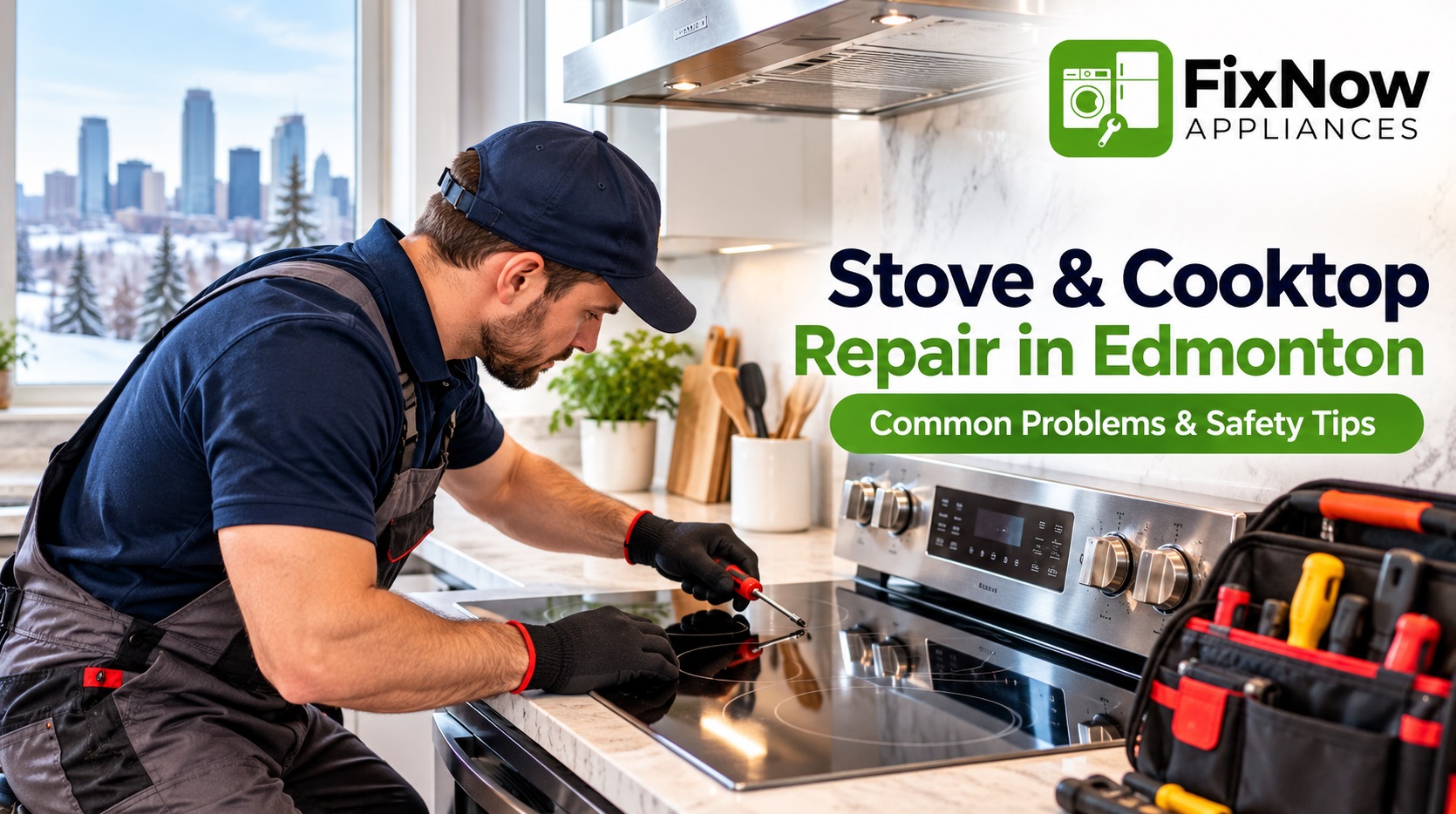
A stove or cooktop is one of the most frequently used appliances in a home. From preparing everyday meals to cooking for family gatherings, homeowners depend on reliable heating and safe operation in the kitchen.
When a burner stops working, a cooktop heats unevenly or a stove produces an unusual smell, cooking can quickly become inconvenient. More importantly, certain appliance problems can create electrical or gas-related safety risks if ignored.
For homeowners searching for stove and cooktop repair in Edmonton, understanding common problems and knowing when to stop using the appliance can help prevent further damage and support safer decisions.
At FixNow Appliances, we understand how important dependable kitchen appliances are for Edmonton households. This guide explores common stove and cooktop problems, practical troubleshooting steps, essential safety precautions and when professional repair may be necessary.
A faulty stove or cooktop can affect more than your cooking schedule. Electrical faults, damaged heating elements, faulty controls and gas ignition problems may require prompt attention.
Edmonton homeowners rely on their kitchen appliances throughout the year, including during the colder months when home cooking is especially convenient.
Addressing problems early can help you:
Identify developing faults before they become more serious.
Reduce the risk of electrical or gas-related hazards.
Restore reliable heating and cooking performance.
Avoid unnecessary component replacement.
Make an informed decision about repair versus replacement.
Not every stove problem requires a major repair. Some issues involve incorrect settings, unsuitable cookware or a temporary interruption in power. However, persistent symptoms should not be ignored, especially when safety may be involved.
An electric stove burner that fails to heat can interrupt meal preparation and may indicate a component or electrical problem.
Possible causes include a damaged heating element, a faulty burner switch, a poor connection or an issue with the appliance's control system.
What you can check safely:
Confirm that the correct burner and temperature setting are selected.
Check whether the appliance's display or other burners are operating normally.
If the cooktop uses removable coil elements, consult the owner's manual for approved user-level inspection procedures.
Look for visible damage without touching or dismantling electrical components.
If a burner remains cold despite correct settings, a technician can inspect the heating element, switch and associated electrical connections.
Do not continue using a burner that sparks, smells burnt or shows signs of electrical damage.
A gas burner that clicks without lighting, lights inconsistently or fails to produce a flame may have an ignition or burner-related problem.
Possible causes include moisture around the burner, incorrectly positioned burner components, blocked burner openings or a faulty igniter.
What you can check:
Confirm that the burner cap is correctly positioned, if applicable.
If the burner was recently cleaned, allow all user-removable parts to dry completely before reassembly.
Follow the manufacturer's instructions for cleaning accessible burner components.
Avoid inserting sharp objects into gas openings or dismantling the ignition system.
If the burner continues clicking without igniting, stop trying to light it and consult the appliance manual or a qualified technician.
Important gas safety: If you smell gas, do not operate electrical switches, use an open flame or continue troubleshooting. Leave the area and contact your gas utility or emergency services from a safe location, following local emergency guidance.
Uneven heating can make it difficult to prepare food consistently. You may notice that one area of a pan becomes much hotter than another or that a burner struggles to maintain the expected heat level.
Possible causes depend on the cooktop type and may include a failing heating element, damaged burner components, unsuitable cookware or a control-system problem.
Practical steps:
Use cookware compatible with your cooktop.
Make sure the pan sits flat on the cooking surface.
Select the appropriate burner size for the cookware.
Check that burner components are correctly positioned on gas models.
Review the manufacturer's operating instructions.
If uneven heating persists across different pans and settings, professional diagnosis can help identify the cause.
Induction cooktops heat compatible cookware using an electromagnetic field. If a pan is unsuitable or incorrectly positioned, the cooktop may not activate.
Common causes include incompatible cookware, a pan that is too small for the cooking zone, an incorrect setting or a fault with the cooktop's electronics.
What you can check:
Confirm that the cookware is induction-compatible.
Centre the pan on the designated cooking zone.
Check the appliance's display for an error code.
Follow the manufacturer's instructions for resetting or operating the cooktop.
If compatible cookware is not detected consistently, a technician may need to inspect the cooking-zone sensor or electronic control system.
Avoid dismantling the cooktop or attempting to repair its internal electronics yourself.
When a stove does not respond correctly to temperature adjustments, cooking can become unpredictable.
Possible causes include a worn control switch, a faulty temperature sensor, damaged wiring or a problem with the electronic control board.
Signs may include:
A burner that remains hot despite a setting change.
Controls that do not respond consistently.
Repeated error codes.
A cooktop that switches off unexpectedly.
If the burner does not respond to the controls, turn off the appliance using the appropriate control if safe to do so. If it continues heating or behaves abnormally, stop using it and seek qualified assistance.
Control switches, wiring and internal electronics should be inspected by an appropriately qualified professional.
Glass and ceramic cooktops can be damaged by impacts, heavy cookware or sudden temperature changes.
A visible crack is not merely a cosmetic problem. It can compromise the cooking surface and create a potential electrical or burn hazard.
What to do:
Stop using the affected cooking zone.
Switch off the appliance if it is safe to do so.
Avoid placing cookware on the damaged surface.
Do not attempt to seal the crack with household adhesives.
Arrange a professional assessment to determine whether the glass surface can be replaced.
If the damage exposes electrical components or the appliance behaves abnormally, do not continue using it.
A stove or cooktop that switches off unexpectedly may be responding to a safety feature or experiencing a component fault.
Possible causes include overheating protection, blocked ventilation, incompatible cookware on induction models, a faulty sensor or a control-system problem.
What you can check:
Review the operating instructions and any displayed error code.
Ensure that ventilation openings are not obstructed.
For induction cooktops, confirm that compatible cookware is correctly positioned.
Allow the appliance to cool if the manufacturer recommends doing so.
If the cooktop continues switching off unexpectedly, arrange professional diagnosis instead of repeatedly restarting it.
Safety should always come before troubleshooting. Although basic checks can help identify some minor problems, internal electrical components and gas systems require appropriate expertise.
Follow these practical precautions.
If you suspect a gas leak, leave the area immediately. Do not operate electrical switches, use a phone inside the affected area or create a flame. Contact the gas utility or emergency services from a safe location.
Do not use the appliance again until it has been assessed and declared safe.
Food spills and grease can affect burner performance and may create fire risks.
Allow the appliance to cool completely before cleaning, and use only products and methods recommended by the manufacturer.
Induction cooktops require compatible cookware. Incorrect cookware may prevent heating or trigger an error message.
For all cooktop types, use appropriately sized cookware and avoid placing pans where they can become unstable.
Keep kitchen towels, paper products, packaging and other flammable materials away from burners and hot cooking surfaces.
Never leave active cooking unattended for extended periods.
Do not open electrical compartments, bypass safety devices or attempt internal wiring repairs unless you are appropriately qualified.
If a circuit breaker repeatedly trips, stop using the appliance and arrange an inspection rather than repeatedly resetting the breaker.
Different stove and cooktop models have different cleaning, installation and maintenance requirements. Consult the owner's manual before carrying out any maintenance.
The repair process depends on the type of appliance and the fault involved.
Gas stoves: Problems may involve burner components, ignition systems, gas controls or the gas supply. Gas-related work should be handled by an appropriately qualified professional.
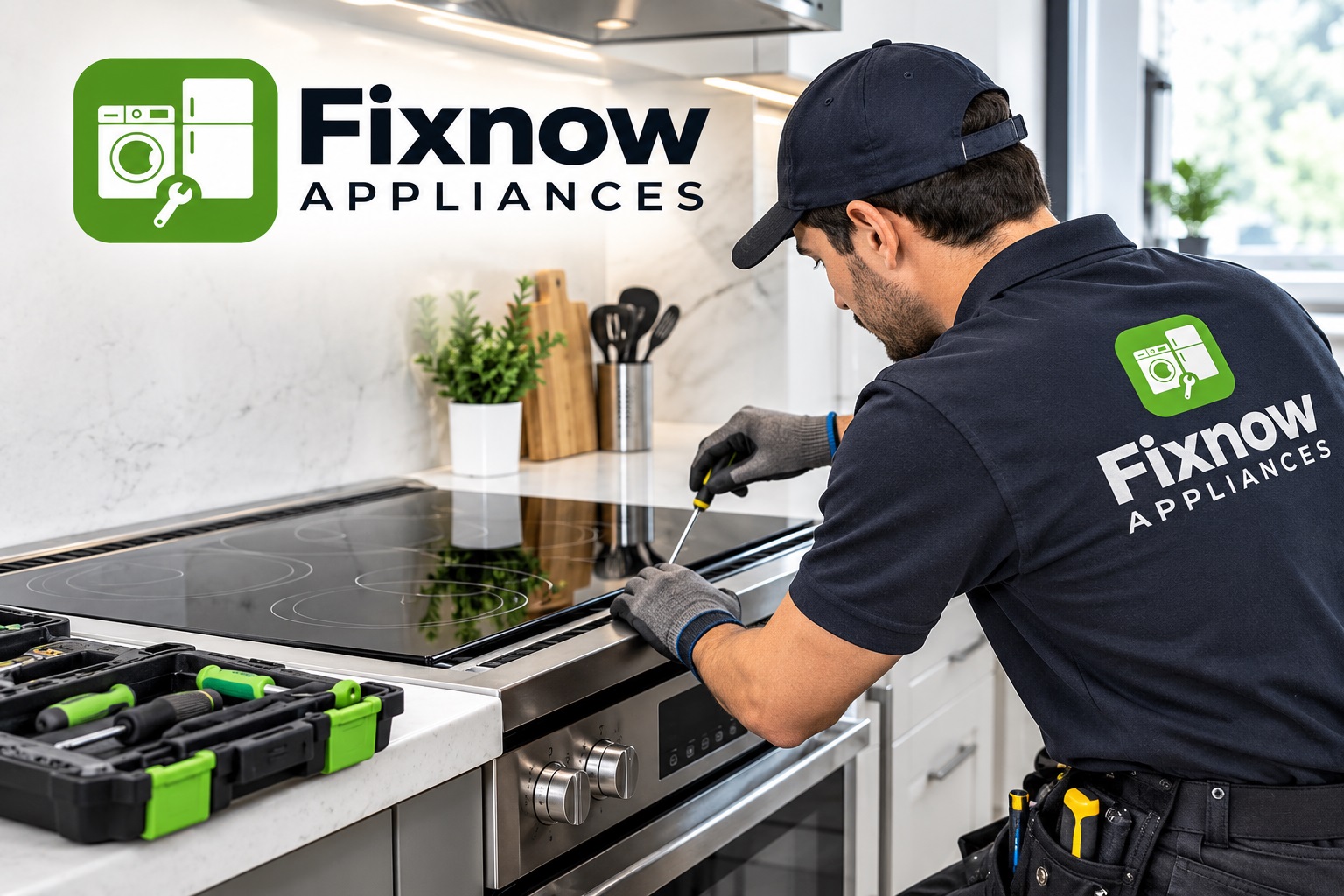
Electric cooktops: Common faults may involve heating elements, burner switches, wiring or electronic controls.
Induction cooktops: Problems may involve cookware detection, sensors, power electronics or control systems.
Although these appliances perform similar cooking functions, their components and repair requirements differ. Providing the appliance's make and model when booking can help the service team understand the issue.
The cost of stove and cooktop repair in Edmonton depends on the appliance type, brand, model, fault, replacement-part availability and labour required.
A straightforward repair involving an accessible component may cost less than replacing a glass cooking surface, electronic control board or specialised heating component.
Before approving a repair, ask the service provider about:
Diagnostic or service-call fees.
Labour charges and estimated repair time.
Replacement-part costs and availability.
Applicable parts and labour warranties.
The total estimated cost before work begins.
Repair prices vary between appliances and service providers. A proper diagnosis and clear estimate are more useful than assuming a fixed price for every stove or cooktop problem.
Repairing an existing stove or cooktop may be a sensible option when the appliance is otherwise in good condition and the repair cost is reasonable.
Replacement may be worth considering if the appliance has recurring major faults, parts are unavailable or the repair cost approaches the price of a suitable replacement.
Consider these factors before deciding:
Age and condition: An older appliance with repeated failures may require more maintenance.
Repair estimate: Compare the complete repair cost with the cost of purchasing and installing a replacement.
Parts availability: Some older or specialised models may require difficult-to-source components.
Warranty coverage: Check whether the manufacturer or an existing extended warranty covers the fault.
Safety: Do not continue using a cracked cooktop, a stove with suspected gas leakage or an appliance with unresolved electrical faults.
A professional assessment can help you understand the repair options and make an informed decision.
When a stove burner stops working or a cooktop develops a heating problem, homeowners need clear information about the issue and practical options for resolving it.
FixNow Appliances provides appliance repair services for customers within its service areas, including stove and cooktop repair enquiries in Edmonton.
When contacting the service team, share a few important details:
The appliance's brand and model.
Whether it uses gas, electricity or induction.
The symptoms you have noticed.
Any error code displayed.
When the problem first started.
These details can help explain the issue and support the service enquiry.
For repair enquiries, estimates and appointment availability, contact FixNow Appliances.
Company: FixNow Appliances
Phone: (780) 229-9274
Website: https://fixnowappliances.ca/
Location: Edmonton, Alberta, Canada
Contact the team to discuss your stove or cooktop problem and confirm service availability for your address.
Possible causes include a damaged heating element, faulty burner switch, electrical connection problem or control-system fault. If the burner remains cold after basic setting checks, professional diagnosis may be needed.
Possible causes include moisture, incorrectly positioned burner components, blocked burner openings or an ignition-system fault. If the burner fails to ignite, stop repeated attempts and seek qualified assistance if the issue persists.
A cracked cooktop should not be used until it has been assessed. Damage can compromise the surface and create electrical or burn hazards.
The cost depends on the appliance, the fault, labour and replacement parts. Ask for a diagnosis and clear estimate before approving the repair.
Basic external cleaning may be permitted by the manufacturer, but gas connections, ignition systems and internal components should be handled by an appropriately qualified professional.
It depends on the appliance's condition, parts availability, repair cost and safety. Comparing the repair estimate with the cost of a suitable replacement can help you decide.
Call (780) 229-9274 or visit fixnowappliances.ca to discuss the issue and confirm service availability.
Leave A Reply
Your email address will not be published. Required fields are marked *