-
-
-
Edmonton, Alberta, Canada
Mon – Sat: 8:00 AM – 7:00 PM
Please tap the button to book your appliance repair on WhatsApp.
Booking Enquiry on WhatsApp
FixNow Appliances provides fast, professional appliance repair across Edmonton, Sherwood Park, Beaumont, St. Albert, Stony Plain and nearby areas. Our licensed technicians repair fridges, washers, dryers, dishwashers, ovens, stoves and more using OEM parts and manufacturer-approved methods.
28
Oct
A washing machine makes everyday laundry easier, but when the cycle finishes and water remains inside the drum, a routine household task can quickly become frustrating. Wet clothes, unpleasant odours and repeated cycle interruptions are common signs that something may be preventing the machine from draining properly.
For homeowners searching for washing machine repair in Edmonton, understanding the possible causes of drainage problems can help identify simple maintenance issues and determine when professional repair is necessary.
At FixNow Appliances, we understand how inconvenient a malfunctioning washing machine can be for Edmonton households. Whether your washer is holding standing water, displaying a drain error, making unusual noises or stopping before the spin cycle, recognizing the symptoms is the first step toward finding a practical solution.
In this guide, we explain why washing machines stop draining, what homeowners can safely check, when professional diagnosis is recommended and how to choose the right repair option.
A washing machine needs an unobstructed drainage path to remove used water after washing and rinsing. Depending on the model, this process involves a drain pump, filter, drain hose and electronic controls.
If one of these components becomes obstructed or malfunctions, water may remain inside the drum.
Common causes include a clogged drain filter, a blocked or kinked hose, a faulty drain pump, excessive suds or an issue with the washer's control system.
Before assuming that an expensive component has failed, check the basic items recommended in your owner's manual.
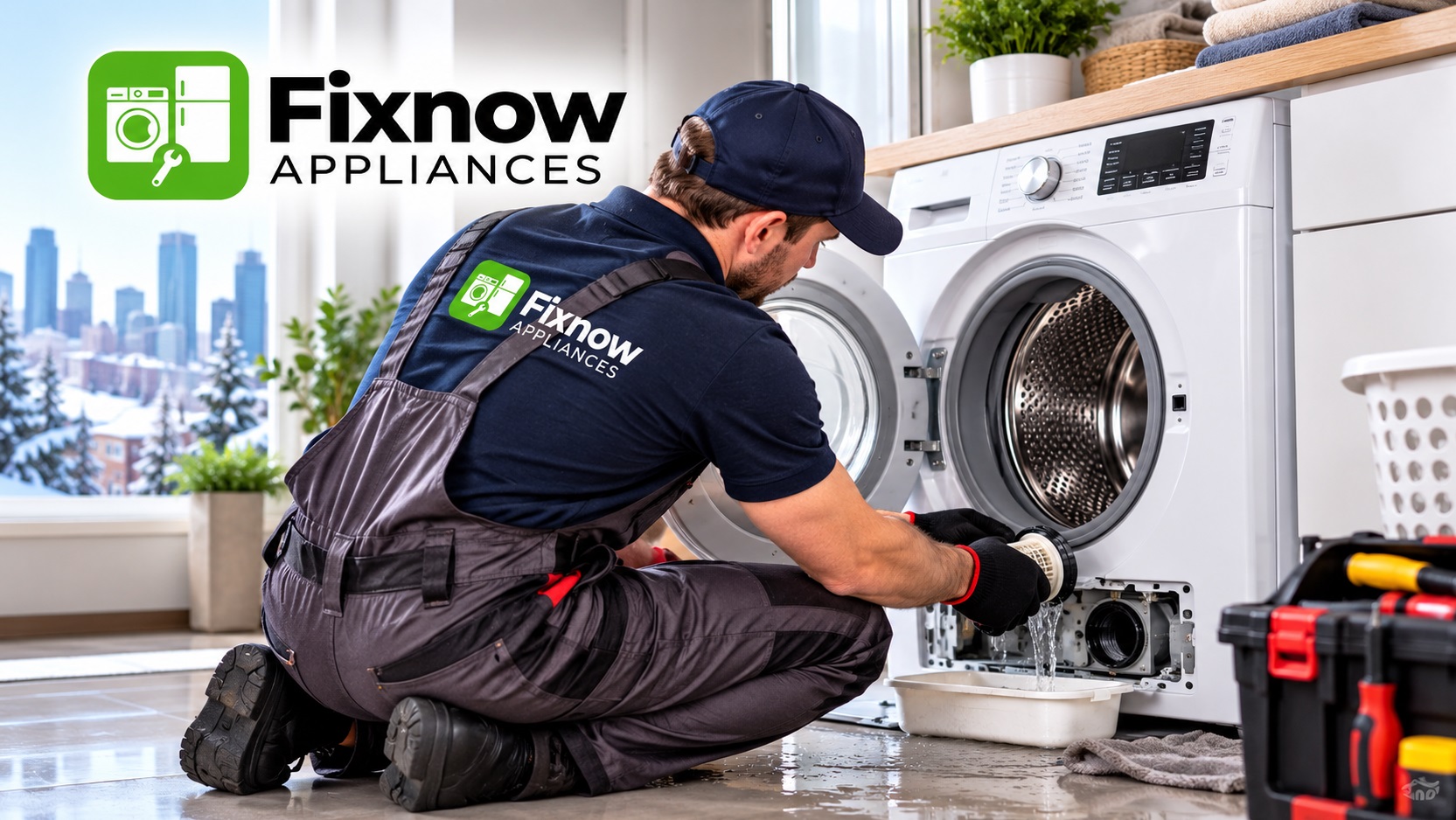
Many washing machines have a drain filter or pump filter designed to catch lint, coins, hair and other small objects before they reach the pump.
Over time, debris can accumulate and restrict water flow.
Common warning signs include:
Water remaining in the drum after a cycle.
A washer that drains slowly.
Unusual noises during the drain cycle.
A recurring drainage error.
What you can do:
Check the owner's manual to locate the filter.
Switch off and disconnect power before performing permitted maintenance.
Follow the manufacturer's instructions for draining residual water safely.
Clean the filter only if it is designed for homeowner access.
Some machines retain a considerable amount of water behind the filter. Use the specified emergency drain procedure, if available, and prepare a suitable container and towels.
If the filter is inaccessible or you cannot remove it safely, contact a qualified technician.
The drain hose carries wastewater away from the washing machine. If the hose is kinked, crushed or obstructed, water may struggle to flow out.
A hose can become restricted when the washer is moved, pushed too close to a wall or installed incorrectly.
Practical checks:
Inspect accessible sections of the hose for visible kinks.
Make sure the hose has not been crushed behind the appliance.
Check the installation instructions for the recommended drain-hose height and arrangement.
Look for visible leakage around the hose connections.
Do not pull or tilt a heavy washing machine without appropriate assistance.
If the hose appears clear but the machine still cannot drain, the blockage may be elsewhere in the drainage system.
The drain pump pushes used water out of the washing machine. If the pump fails or becomes obstructed, the washer may stop with water still inside.
Possible symptoms include humming without effective drainage, unusual grinding sounds or a cycle that repeatedly stops before spinning.
A pump can be affected by debris, worn internal components or an electrical fault.
What to do:
First, check the user-accessible filter and hose if your model permits it. Avoid opening the machine's internal panels or attempting electrical testing unless you are appropriately qualified.
If water remains after basic checks, professional diagnosis can determine whether the pump is blocked, damaged or receiving the correct electrical signal.
Replacing the pump without confirming the fault may result in unnecessary expense, so accurate diagnosis matters.
Using more detergent than recommended can create excessive suds, particularly when the detergent is unsuitable for the washing machine.
High-efficiency washers generally require detergent specifically labelled for HE machines. Excessive foam may interfere with normal washing and draining behaviour.
Ways to prevent the problem:
Use the detergent recommended for your washer.
Follow the dosage instructions on the packaging.
Consider water hardness and load size when measuring detergent.
Avoid adding ordinary dishwashing liquid to a washing machine.
If excessive suds are present, follow the manufacturer's instructions for resolving the condition. Do not repeatedly restart cycles without checking the manual.
If the washer continues to retain water after the suds disappear, another drainage issue may be responsible.
An overloaded or badly unbalanced load can prevent a washer from completing its spin cycle properly.
In some models, the machine may attempt to redistribute the laundry, extend the cycle or stop before spinning. This can leave clothes wetter than usual and may be mistaken for a drainage failure.
Try these steps:
Remove some items if the drum is overloaded.
Redistribute heavy garments evenly.
Wash bulky items according to the manufacturer's instructions.
Check whether the washer displays an unbalanced-load error.
If the machine drains normally when empty but struggles with certain loads, loading or balance may be contributing to the problem.
Persistent drainage failure, however, may indicate a separate fault that requires inspection.
Modern washing machines use sensors and electronic controls to coordinate filling, washing, draining and spinning.
A malfunctioning pressure sensor, wiring issue or control-board fault can interrupt the drainage sequence even when the hose and filter are clear.
Possible signs include:
Recurring error codes.
The machine stopping at the same point in every cycle.
Drain and spin programmes failing repeatedly.
Unusual behaviour despite correct loading and settings.
Check the owner's manual for the meaning of the displayed error code and any manufacturer-approved reset procedure.
If the problem returns, a technician can assess the control system, wiring and related components.
Avoid repeatedly resetting the machine without addressing a recurring fault.
Sometimes the washing machine is not the source of the problem. A blockage in the household standpipe, drain connection or plumbing system can prevent wastewater from leaving properly.
Possible warning signs include water backing up near the drain, gurgling sounds or drainage problems affecting other fixtures.
If you suspect a plumbing blockage, avoid running repeated wash cycles that could cause water to overflow.
A qualified plumber may be needed to inspect the household drainage system, while an appliance technician can assess the washer itself.
Identifying whether the problem originates inside the machine or in the home's plumbing can prevent unnecessary appliance repairs.
If your washing machine stops with standing water in the drum, follow these steps in order.
Step 1: Stop the cycle. Do not repeatedly restart the machine if it consistently fails to drain.
Step 2: Check for safety concerns. If water is near electrical connections, do not touch wet plugs, outlets or the appliance. Disconnect power only if it is safe to do so.
Step 3: Consult the manual. Look for instructions on emergency draining, error codes and user-accessible filters.
Step 4: Inspect accessible areas. Check the visible drain hose for kinks and look for obvious external leaks.
Step 5: Avoid forcing the door open. Front-loading washers may keep the door locked while water remains inside. Follow the manufacturer's emergency-release instructions, if provided.
Step 6: Arrange professional assistance if needed. If the washer remains full, makes unusual noises or repeatedly stops, a technician can inspect the pump and drainage system.
Never force the door open or dismantle the washer while it contains water and remains connected to power.
Edmonton's winters bring freezing temperatures, which can create additional concerns for washing machines installed in garages, unheated utility rooms or other exposed locations.
Indoor washing machines installed in properly heated spaces are not automatically affected by outdoor temperatures. The installation environment and plumbing arrangement matter more than the weather alone.
Homeowners can take these precautions:
Keep the washer within the manufacturer's permitted operating temperature range.
Protect exposed water supply and drain lines where appropriate.
Watch for signs of frozen or damaged plumbing.
Inspect accessible hoses for leaks and deterioration.
Avoid operating the appliance if a water line is suspected to be frozen.
If a line appears frozen, do not use an open flame or unsafe heating method to thaw it. Seek appropriate plumbing assistance if necessary.
A washing machine that stops draining during winter may still have an ordinary filter, pump or hose problem, so the actual cause should be diagnosed rather than assumed.
Basic maintenance may resolve a minor obstruction, but persistent drainage problems often require professional assessment.
Consider arranging washing machine repair in Edmonton if:
Water remains in the drum after a completed cycle.
The drain pump makes unusual noises.
The washer repeatedly displays a drain error.
The machine leaks during draining.
The washer stops before the spin cycle despite a balanced load.
The filter is inaccessible or cannot be removed safely.
The appliance repeatedly trips a circuit breaker.
You suspect an internal pump, sensor or control-system fault.
Stop using the washer if you notice smoke, sparks or a burning electrical smell. Disconnect power only if safe to do so.
Professional diagnosis can help determine whether the issue involves the pump, filter, hose, controls or household drainage.
The cost of washing machine repair in Edmonton depends on the appliance's brand, model, fault, labour requirements and replacement-part availability.
A simple issue involving an accessible filter or hose may cost less than replacing a drain pump, electronic control board or another internal component.
Before approving repairs, ask the service provider about:
Diagnostic or service-call fees.
Labour charges and estimated repair time.
Replacement-part costs and availability.
Applicable parts and labour warranties.
The estimated total cost before work begins.
Prices vary by appliance and service provider. An inspection and itemized estimate can help you understand the likely expense before committing to a repair.
Repairing a washing machine may be a sensible option when the appliance is in good condition and the repair cost is reasonable.
Replacement may be worth considering when the washer has recurring major faults, parts are difficult to obtain or the repair cost approaches the price of a suitable new appliance.
Consider these factors:
Age and condition: An older washer with multiple recurring problems may require more maintenance.
Repair estimate: Compare the complete repair cost with the cost of purchasing and installing a replacement.
Parts availability: Some models may require parts that are expensive or difficult to source.
Warranty coverage: Check whether the manufacturer or an existing extended warranty covers the fault.
Expected reliability: Consider whether the proposed repair is likely to address the underlying issue rather than only a temporary symptom.
A professional assessment can help you compare repair and replacement options based on your budget and household needs.
Regular maintenance can help reduce avoidable blockages and support reliable washer performance.
Follow these practical recommendations:
Clean the drain filter according to the manufacturer's schedule.
Check accessible drain hoses for kinks or damage.
Use the recommended type and quantity of detergent.
Avoid overloading the drum.
Remove coins and other small objects from clothing pockets.
Follow the manufacturer's instructions for cleaning the washer.
Address unusual noises, leaks and recurring error codes promptly.
Avoid repeatedly running cycles when the machine is unable to drain.
These steps cannot prevent every component failure, but they can help identify developing problems early.
When a washing machine stops draining, homeowners need practical information and a clear way to explore repair options.
FixNow Appliances provides appliance repair services for customers within its service areas, including washing machine repair enquiries in Edmonton.
When contacting the service team, share a few details about the problem:
The washing machine's brand and model.
Whether water remains inside the drum.
Any error code displayed.
Whether you hear the drain pump operating.
When the problem first started.
Whether water is leaking around the appliance.
These details can help explain the symptoms and support your service enquiry.
For repair enquiries, estimates and appointment availability, contact FixNow Appliances.
Company: FixNow Appliances
Phone: (780) 229-9274
Website: https://fixnowappliances.ca/
Location: Edmonton, Alberta, Canada
Contact the team to discuss your washing machine problem and confirm service availability for your address.
Common causes include a clogged filter, blocked drain hose, faulty drain pump, excessive detergent or a household plumbing blockage. The exact cause depends on the washer model and symptoms.
It is better to stop running repeated cycles until the cause is understood. Standing water may indicate a blockage or component fault, and further operation could cause additional problems.
Consult the owner's manual for the model-specific emergency drain procedure. Switch off and disconnect power before performing permitted maintenance, and prepare for residual water. If the process is unclear or unsafe, contact a qualified technician.
The cost depends on the fault, appliance model, labour and replacement parts. Request a diagnosis and an estimate before approving repairs.
Excessive suds can interfere with normal operation. Use the detergent type and quantity recommended by the manufacturer. Persistent drainage problems may indicate another fault.
It depends on the cause, appliance condition, repair cost, parts availability and expected reliability. A diagnosis can help you compare repair with replacement.
Call (780) 229-9274 or visit fixnowappliances.ca to discuss the issue and confirm service availability.


Leave A Reply
Your email address will not be published. Required fields are marked *