-
-
-
Edmonton, Alberta, Canada
Mon – Sat: 8:00 AM – 7:00 PM
Please tap the button to book your appliance repair on WhatsApp.
Booking Enquiry on WhatsApp
FixNow Appliances provides fast, professional appliance repair across Edmonton, Sherwood Park, Beaumont, St. Albert, Stony Plain and nearby areas. Our licensed technicians repair fridges, washers, dryers, dishwashers, ovens, stoves and more using OEM parts and manufacturer-approved methods.
25
Oct
Winter in Edmonton brings freezing temperatures, shorter days and more time spent indoors. During the colder months, household appliances often become even more important, from refrigerators and freezers preserving groceries to washing machines, dryers and ovens supporting busy family routines.
However, winter can also expose appliance maintenance issues that are easy to overlook. Restricted dryer ventilation, worn refrigerator door seals, unsuitable garage freezer conditions and neglected dishwasher filters can affect performance when homeowners rely on their appliances most.
For homeowners looking for winter appliance maintenance tips in Edmonton, a proactive approach can help identify developing problems, improve day-to-day reliability and reduce the risk of unexpected breakdowns.
At FixNow Appliances, we understand the importance of keeping household appliances operating properly throughout Edmonton's winter season. This guide explains practical maintenance steps for common household appliances, warning signs to watch for and when professional appliance repair may be necessary.
Edmonton's cold climate can influence how households use and maintain their appliances. Families may run more laundry cycles, cook more meals at home and depend on freezers for longer-term food storage.
Appliances installed in garages, basements or other areas with changing temperatures may also need special consideration. Not every refrigerator or freezer is designed to operate in an unheated space.
Regular maintenance helps homeowners identify potential problems before they become more disruptive.
The main benefits include:
Identifying worn seals, damaged hoses and restricted ventilation.
Supporting reliable appliance performance during colder months.
Reducing the risk of water leaks and avoidable damage.
Maintaining appropriate food-storage temperatures.
Recognizing potential safety hazards early.
Making informed decisions about repairs and replacement.
Routine maintenance cannot prevent every appliance failure, but it can help you identify problems early and understand when professional assistance is needed.
Your refrigerator works throughout the year, regardless of the temperature outside. Keeping it properly maintained is important for food safety and reliable performance.
Keep your refrigerator at or below 4°C (40°F). An appliance thermometer can help you verify the actual temperature rather than relying only on the control setting.
If the refrigerator struggles to maintain a safe temperature, investigate the issue promptly.
A damaged or dirty door gasket can allow cold air to escape and warm air to enter.
Check the seal for visible cracks, gaps or trapped debris. Clean it according to the manufacturer's instructions and arrange a replacement if it is damaged.
Avoid placing food containers directly against internal air vents. Proper airflow helps distribute cold air throughout the refrigerator compartment.
Dust and debris can accumulate around condenser coils, depending on the appliance design and installation.
Follow the manufacturer's instructions for cleaning accessible coils, and disconnect power safely before performing permitted maintenance.
Contact a qualified repair professional if you notice persistent unusual noises, water leakage, excessive frost or a refrigerator that runs continuously without cooling properly.
Freezers are especially important during winter, but cold outdoor temperatures do not automatically guarantee reliable freezer operation.
A freezer installed in an unheated garage or other cold location may operate outside its recommended ambient temperature range. Some models are designed for such environments, while others are not.
For long-term frozen food storage, maintain a freezer temperature of approximately -18°C (0°F) or colder.
Use an appliance thermometer to monitor the temperature and investigate persistent changes.
Check the freezer door seal for cracks, gaps or damage. A poor seal can allow humid air to enter, contributing to frost buildup and reduced performance.
Arrange frozen food so internal vents remain unobstructed. Overloading or incorrectly arranging food can interfere with air circulation.
If your freezer is in a garage, shed or unheated basement, consult the manufacturer's specifications for the permitted ambient operating temperature.
Do not assume that an extremely cold room will always improve freezer performance.
If your freezer stops cooling, keep the door closed as much as possible and protect perishable food. A full freezer may keep food frozen for approximately 48 hours during a power outage, or about 24 hours if half full, provided the door remains closed. Actual conditions vary, so follow official food-safety guidance.
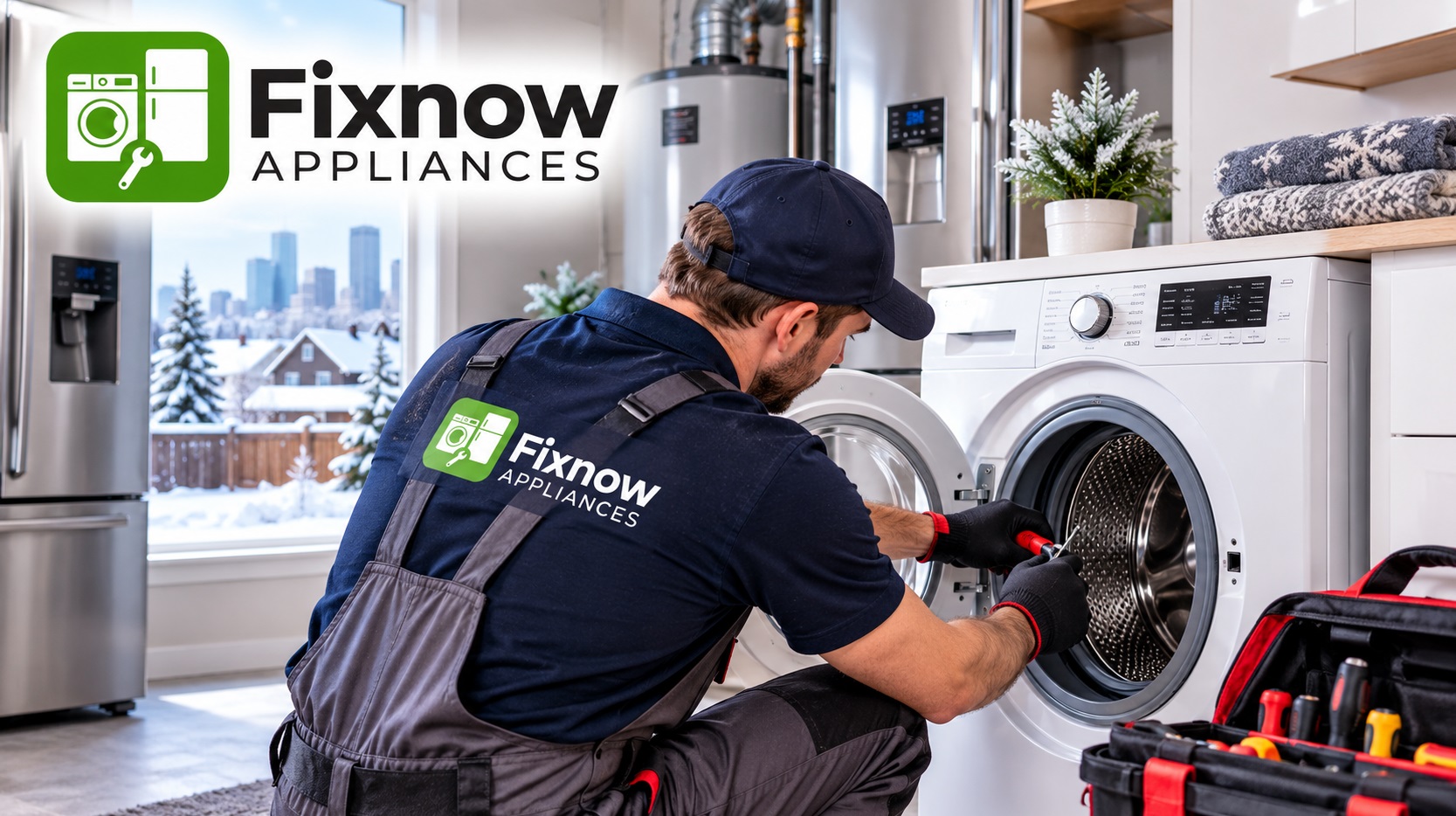
A washing machine becomes particularly valuable during Edmonton's winter, when families frequently wash heavier clothing, towels, bedding and other household items.
Regular maintenance can help reduce drainage problems, leaks and unnecessary wear.
Look for visible bulges, cracks, leaks or damaged connections on accessible water hoses.
Replace damaged hoses according to the manufacturer's recommendations. If a connection is leaking and you cannot safely address it, shut off the water supply if possible and arrange assistance.
Heavy winter clothing and bedding can place additional strain on a washing machine when the drum is overloaded.
Follow the recommended load capacity and distribute items evenly.
Detergent residue and trapped moisture can contribute to unpleasant odours.
Clean accessible areas according to the owner's manual and leave the door slightly open between cycles when appropriate and safe.
If water remains inside the drum after a cycle, inspect accessible areas according to the manufacturer's instructions.
A blocked filter, kinked drain hose or faulty pump may prevent proper drainage. Disconnect power and follow the manual before inspecting any user-serviceable filter.
Make sure the washer is level and stable. Persistent banging, grinding or excessive vibration may indicate an installation or mechanical problem.
Dryers often see increased use during winter because outdoor clothes drying becomes less practical.
Regular dryer maintenance is particularly important because lint accumulation and restricted exhaust airflow can increase overheating and fire risks.
Remove lint from the filter after each drying cycle. Follow the manufacturer's instructions for cleaning the filter and allow it to dry completely if it is washed.
A clean lint filter supports airflow but does not replace maintenance of the entire exhaust system.
Inspect accessible sections of the exhaust hose for visible crushing, disconnection or obstruction.
Dryer exhaust systems should be installed and maintained according to the manufacturer's instructions and applicable safety requirements.
If clothes take unusually long to dry, the dryer overheats or the exhaust airflow appears weak, arrange an inspection of the ventilation system.
Large loads can restrict airflow and increase drying times. Separate heavy fabrics from lighter clothing and choose the appropriate drying programme.
Stop using the dryer if you notice a burning smell, smoke or abnormal overheating. If there is smoke or fire, leave the area and contact emergency services.
Do not continue running the appliance to see whether the smell disappears.
A dryer that runs without heating, makes persistent grinding noises or repeatedly shuts off may have a component fault requiring professional diagnosis.
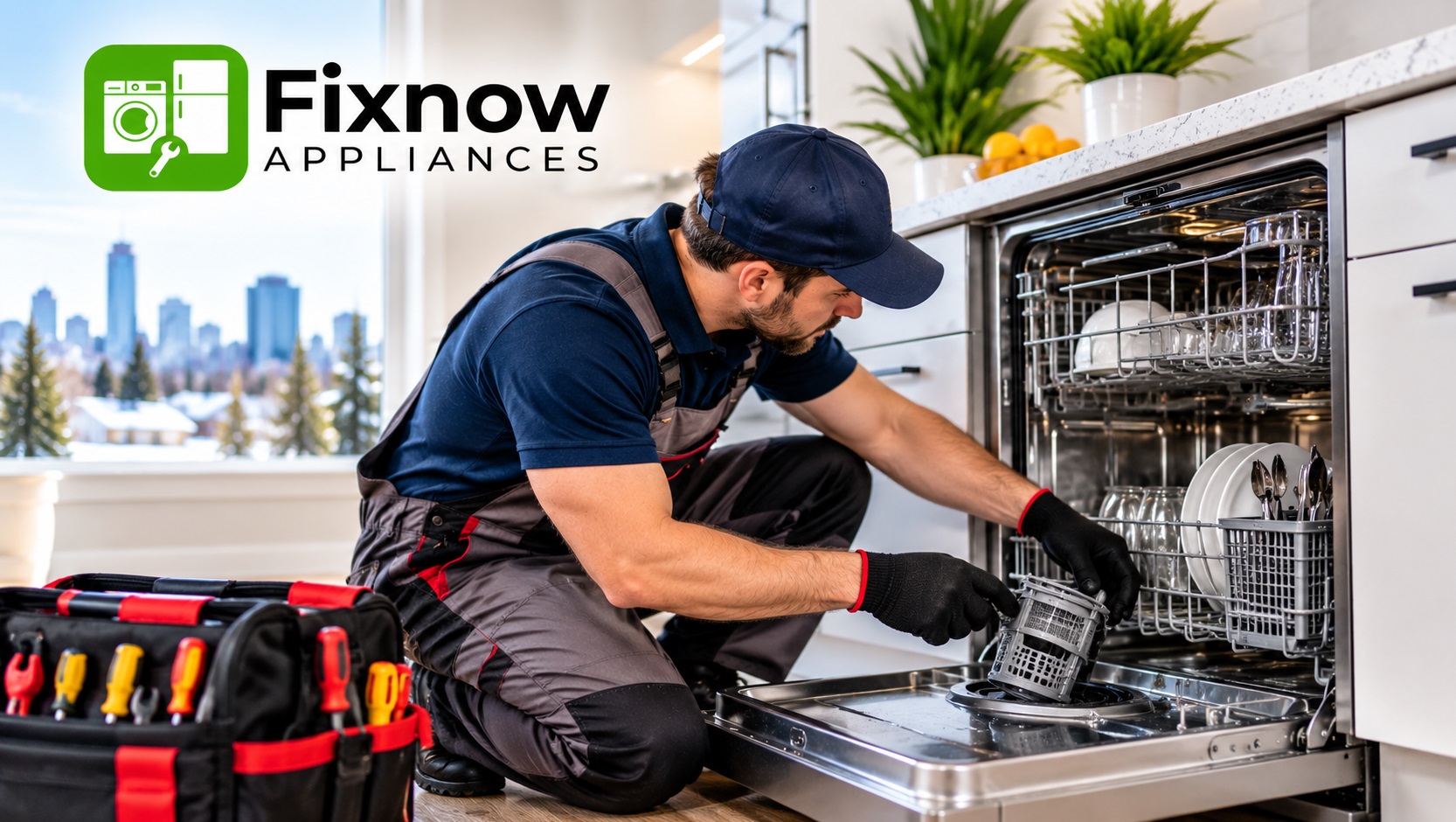
Dishwashers help households manage everyday kitchen cleaning, especially when families spend more time cooking at home during winter.
A few simple maintenance habits can support cleaning performance and help prevent avoidable drainage problems.
Food particles and debris can accumulate in the filter, affecting drainage and cleaning results.
Remove and clean the filter only as instructed by the manufacturer.
Check accessible spray-arm openings for visible obstructions and make sure the arms can rotate freely when the appliance is switched off.
Blocked spray arms can leave food residue on dishes.
Inspect the visible seal for trapped debris, cracks or signs of wear.
If the dishwasher leaks repeatedly, stop using it and arrange a professional inspection.
Use dishwasher detergent designed for your appliance. Ordinary dishwashing liquid can create excessive suds and lead to operational problems.
Follow the manufacturer's recommendations for detergent and rinse aid.
If dishes remain dirty, water stays in the bottom of the appliance or unusual noises persist, basic maintenance may not be enough.
A technician can assess the drainage system, circulation pump, heating components or other parts as appropriate.
Cold winter days often mean more home cooking, baking and preparation of family meals. A reliable oven and stove can make these routines easier.
Remove food spills according to the manufacturer's instructions. Allow the appliance to cool completely before cleaning, and avoid using cleaning products that are not approved for its surfaces.
If using a self-cleaning function, follow all safety instructions and ensure the kitchen is appropriately ventilated.
A damaged gasket can allow heat to escape and contribute to uneven cooking.
Check the seal for visible damage and arrange a replacement if necessary.
If the oven takes unusually long to preheat, cooks food unevenly or fails to maintain the selected temperature, the issue may involve a heating element, temperature sensor or control system.
For electric cooktops, follow the manufacturer's instructions for cleaning the cooking surface.
For gas stoves, keep burner components clean as directed and ensure that the flame appears normal for the appliance.
Never dismantle gas connections or attempt unqualified gas repairs. If you smell gas, leave the area and contact the appropriate emergency or gas utility service from a safe location.
Many Edmonton homes have appliances installed in basements, utility rooms or garages. These locations can present special maintenance considerations during winter.
Refrigerators, freezers, washers and other appliances have specific operating conditions.
Review the manufacturer's documentation to determine whether the appliance can operate safely in an unheated garage or other cold environment.
Where applicable, water supply lines in exposed or poorly heated areas may be vulnerable to freezing.
Follow appropriate plumbing and appliance installation guidance, and address signs of freezing or leakage promptly.
Do not operate an appliance with a suspected frozen or damaged water line until it has been assessed safely.
Appliances that require ventilation need the clearances specified by the manufacturer.
Avoid covering vents or placing items where they restrict airflow.
Condensation and water leaks can affect surrounding floors, cabinets and equipment.
Investigate unexplained moisture promptly, especially near electrical connections.
Maintenance can help prevent some issues, but certain symptoms indicate that a professional inspection may be necessary.
Contact an appropriately qualified appliance repair professional if you notice:
A refrigerator or freezer that cannot maintain the correct temperature.
A washing machine that repeatedly leaks or fails to drain.
A dryer that overheats or does not produce heat.
A dishwasher that leaks or repeatedly leaves standing water.
An oven that fails to heat properly.
Persistent grinding, banging or unusual mechanical noises.
Repeated circuit-breaker trips.
Error codes that continue after the basic checks recommended by the manufacturer.
Stop using an appliance if you notice smoke, sparks or a burning electrical smell. Disconnect power only if it is safe to do so.
Never bypass safety switches, dismantle electrical components without the appropriate qualifications or attempt repairs involving sealed refrigeration systems or gas connections unless properly qualified.
The cost of appliance repair in Edmonton depends on the appliance type, the nature of the fault, labour requirements, parts availability and the service provider's pricing.
A simple issue involving an accessible filter or door seal may cost less than a repair involving a compressor, motor, heating element or electronic control board.
Winter conditions do not automatically mean that every repair will cost more. However, if an appliance failure is urgent or requires specialised parts, availability and scheduling may affect the overall process.
Before approving a repair, ask about:
Diagnostic or service-call fees.
Labour charges and estimated repair time.
Replacement-part costs and availability.
Applicable parts and labour warranties.
The total estimate before additional work begins.
If the appliance is older or has recurring faults, compare the estimated repair cost with the cost of a suitable replacement.
When an essential appliance stops working during winter, homeowners need practical information and a clear way to explore repair options.
FixNow Appliances provides appliance repair services for customers within its service areas, including repair enquiries in Edmonton.
Whether you are experiencing refrigerator cooling problems, a washer that will not drain, a dryer that is not heating, a dishwasher leak or an oven temperature issue, the first step is to describe the symptoms clearly.
When contacting the team, share:
The appliance type, brand and model.
The problem you have noticed.
Any error code displayed.
When the issue started.
Your location in Edmonton so service availability can be confirmed.
These details can help explain the issue and support the service enquiry.
Company: FixNow Appliances
Phone: (780) 229-9274
Website: https://fixnowappliances.ca/
Location: Edmonton, Alberta, Canada
Contact the team to discuss your appliance problem and confirm service availability for your address.
Clean accessible filters and vents, inspect visible hoses and door seals, check refrigerator and freezer temperatures, and review manufacturer guidance for appliances installed in cold locations.
Yes. A garage may fall outside the appliance's recommended ambient operating range. Check the manufacturer's specifications before using a freezer in an unheated space.
Clean the lint filter after every load. Also maintain the exhaust system according to the manufacturer's instructions, because cleaning the filter alone does not remove all lint from the ventilation system.
Keep your refrigerator at or below 4°C (40°F) and your freezer at approximately -18°C (0°F) or colder. Use appliance thermometers to verify the actual temperatures.
Possible causes include damaged hoses, worn seals, loose connections or drainage problems. Inspect accessible areas safely, shut off the water supply if needed and arrange professional assistance if the leak continues.
Contact a professional when an appliance repeatedly fails to operate correctly, cannot maintain safe temperatures, leaks persistently, overheats, makes unusual noises or displays recurring error codes.
Call (780) 229-9274 or visit fixnowappliances.ca to discuss your appliance issue and confirm service availability.


Leave A Reply
Your email address will not be published. Required fields are marked *