-
-
-
Edmonton, Alberta, Canada
Mon – Sat: 8:00 AM – 7:00 PM
Please tap the button to book your appliance repair on WhatsApp.
Booking Enquiry on WhatsApp
FixNow Appliances provides fast, professional appliance repair across Edmonton, Sherwood Park, Beaumont, St. Albert, Stony Plain and nearby areas. Our licensed technicians repair fridges, washers, dryers, dishwashers, ovens, stoves and more using OEM parts and manufacturer-approved methods.
03
Nov
When an essential home appliance stops working, the inconvenience is often immediate. A refrigerator that is no longer cooling can put groceries at risk. A washing machine that refuses to drain can interrupt your household routine. A malfunctioning oven or dishwasher can make everyday tasks more difficult.
For Calgary homeowners, finding the right appliance repair service is not simply about getting someone to fix the problem. It is about understanding the issue, choosing a suitable technician, knowing what the repair process involves and making an informed decision about the cost.
Before booking appliance repair in Calgary, taking a few minutes to prepare can make the entire experience smoother. It can also help you avoid unnecessary repairs, unclear estimates and repeated service visits.
This guide explains common appliance problems, important questions to ask before booking and what homeowners should expect from a professional repair appointment.
You do not need to diagnose the appliance yourself. However, understanding its symptoms can help the repair company assess your situation more effectively.
Start by identifying what the appliance is doing differently from normal.
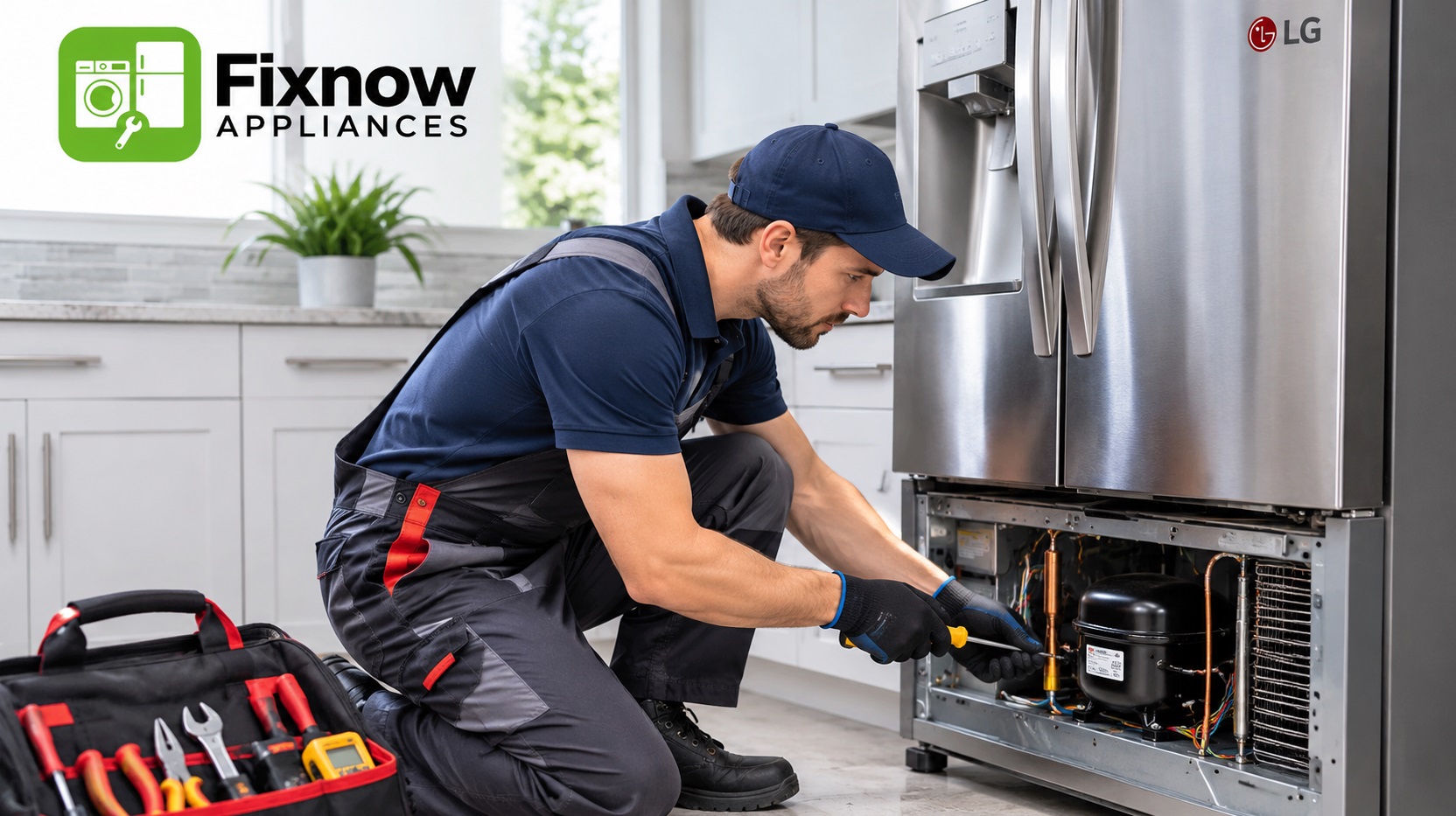
A refrigerator that is not maintaining the correct temperature needs attention, particularly if food is beginning to spoil.
Common warning signs include:
Refrigerator or freezer not cooling sufficiently.
Food spoiling earlier than expected.
Water collecting beneath the appliance.
Unusual buzzing, clicking or humming sounds.
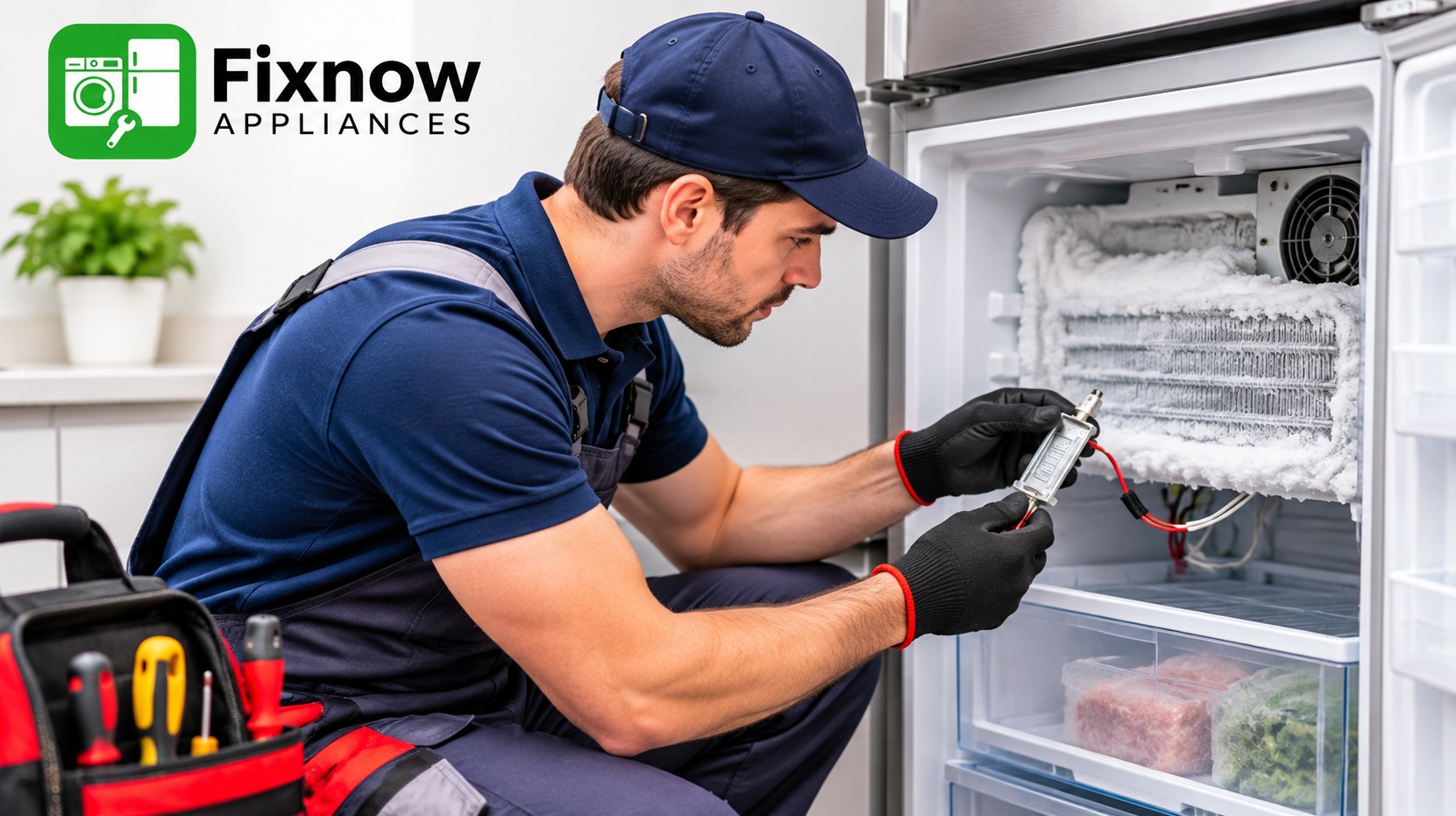
Excessive frost building up inside the freezer.
Compressor running continuously.
Possible causes include dirty condenser coils, damaged door seals, fan problems, thermostat faults or compressor-related issues.
If the refrigerator is not maintaining a safe temperature, protect perishable food by moving it to another properly operating refrigerator or suitable cold storage.
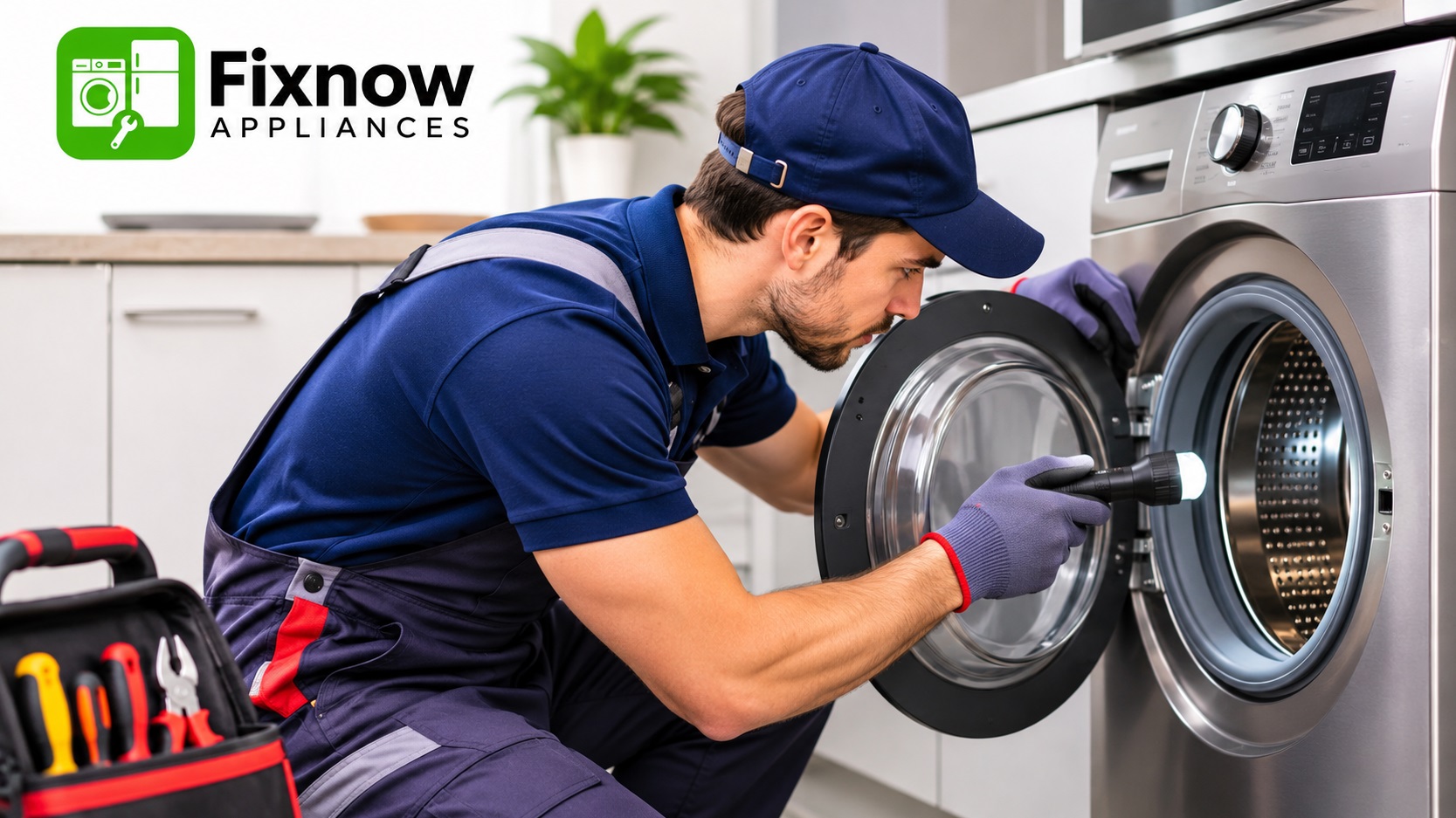
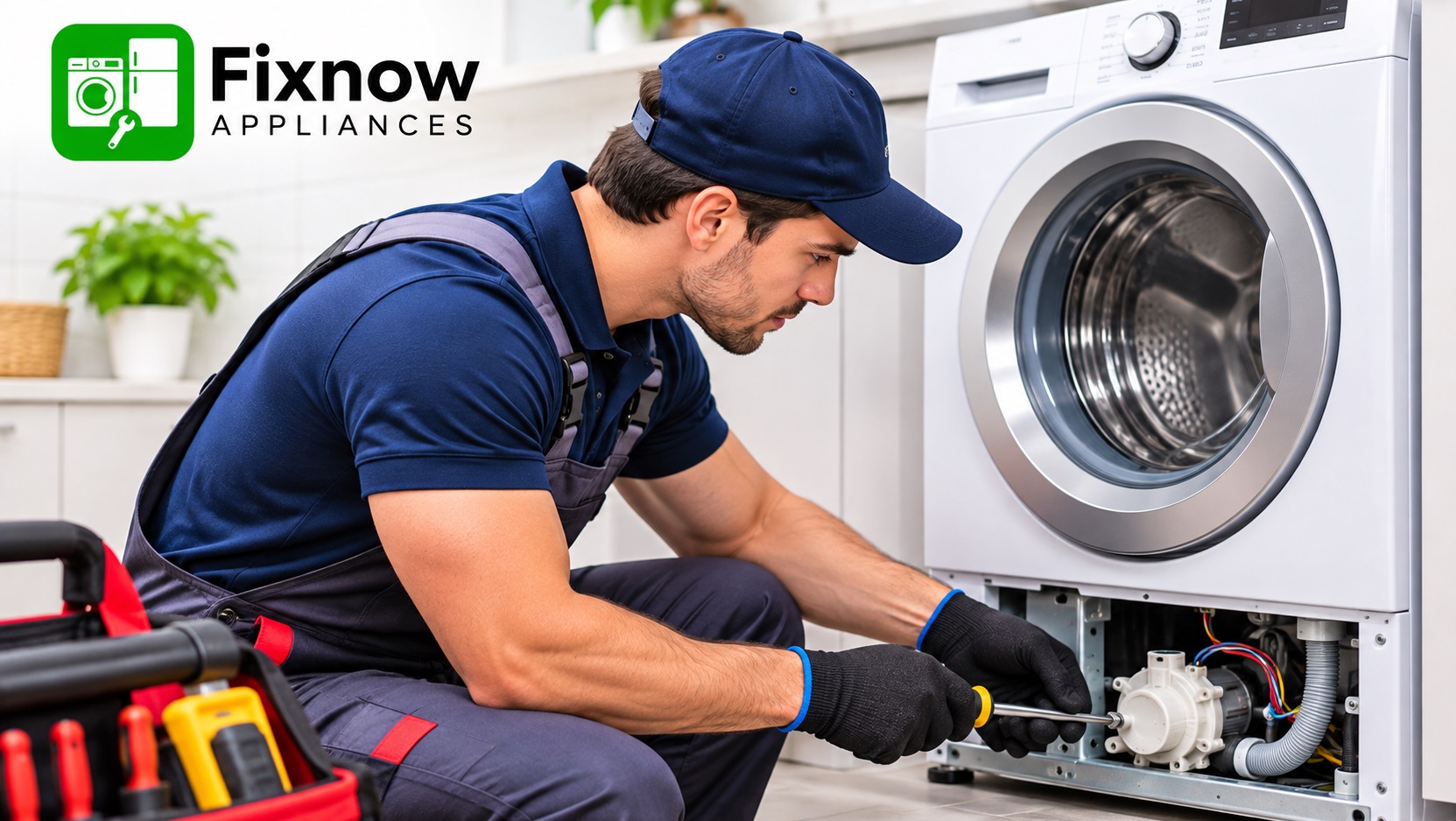
Washing machine problems can interrupt your entire laundry routine.
Some common symptoms include:
Water remaining inside the drum after a cycle.
Clothes coming out excessively wet.
The machine stopping before completing a cycle.
Unusual vibration during spinning.
Water leaking around the appliance.
Error codes appearing on the display.
Potential causes include drainage restrictions, pump problems, an unbalanced load, door-lock faults or issues with internal components.
Before booking a technician, note the cycle during which the problem occurs and whether the machine displays an error code.
A dryer that runs without producing sufficient heat can significantly increase drying time.
Common symptoms include:
Clothes remaining damp after a complete cycle.
Dryer taking multiple cycles to dry a normal load.
Unusual noises or vibration.
The appliance stopping unexpectedly.
Burning smells or excessive heat around the machine.
Possible causes include airflow restrictions, a faulty heating element, thermostat problems or other internal component failures.
If you notice a burning smell, smoke or unusual overheating, stop using the dryer and arrange a professional inspection. Clean the lint filter regularly, but do not attempt internal repairs yourself.
A dishwasher may complete its cycle without delivering the cleaning results you expect.
Look for signs such as:
Dishes remaining dirty after washing.
Water collecting at the bottom.
Detergent not dissolving properly.
Water leaking around the door.
Unusual noises during operation.
Poor drainage or persistent odours.
The issue may involve spray arms, filters, drainage components, water supply or circulation systems.
Cooking appliances can develop heating and temperature-control problems over time.
Common symptoms include:
Oven not reaching the selected temperature.
Burners not heating consistently.
Gas burner failing to ignite.
Food cooking unevenly.
Oven taking too long to preheat.
Error codes or control-panel issues.
Gas-related faults should always be handled by qualified professionals. If you smell gas, stop using the appliance, avoid operating electrical switches or creating flames, leave the building and contact your gas utility or emergency services from a safe location outside.
Some appliance problems are caused by simple operating conditions rather than component failure. A few safe checks may help you understand the situation.
| Appliance | Basic checks |
|---|---|
| Refrigerator | Check temperature settings and whether the door closes properly |
| Washing machine | Check the selected cycle, load balance and visible drainage hose position |
| Dryer | Clean the lint filter and check accessible vent areas for obvious blockage |
| Dishwasher | Check the filter, detergent and spray-arm obstructions |
| Oven | Confirm the cooking mode, temperature and door closure |
| Stove | Confirm the selected burner and control settings |
Always follow the manufacturer's instructions.
Do not remove appliance panels, handle exposed wiring, dismantle components or attempt gas-system repairs. If a breaker trips repeatedly, leave it off and arrange an appropriate inspection.
These checks are intended to identify simple operating issues, not replace professional diagnosis.
Choosing an appliance repair company deserves the same attention as choosing any other home service provider.
Before confirming an appointment, ask a few practical questions.
Different manufacturers use different components, control systems and diagnostic procedures.
Ask whether the technician has experience working with your appliance brand and model.
For example, refrigerator repairs may involve different diagnostic requirements depending on whether the appliance is manufactured by Samsung, LG, Whirlpool, GE, Bosch or another brand.
Providing the model number when booking can help the service team understand your requirements.
Ask about the technician's relevant training, experience and qualifications for the type of appliance being repaired.
This is especially important for gas appliances and electrical faults, where the work may require specific credentials and compliance with applicable safety requirements.
Some appliance repair companies charge a fee to inspect the appliance and identify the problem.
Before booking, clarify:
Whether a diagnostic fee applies.
What the fee includes.
Whether it is credited towards the repair.
Whether additional charges may apply if you decline the repair.
A clear explanation helps you understand the financial commitment before the appointment.
A professional repair process should include an explanation of the identified problem and the expected repair cost before work proceeds.
Ask whether the estimate will include:
Replacement parts.
Labour charges.
Diagnostic fees.
Applicable taxes.
Any additional service charges.
If the technician discovers another problem during the repair, ask for an updated estimate and approve additional work before it begins.
Some repairs can be completed quickly when the required component is readily available. Others may take longer because a specific part needs to be ordered.
Ask whether the company expects to have the required part available and what the approximate waiting time might be.
Original manufacturer parts or suitable compatible replacement parts may be considered depending on the appliance and repair requirements.
Before approving the work, ask about the warranty terms.
Important details include:
Whether the warranty covers parts, labour or both.
How long the coverage lasts.
Whether specific components are excluded.
What happens if the same problem returns.
Request written confirmation of the applicable warranty conditions.
Knowing what happens during a service visit can help you prepare and understand the repair process.
The technician may ask about the appliance's symptoms, when the issue started and whether anything unusual happened before the failure.
Be prepared to explain:
What the appliance is doing.
When you first noticed the problem.
Whether the issue happens every time.
Any error codes or warning indicators.
Whether the appliance has been repaired previously.
Accurate information can help narrow down possible causes.
The technician examines the appliance and checks the relevant systems based on the reported symptoms.
Depending on the appliance, the inspection may involve testing electrical components, checking water connections, examining drainage systems or evaluating temperature-control functions.
The objective is to identify the underlying fault rather than simply replace a component based on symptoms.
Once the inspection is complete, the technician should explain the findings in understandable language.
You should know:
What appears to be causing the problem.
Which component or system requires attention.
Whether replacement parts are needed.
What the estimated repair cost will be.
Whether further testing is necessary.
Take time to understand the estimate before approving the repair.
After receiving your approval, the technician can proceed with the agreed repair.
The work may involve component replacement, cleaning or clearing an appropriate system, correcting a connection or addressing another identified fault.
The time required depends on the appliance, the complexity of the issue and parts availability.
After completing the repair, the appliance should be tested as appropriate to confirm that the reported problem has been addressed.
Before the technician leaves, ask about:
The work completed.
Parts replaced.
Any remaining concerns.
Maintenance recommendations.
Warranty coverage and documentation.
A clear explanation helps you understand how to care for the appliance after the repair.
There is no single price for appliance repair because the final cost depends on several factors.
A minor component replacement may be relatively straightforward, while a complex electrical, refrigeration or control-system fault may require more time and specialised parts.
The main factors affecting appliance repair costs include:
Type of appliance: Refrigerator, dishwasher, dryer, oven and washing machine repairs involve different components and diagnostic requirements.
Nature of the fault: A simple blockage may require less work than a compressor, motor or electronic control-board issue.
Replacement parts: The brand, model and availability of the required component can influence the total cost.
Labour and diagnosis: The time needed to identify and repair the problem affects the estimate.
Age and condition: Older appliances may have additional wear or limited replacement-part availability.
Rather than choosing a repair service based only on the lowest advertised price, compare the complete estimate, scope of work and warranty terms.
One of the most important decisions homeowners face is whether repairing an appliance is financially worthwhile.
The right answer depends on the appliance's condition and the estimated cost of restoring it.
Consider these factors:
| Factor | Consider repairing when | Consider replacing when |
|---|---|---|
| Appliance age | The appliance is relatively new | It is nearing the end of its expected service life |
| Repair cost | The repair is reasonable compared with replacement | Repair costs are disproportionately high |
| Overall condition | Most components are functioning properly | Multiple major components are failing |
| Parts availability | Suitable parts are available | Essential parts are discontinued or difficult to source |
| Reliability | The appliance has a limited repair history | It has recurring breakdowns |
A professional assessment can help you compare the options without committing to an unnecessary replacement.
A little preparation can make the appointment more efficient.
Before the technician arrives:
Locate the model and serial number: These are often printed on a label inside the appliance door, around the frame or on the rear panel. The exact location depends on the model.
Clear the surrounding area: Provide enough room for the technician to inspect and access the appliance safely.
Record error codes: Take a note or photograph of any displayed warning messages.
Explain previous repairs: If another technician has worked on the appliance, share the details if available.
Secure pets and children: Keep them away from the work area during inspection and repair.
Keep relevant documents available: Manuals, purchase details and previous repair records may be useful.
These simple steps can help avoid delays and give the technician a clearer understanding of the appliance's history.
Working with an appliance repair company that serves your area can make communication and appointment planning more convenient.
When comparing repair providers in Calgary, consider:
Service availability in your neighbourhood.
Experience with your appliance type.
Clarity of pricing and estimates.
Communication before and after the appointment.
Availability of suitable replacement parts.
Repair warranty and service policies.
A reliable service experience should involve more than replacing a faulty component. It should help homeowners understand the problem, the available options and the work being performed.
When a household appliance stops working, homeowners need clear information and practical repair support.
FixNow Appliances helps customers looking for appliance repair assistance and solutions for common household appliance problems.
Whether you are experiencing refrigerator cooling issues, washing machine drainage problems, dryer heating faults, dishwasher performance concerns or oven and stove malfunctions, describing the symptoms clearly can help determine the next step.
Before booking, keep your appliance's brand, model number and problem details ready.
If you are in Calgary and need appliance repair assistance, contact FixNow Appliances to discuss your requirements and confirm current service availability.
Call: (587) 962-2861
Website: https://fixnowappliances.ca/
Identify the appliance symptoms, check basic operating settings, note any error codes and locate the model number. Avoid opening the appliance or attempting internal electrical or gas repairs.
Compare relevant experience, technician qualifications, pricing transparency, diagnostic fees, replacement-part options, customer communication and repair warranty terms.
Many companies charge a service or diagnostic fee for inspecting an appliance. The amount and whether it is credited towards the repair depend on the company's policy. Confirm this before booking.
The time depends on the appliance, the fault and the availability of replacement parts. Some repairs may be completed during the first visit, while others require additional parts or testing.
Yes. The model number helps the repair company identify the appliance and understand which components or replacement parts may be suitable.
Compare the repair estimate, appliance age, overall condition, parts availability and expected future reliability. A professional diagnosis can help you make an informed decision.
It depends on the cause. If the appliance is overheating, producing smoke, sparking, leaking significantly or creating a burning smell, stop using it and seek appropriate assistance.
You can call FixNow Appliances at (587) 962-2861 or visit https://fixnowappliances.ca/ to discuss your appliance problem and confirm service availability in your area.
Leave A Reply
Your email address will not be published. Required fields are marked *