-
-
-
Edmonton, Alberta, Canada
Mon – Sat: 8:00 AM – 7:00 PM
Please tap the button to book your appliance repair on WhatsApp.
Booking Enquiry on WhatsApp
FixNow Appliances provides fast, professional appliance repair across Edmonton, Sherwood Park, Beaumont, St. Albert, Stony Plain and nearby areas. Our licensed technicians repair fridges, washers, dryers, dishwashers, ovens, stoves and more using OEM parts and manufacturer-approved methods.
04
Nov
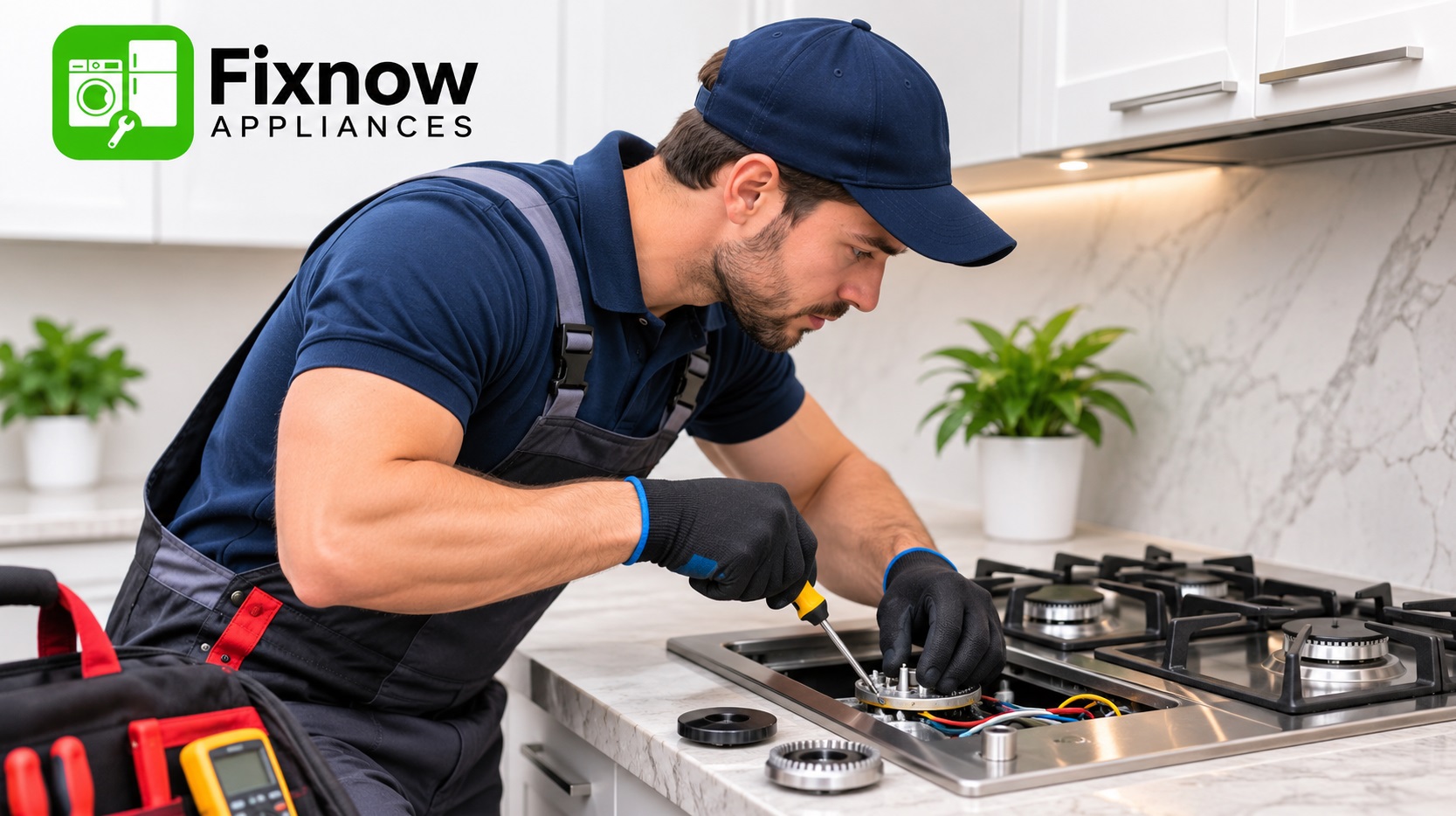
A cooktop is one of the most frequently used appliances in a modern kitchen. Whether you prepare quick weekday meals or cook for the entire family, you depend on consistent heat, responsive controls and reliable burner performance.
When a cooktop stops working properly, even a small fault can disrupt your routine. A gas burner may refuse to ignite, an electric cooking zone may heat unevenly, or an induction cooktop may stop recognising compatible cookware.
For Calgary homeowners, understanding these symptoms is the first step towards choosing the right repair solution.
Cooktop problems can involve ignition systems, heating elements, temperature sensors, electrical connections or electronic controls. While some basic checks are safe to perform, internal repairs should be handled by a qualified technician.
This guide explains common cooktop problems, their possible causes, safe troubleshooting steps and when to arrange professional cooktop repair in Calgary.
A gas cooktop that clicks repeatedly without producing a flame is a common source of frustration.
Gas burners use an ignition system to create a spark that lights the gas. If the ignition process fails, the burner may not light even when the control knob is turned.
Common symptoms include:
Burner clicks but does not ignite.
Ignition takes longer than usual.
One burner fails while the others work normally.
The burner produces inconsistent sparks.
Clicking continues after the burner has been switched off.
Possible causes:
Dirty or obstructed burner ports.
Moisture around the ignition electrode.
Misaligned burner caps.
Faulty ignition switches.
Damaged spark electrodes.
Problems with the ignition module.
Turn the burner off and allow it to cool completely. If the cooktop manual permits, remove accessible burner caps and clean them according to the manufacturer's instructions. Make sure all parts are completely dry and correctly positioned before using the appliance again.
Do not insert sharp objects into gas openings or attempt to adjust gas components.
If you smell gas, stop using the cooktop. Do not operate electrical switches, create flames or attempt to locate the leak. Leave the building and contact your gas utility or emergency services from a safe location outside.
A gas burner should generally produce a consistent flame appropriate to its design and setting.
If the flame appears unusually weak, uneven or unstable, the burner may not be operating correctly.
Possible warning signs:
Flame appears smaller than usual.
Some areas of the burner do not produce a flame.
Flame repeatedly goes out.
Cooking takes longer than expected.
Flame appearance changes unexpectedly.
Possible causes include blocked burner ports, incorrectly positioned burner components or problems with gas supply and regulation.
Visible burner components should only be cleaned as instructed in the appliance manual. If the flame remains abnormal, arrange professional inspection rather than attempting to adjust gas pressure or internal valves.
Electric cooktops use heating elements or other electrical heating systems to transfer heat to cookware.
When a cooking zone stops heating, takes too long to warm up or produces inconsistent heat, the problem may involve the heating element, wiring, temperature sensor or control system.
Common symptoms include:
One cooking zone remains cold.
Heating takes longer than normal.
The element heats intermittently.
The selected temperature does not produce the expected result.
A cooking zone switches off unexpectedly.
A damaged heating element is one possible cause, but the issue may also involve electrical connections or control components.
Because electric cooktops operate with high-voltage electrical systems, internal testing and component replacement should be performed by an appropriately qualified technician.
Induction cooktops use electromagnetic energy to heat compatible cookware. Unlike conventional electric cooktops, they do not work with every type of pot or pan.
If your induction cooktop displays a cookware warning or fails to activate, the problem may not necessarily be an appliance fault.
Common reasons include:
Cookware is not induction-compatible.
The pan is too small for the selected cooking zone.
Cookware is not positioned correctly.
The base of the pan is uneven.
The cooktop has a sensor or control-system fault.
First, confirm that your cookware is suitable for induction cooking. Check the manufacturer's instructions and cookware compatibility markings.
Place the pan in the centre of the cooking zone and select the required power setting.
If the cooktop continues displaying an error with compatible cookware, a technician may need to inspect the detection system or electronic controls.
Modern cooktops may use touch-sensitive controls, electronic displays or traditional mechanical knobs.
When controls stop responding, it can become difficult or impossible to adjust cooking temperatures.
Possible symptoms include:
Touch buttons do not respond.
Display settings change unexpectedly.
Burner controls become unresponsive.
Error codes appear.
The cooktop switches off unexpectedly.
Knobs feel loose or fail to operate correctly.
Potential causes include moisture on the control surface, damaged switches, faulty control boards or electrical connection problems.
If the manufacturer's instructions permit, switch the appliance off using its normal controls and clean the touch surface with an appropriate soft cloth. Make sure it is dry before trying again.
If controls remain unresponsive, avoid opening the cooktop or attempting to bypass its safety features.
A cooktop should respond predictably when you change the heat setting.
If food burns unexpectedly, water takes unusually long to boil or a cooking zone becomes hotter than expected, the appliance may have a temperature-regulation problem.
Possible causes include:
Faulty temperature sensors.
Damaged control switches.
Heating element problems.
Electronic control-board faults.
Incorrect cookware for the cooking surface.
Some induction and electric cooktops also have built-in safety systems that reduce or interrupt heating when internal temperatures become excessive.
A technician can inspect the relevant components and determine whether the issue involves temperature sensing, heating control or another fault.
Electronic cooktops use error codes to communicate certain operating problems.
Depending on the manufacturer and model, an error may indicate overheating, sensor faults, electrical issues, cookware detection problems or control-system failures.
If an error code appears:
Record the exact code.
Check the appliance manual for its meaning.
Follow only the manufacturer's recommended reset or troubleshooting instructions.
If the error returns, arrange professional inspection.
Avoid repeatedly resetting the appliance without understanding the cause. Persistent error codes may indicate a fault that requires diagnosis.
Some sounds are normal during operation. Gas cooktops may click during ignition, while induction cooktops can produce a low humming or buzzing sound depending on the cookware and power level.
However, a sudden change in noise or continuous clicking may indicate a problem.
Pay attention to:
Repeated clicking after ignition.
Unusual buzzing that changes suddenly.
Loose or vibrating components.
Unexpected sounds accompanied by heating problems.
Noise combined with burning smells or visible damage.
If the sound is accompanied by sparks, smoke, gas odour or abnormal overheating, stop using the cooktop and seek appropriate assistance.
Before arranging a repair appointment, you can perform a few basic checks without opening the appliance.
| Cooktop type | Safe checks |
|---|---|
| Gas cooktop | Confirm the control setting and inspect accessible burner caps for correct positioning after the appliance has cooled |
| Electric cooktop | Confirm the selected cooking zone and check whether the circuit breaker has tripped |
| Induction cooktop | Check cookware compatibility and correct pan positioning |
| Touch-control cooktop | Make sure the control surface is clean and dry |
| All cooktops | Record error codes and check the manufacturer's operating instructions |
Do not remove panels, handle exposed wiring, dismantle ignition systems or attempt gas-line repairs.
If a breaker trips repeatedly, leave it off and arrange professional inspection.
Basic checks may help identify simple operating issues, but persistent problems usually require professional diagnosis.
Consider arranging cooktop repair if:
A gas burner repeatedly fails to ignite.
One or more electric cooking zones do not heat.
Induction cookware detection fails with compatible pans.
Touch controls or knobs stop responding.
The cooktop displays recurring error codes.
Heating levels change unexpectedly.
The appliance switches off during normal use.
You notice damaged components, sparks or burning smells.
A circuit breaker repeatedly trips.
Gas-related issues should be assessed by a professional with the appropriate qualifications. Electrical and induction cooktop repairs also require suitable technical knowledge and safety procedures.
Cooktop repair costs depend on the appliance type, brand, model and component that requires attention.
A simple repair involving an accessible component may be less expensive than replacing an electronic control board or diagnosing a complex electrical fault.
Several factors influence the final estimate:
| Repair factor | Potential cost considerations |
|---|---|
| Ignition system | Electrode, switch or ignition-module replacement |
| Heating element | Element type and compatibility |
| Temperature sensor | Sensor testing and replacement |
| Control board | Part availability and model-specific requirements |
| Electrical fault | Diagnostic time and repair complexity |
| Induction system | Cookware detection or electronic component faults |
Before approving any repair, request an explanation of the diagnosis and a clear estimate covering parts, labour and applicable charges.
The lowest initial quote is not always the best value. Consider the quality of the diagnosis, repair scope and warranty terms as well.
A cooktop that develops a fault does not always need to be replaced.
In many cases, replacing a faulty component can restore normal operation. However, the decision should consider the appliance's age, condition and repair cost.
Repair may be practical when:
The appliance is otherwise in good condition.
The fault is limited to one component.
Suitable replacement parts are available.
The estimated repair cost is reasonable.
Replacement may be worth considering when:
Multiple major components have failed.
The cooktop has recurring problems.
Replacement parts are discontinued.
Repair costs approach the price of a suitable new appliance.
The appliance has significant physical or electrical damage.
A professional assessment can help you compare the available options before making a decision.
Regular care can help maintain cooktop performance and identify potential issues early.
For gas cooktops:
Clean accessible burner components according to the manual.
Keep burner caps correctly positioned.
Avoid allowing food debris to accumulate around burners.
Never use sharp objects to clear gas openings.
For electric cooktops:
Clean the surface using manufacturer-approved products.
Avoid dragging heavy cookware across glass surfaces.
Check for visible cracks or damage.
Do not continue using a visibly damaged cooking surface.
For induction cooktops:
Use compatible cookware.
Keep the cooking surface clean and dry.
Avoid placing heavy objects on the glass.
Follow the manufacturer's ventilation and clearance requirements.
For every cooktop type, stop using the appliance if you notice signs of an electrical or gas safety problem.
A cooktop problem can affect more than your cooking schedule. Ignition failures, heating issues and unresponsive controls can also create safety concerns when the underlying fault is not addressed properly.
FixNow Appliances provides appliance repair assistance for homeowners looking for practical solutions to common household appliance problems.
Whether your gas cooktop is not igniting, an electric cooking zone is not heating or an induction cooktop is displaying an error, describing the symptoms clearly can help identify the next steps.
Before contacting the service team, keep your appliance brand, model number and error-code details ready.
If you are in Calgary and need cooktop repair assistance, contact FixNow Appliances to discuss the issue and confirm current service availability in your area.
Call: (587) 962-2861
Website: https://fixnowappliances.ca/
Possible causes include moisture around the ignition system, dirty burner ports, misaligned burner caps or a faulty ignition component. If you smell gas, stop using the appliance, leave the building and contact your gas utility or emergency services from outside.
A damaged heating element, faulty control switch, wiring issue or electronic control fault may prevent a cooking zone from heating. A technician can test the relevant components.
The cookware may not be induction-compatible, may be incorrectly positioned or may be too small for the selected cooking zone. If compatible cookware still produces an error, the detection system may need inspection.
Depending on the model and fault, the control board may be repairable or may need replacement. Proper diagnosis is important before deciding which option is appropriate.
Not necessarily. Repeated shutdowns may indicate overheating, sensor problems or electrical faults. Stop using the appliance if the issue persists and arrange an inspection.
Persistent ignition failures, heating problems, unresponsive controls, recurring error codes, unusual noises and electrical issues are reasons to arrange professional assessment.
The cost depends on the cooktop type, faulty component, replacement-part availability and labour involved. Request a diagnosis and itemised estimate before approving the work.
You can contact FixNow Appliances at (587) 962-2861 to discuss your cooktop problem and confirm service availability in your area.
Leave A Reply
Your email address will not be published. Required fields are marked *