-
-
-
Edmonton, Alberta, Canada
Mon – Sat: 8:00 AM – 7:00 PM
Please tap the button to book your appliance repair on WhatsApp.
Booking Enquiry on WhatsApp
FixNow Appliances provides fast, professional appliance repair across Edmonton, Sherwood Park, Beaumont, St. Albert, Stony Plain and nearby areas. Our licensed technicians repair fridges, washers, dryers, dishwashers, ovens, stoves and more using OEM parts and manufacturer-approved methods.
05
Nov
A dryer is designed to make laundry easier, but when clothes remain damp after a complete cycle, a simple household task can become frustrating. You may find yourself running the same load twice, increasing energy consumption and spending more time waiting for clothes to dry.
If your dryer is not drying clothes properly in Calgary, the issue could be related to restricted airflow, a blocked vent, a faulty heating element, a thermostat problem or another internal component.
The important thing is not to assume that every dryer problem requires an expensive replacement. Understanding the symptoms and checking a few basic things can help you identify what might be happening before booking professional dryer repair.
This guide explains why clothes stay damp, what homeowners can safely check and when to contact a dryer repair technician in Calgary.
A dryer needs three things to work effectively:
Sufficient heat to remove moisture.
Proper airflow to carry moisture away.
Adequate tumbling to expose clothes evenly to warm air.
If any of these functions are affected, the drying process may take longer or fail to complete properly.
Here are some common reasons your dryer may be leaving clothes damp.
A restricted dryer vent is one of the first things worth investigating when clothes take too long to dry.
During operation, the dryer moves warm, moisture-filled air through its ventilation system. If lint or debris restricts the airflow, moisture cannot escape efficiently.
Common warning signs include:
Clothes remain damp after a full cycle.
Drying takes longer than usual.
The dryer feels unusually hot.
The laundry area becomes warmer than normal.
The exterior vent flap does not open properly during operation.
Lint accumulation can develop inside the vent system over time, even when the lint filter is cleaned regularly.
What can you check?
Clean the accessible lint filter before each load. If the manufacturer's instructions allow, inspect accessible vent areas for visible obstructions.
Do not dismantle the dryer or reach deep inside the ventilation system. If airflow remains restricted, arrange appropriate vent inspection and cleaning.
A blocked or damaged exhaust system can create a fire risk, so do not ignore persistent airflow problems.
Electric dryers use a heating element to warm the air circulating through the drum.
If the heating element becomes damaged, the dryer may continue tumbling without producing enough heat to dry clothes effectively.
Possible symptoms include:
Dryer runs but produces little or no heat.
Clothes remain cold and damp.
Drying cycles take significantly longer.
The appliance completes its cycle without properly drying the load.
A damaged heating element is one possible cause, but the issue may also involve electrical connections, thermostats or other heating-system components.
A qualified technician can test the heating system and determine whether the element needs replacement.
Dryers use temperature-control components to regulate heat and protect the appliance from overheating.
If a thermostat or temperature sensor stops working correctly, the dryer may not maintain the appropriate temperature during the cycle.
You may notice:
Clothes taking longer to dry.
Heating switching on and off unexpectedly.
Dryer overheating or shutting down.
Inconsistent results between different cycles.
Replacing a thermostat without confirming the fault can lead to unnecessary expenses. Proper testing helps identify whether the sensor, thermostat or another component is responsible.
Sometimes the problem is not a mechanical fault at all.
When too many clothes are placed inside the dryer, warm air cannot circulate effectively between the garments. Clothes may remain damp even when the appliance is operating normally.
Signs of overloading include:
Large loads taking much longer to dry.
Heavy items remaining wet in the centre.
Clothes becoming tangled together.
Drying results improving when smaller loads are used.
Try dividing laundry into smaller loads and following the manufacturer's recommended capacity.
Avoid mixing very heavy items with lightweight garments when doing so prevents even drying.
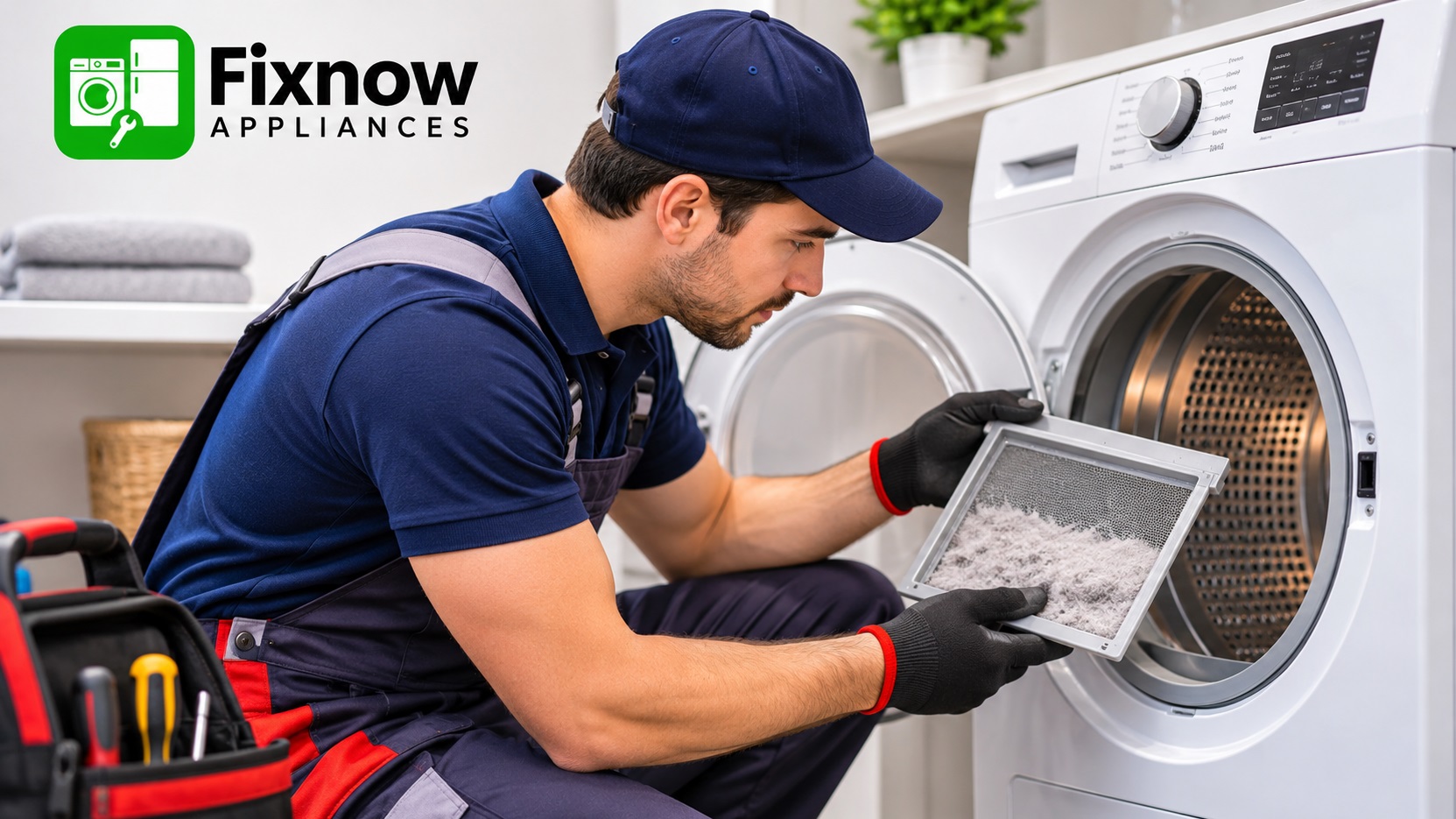
The lint filter captures fibres released from clothing during drying.
When the filter becomes clogged, airflow can be reduced and drying performance may suffer.
A damaged or incorrectly installed filter can also affect how the dryer operates.
What should you do?
Remove lint from the filter after every load.
Check that the filter is correctly positioned.
Follow the manufacturer's instructions for periodic filter cleaning.
Replace a damaged filter with a compatible part.
Cleaning the lint filter is a simple maintenance task, but it should never be treated as a substitute for inspecting a restricted exhaust vent.
Many modern dryers use moisture sensors to determine when clothes are sufficiently dry.
If these sensors become dirty, damaged or inaccurate, the dryer may end the cycle too early or produce inconsistent drying results.
Common symptoms include:
Dryer stopping while clothes are still damp.
Automatic cycles ending earlier than expected.
Different results between automatic and timed cycles.
Drying performance changing from one load to another.
Depending on the model, cleaning accessible sensor bars according to the manufacturer's instructions may help.
If the problem continues, a technician can inspect the sensor and related control system.
Gas dryers use a burner system to generate heat. If the ignition system or another gas-related component develops a fault, the appliance may tumble without producing sufficient heat.
Possible causes include:
Faulty igniter.
Defective flame sensor.
Gas valve coil problems.
Temperature-control faults.
Burner-related issues.
These components require professional inspection.
Do not attempt to open the gas system, adjust gas valves or repair ignition components yourself.
If you smell gas, stop using the dryer. Do not operate electrical switches, create flames or attempt to locate the leak. Leave the building and contact your gas utility or emergency services from a safe location outside.
Proper tumbling helps separate clothes and expose them to warm air.
If the drum does not rotate correctly, clothes may remain in a pile and dry unevenly.
Possible causes include:
Worn drive belt.
Motor problems.
Damaged drum rollers.
Faulty idler pulley.
Mechanical obstruction.
You may hear unusual noises, notice intermittent drum movement or find that the dryer runs without tumbling.
Internal mechanical repairs should be handled by a qualified technician.
Before arranging a repair appointment, perform a few basic checks that do not require opening the appliance.
| What to check | Why it matters |
|---|---|
| Lint filter | A clogged filter can restrict airflow |
| Load size | Overloading can prevent proper drying |
| Drying cycle | Incorrect settings may produce different results |
| Vent area | Visible restrictions can affect exhaust airflow |
| Moisture sensor | Dirt on accessible sensor bars may affect automatic cycles |
| Error codes | Warning messages can help identify the problem |
Always follow your dryer's operating manual.
Do not remove panels, test live electrical connections or attempt internal gas and heating-system repairs.
If the dryer produces smoke, sparks, a burning smell or unusual overheating, stop using it and arrange professional inspection.
Basic checks can resolve some operating issues, but persistent drying problems often indicate a component or ventilation fault.
Consider professional dryer repair if:
Clothes remain damp after multiple normal cycles.
The dryer runs but produces no heat.
The appliance repeatedly stops before completing a cycle.
Drying time has increased significantly.
The drum is not rotating properly.
You hear unusual grinding, squealing or banging sounds.
The dryer overheats or shuts down unexpectedly.
Error codes continue appearing.
The vent system appears damaged or severely restricted.
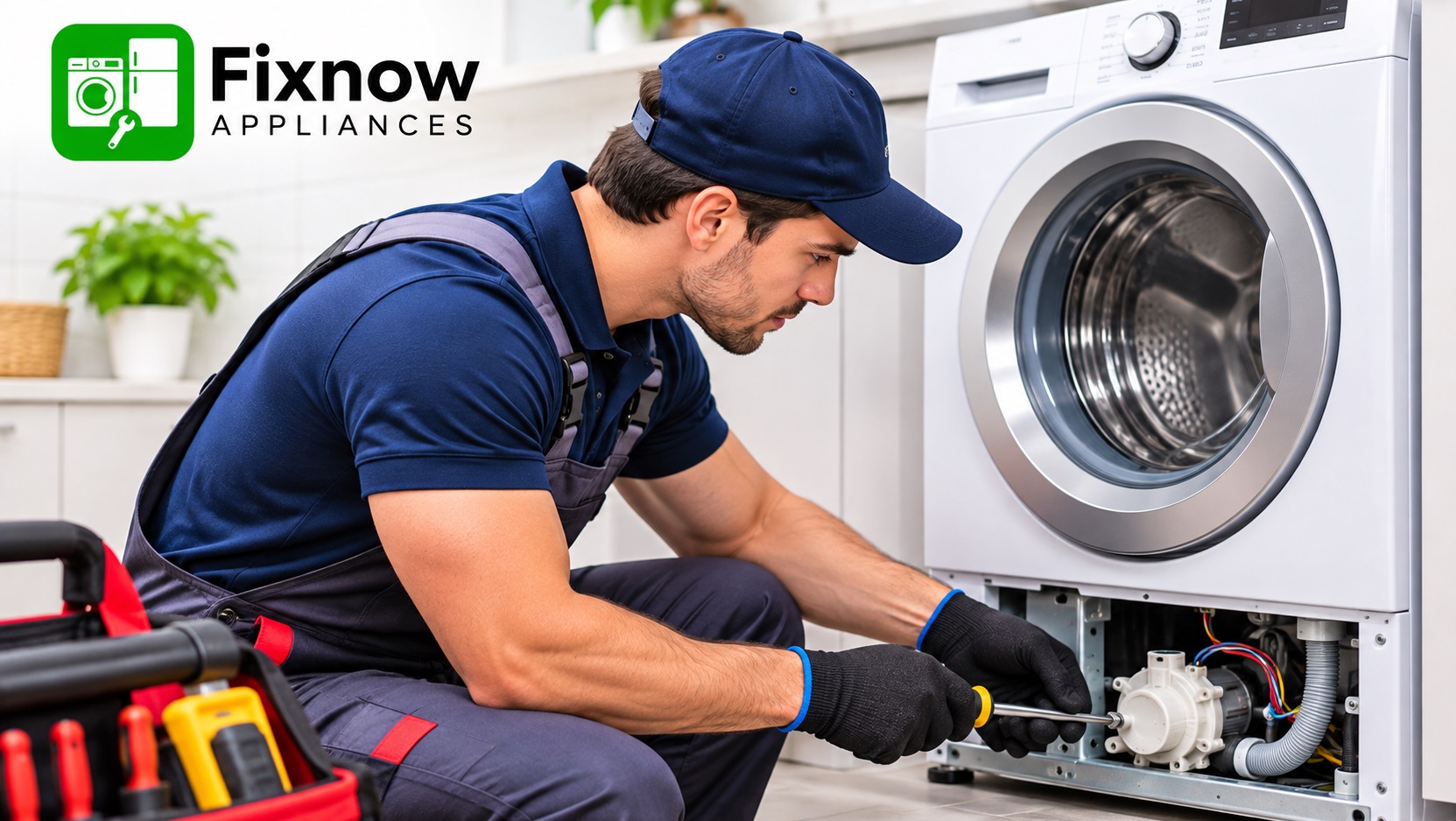
A technician can inspect the heating system, airflow, sensors, electrical components and mechanical parts to identify the underlying cause.
The cost of dryer repair in Calgary depends on the appliance type, brand, model and component that requires attention.
A simple repair may be relatively straightforward, while a heating-system or motor-related issue may involve more labour and replacement-part costs.
Several factors influence the final estimate:
| Repair type | Factors affecting cost |
|---|---|
| Heating element | Part compatibility and replacement work |
| Thermostat or sensor | Testing and component requirements |
| Ventilation issue | Accessibility and extent of blockage |
| Drive belt | Part availability and labour |
| Drum motor | Diagnostic complexity and replacement requirements |
| Gas ignition system | Ignition component and related testing |
| Control board | Model-specific parts and programming requirements |
Before approving a repair, ask for a clear estimate explaining the diagnosis, replacement parts, labour and any applicable service charges.
Comparing the complete repair estimate is more useful than choosing a service based only on the lowest advertised price.
A dryer that leaves clothes damp does not automatically need replacement.
In many situations, replacing a faulty component or correcting an airflow problem may restore normal performance.
Consider these factors before deciding:
Age of the dryer: A relatively new appliance in good condition may be worth repairing.
Repair cost: Compare the estimated repair cost with the price of a suitable replacement.
Overall condition: If the dryer has multiple recurring problems, replacement may be more practical.
Parts availability: Older models may have limited replacement-part options.
Energy performance: A newer dryer may offer improved efficiency depending on its design and usage.
A professional assessment can help you understand whether repair or replacement is the more sensible option.
Regular maintenance can help reduce common dryer problems and support reliable performance.
Follow these practical habits:
Clean the lint filter after every load.
Avoid overloading the drum.
Separate heavy and lightweight laundry when appropriate.
Check accessible vent areas for visible restrictions.
Keep the area around the dryer clear.
Follow the manufacturer's maintenance instructions.
Pay attention to unusual noises, smells and changes in drying time.
Arrange professional inspection if airflow or heating problems persist.
If your dryer uses an exhaust vent, make sure the ventilation system is maintained according to the manufacturer's requirements and applicable safety guidance.
A dryer that leaves clothes damp can be frustrating, particularly when the problem keeps returning despite repeated cycles.
Identifying the underlying cause is important. The issue could involve restricted airflow, a heating element, a moisture sensor, a thermostat or a mechanical component.
FixNow Appliances provides appliance repair assistance for homeowners experiencing common household appliance problems.
If your dryer is not heating, taking too long to dry clothes or showing signs of a mechanical fault, keep the appliance brand, model number and symptoms ready when contacting the service team.
If you are in Calgary and need dryer repair assistance, contact FixNow Appliances to discuss the problem and confirm current service availability in your area.
Call: (587) 962-2861
Website: https://fixnowappliances.ca/
Common reasons include restricted airflow, a blocked vent, a faulty heating element, a temperature-control problem, overloading or a moisture sensor fault.
The issue may involve the heating element, thermostat, electrical supply or control system in an electric dryer. Gas dryers may have an ignition or burner-related fault.
Yes. Restricted airflow can prevent moisture from escaping efficiently, increasing drying time and potentially creating an overheating or fire hazard.
Clean the lint filter after every load. Follow the manufacturer's instructions for periodic cleaning of the filter housing and ventilation system.
A faulty moisture sensor, incorrect cycle setting, restricted airflow or control-system issue may cause the dryer to stop too early.
Not always. Longer drying times can indicate restricted airflow or another fault. If you notice overheating, smoke or a burning smell, stop using the appliance and arrange an inspection.
It depends on the fault, appliance age, parts availability and repair estimate. A professional diagnosis can help you compare repair and replacement costs.
You can contact FixNow Appliances at (587) 962-2861 to discuss your dryer problem and confirm service availability in your area.
Leave A Reply
Your email address will not be published. Required fields are marked *