-
-
-
Edmonton, Alberta, Canada
Mon – Sat: 8:00 AM – 7:00 PM
Please tap the button to book your appliance repair on WhatsApp.
Booking Enquiry on WhatsApp
FixNow Appliances provides fast, professional appliance repair across Edmonton, Sherwood Park, Beaumont, St. Albert, Stony Plain and nearby areas. Our licensed technicians repair fridges, washers, dryers, dishwashers, ovens, stoves and more using OEM parts and manufacturer-approved methods.
06
Nov
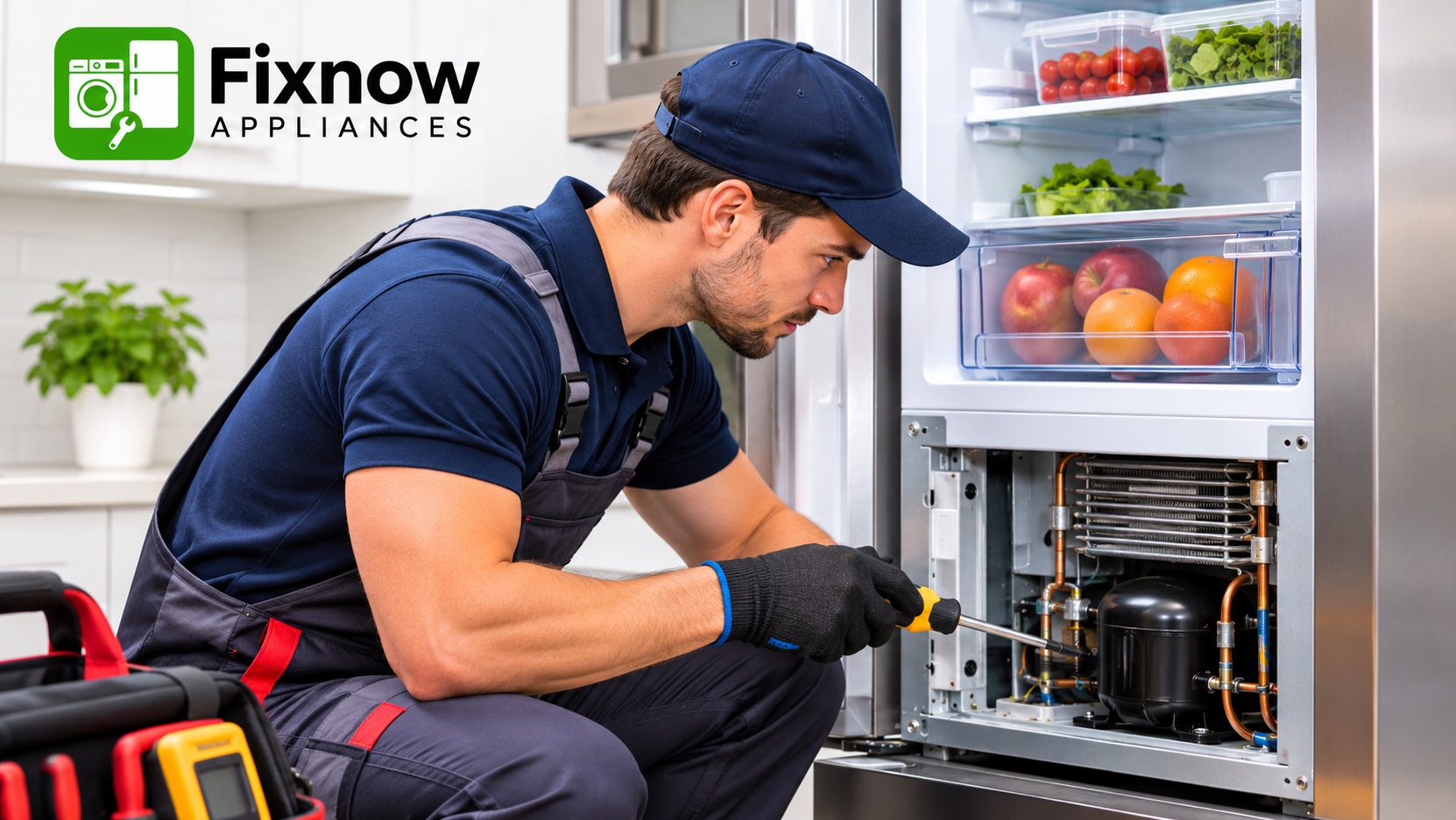
A refrigerator is one of the most important appliances in any home. It protects groceries, keeps everyday ingredients fresh and helps prevent food from spoiling. When it suddenly stops cooling, even a minor issue can quickly become a serious household inconvenience.
If your fridge is not cooling in Calgary, the problem could involve restricted airflow, dirty condenser coils, a faulty evaporator fan, temperature-control issues or a failing compressor.
However, not every refrigerator cooling problem requires an expensive component replacement. Some issues may be related to incorrect settings, blocked air vents or poor ventilation around the appliance.
Understanding the symptoms can help you identify what might be wrong and decide when professional refrigerator repair is necessary.
This guide explains the common reasons refrigerators stop cooling, safe checks homeowners can perform and when to contact a refrigerator repair technician in Calgary.
A refrigerator works by transferring heat from inside the cabinet to the surrounding environment. Its cooling system relies on several components working together, including the compressor, evaporator, condenser, fans and temperature controls.
If one of these components stops functioning correctly, the refrigerator may struggle to maintain the required temperature.
Common symptoms include:
Refrigerator compartment feels warmer than usual.
Milk and other groceries are not staying cold.
Freezer works but the fridge section does not.
Ice cream becomes soft or partially melts.
Food spoils faster than expected.
Refrigerator runs continuously.
Unusual clicking, buzzing or humming sounds occur.
The first step is to identify whether the refrigerator and freezer are both affected or whether only one compartment has stopped cooling.
Sometimes the cause of a cooling problem is simpler than homeowners expect.
Temperature settings may accidentally change during cleaning, loading groceries or adjusting the control panel.
If the refrigerator is set too warm, it may not maintain a suitable temperature for food storage.
What to check:
Confirm the refrigerator temperature setting.
Check whether the control panel displays an error.
Review the manufacturer's recommended temperature settings.
Allow sufficient time for the refrigerator to stabilise after changing settings.
As a general food-safety target, keep your refrigerator at 4°C or colder and your freezer at approximately -18°C.
Use an appliance thermometer to check the actual temperature rather than relying entirely on the display.
Condenser coils help release heat from the refrigeration system.
Over time, dust, pet hair and debris can accumulate around accessible condenser coils. This can reduce heat transfer efficiency and make the refrigerator work harder to maintain its temperature.
Common warning signs include:
Refrigerator running more frequently than usual.
Cooling performance gradually declining.
Appliance becoming unusually warm around certain exterior areas.
Higher energy consumption.
What can you safely check?
If your refrigerator manual permits, inspect the accessible condenser area for dust and debris.
Before cleaning, disconnect the appliance from power and follow the manufacturer's instructions. Use only an appropriate cleaning brush or vacuum attachment where recommended.
Do not remove sealed system components or attempt to access internal electrical parts.
If cleaning does not improve cooling, a technician may need to inspect the condenser fan, refrigerant system or other components.
The evaporator fan circulates cold air through the refrigerator and freezer compartments.
If the fan stops working properly, cold air may not move through the appliance as intended.
This can create a situation where the freezer remains cold while the refrigerator compartment becomes warmer.
Possible symptoms include:
Freezer appears to work normally.
Refrigerator section is not cooling sufficiently.
Airflow from refrigerator vents feels weak.
Unusual noises come from inside the appliance.
Cooling performance changes unexpectedly.
A faulty fan motor, ice accumulation or an obstruction may be responsible.
Avoid removing internal panels to inspect the fan yourself. A technician can determine whether the problem involves the fan motor, wiring or defrost system.
The rubber gasket around the refrigerator door helps maintain an airtight seal.
When the gasket becomes cracked, loose or damaged, warm air can enter the refrigerator while cold air escapes.
This forces the cooling system to work harder and may affect food storage temperatures.
Look for these warning signs:
Door does not close properly.
Visible cracks or gaps around the gasket.
Moisture or condensation near the door.
Refrigerator running more frequently.
Cooling performance declining.
Check that food containers are not preventing the door from closing completely.
You can also visually inspect the accessible gasket for damage. If it appears worn or deformed, professional assessment may help determine whether replacement is necessary.
The thermostat or temperature sensor helps monitor the internal temperature and regulate cooling activity.
If the sensor provides inaccurate readings, the refrigerator may not activate its cooling system at the appropriate time.
Common symptoms include:
Refrigerator becoming warmer than the selected setting.
Cooling switching on and off unexpectedly.
Temperature changing without adjustment.
Food freezing in some areas while other sections remain warm.
Inconsistent cooling performance.
Modern refrigerators may use electronic sensors and control systems rather than traditional mechanical thermostats.
A technician can test the relevant components and identify whether the sensor, thermostat or control board is responsible.
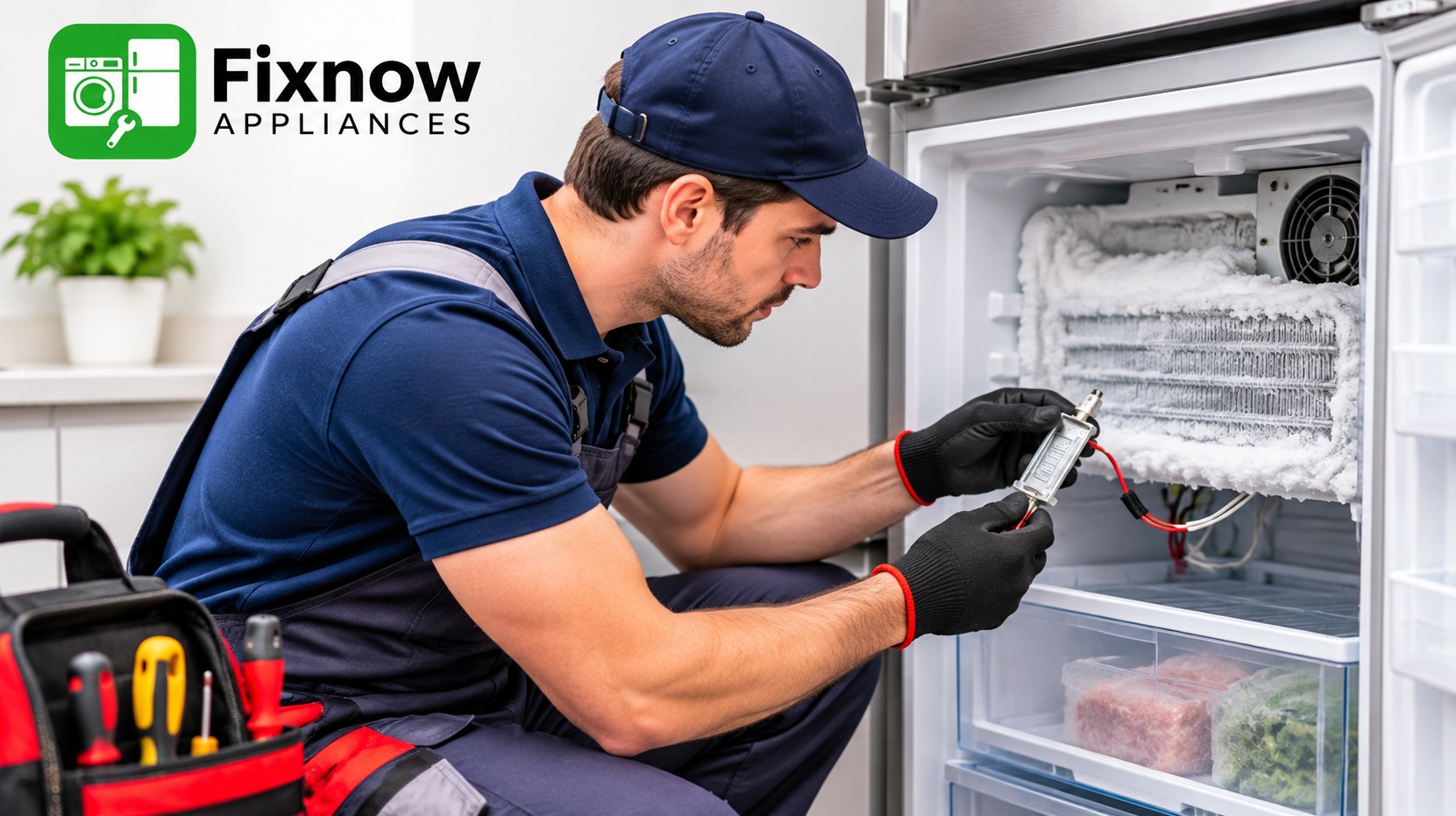
Many modern refrigerators use an automatic defrost system to prevent excessive frost from accumulating around the evaporator.
When this system fails, ice can build up and restrict airflow.
Possible causes include:
Faulty defrost heater.
Defective defrost thermostat or sensor.
Control-board problems.
Defrost timer issues in applicable models.
Warning signs include:
Thick frost accumulating inside the freezer.
Refrigerator compartment becoming warmer.
Weak airflow from internal vents.
Cooling performance gradually declining.
Do not use sharp objects, knives or heating devices to remove ice. This can damage internal components or create a safety hazard.
If excessive frost returns repeatedly, arrange professional refrigerator repair.
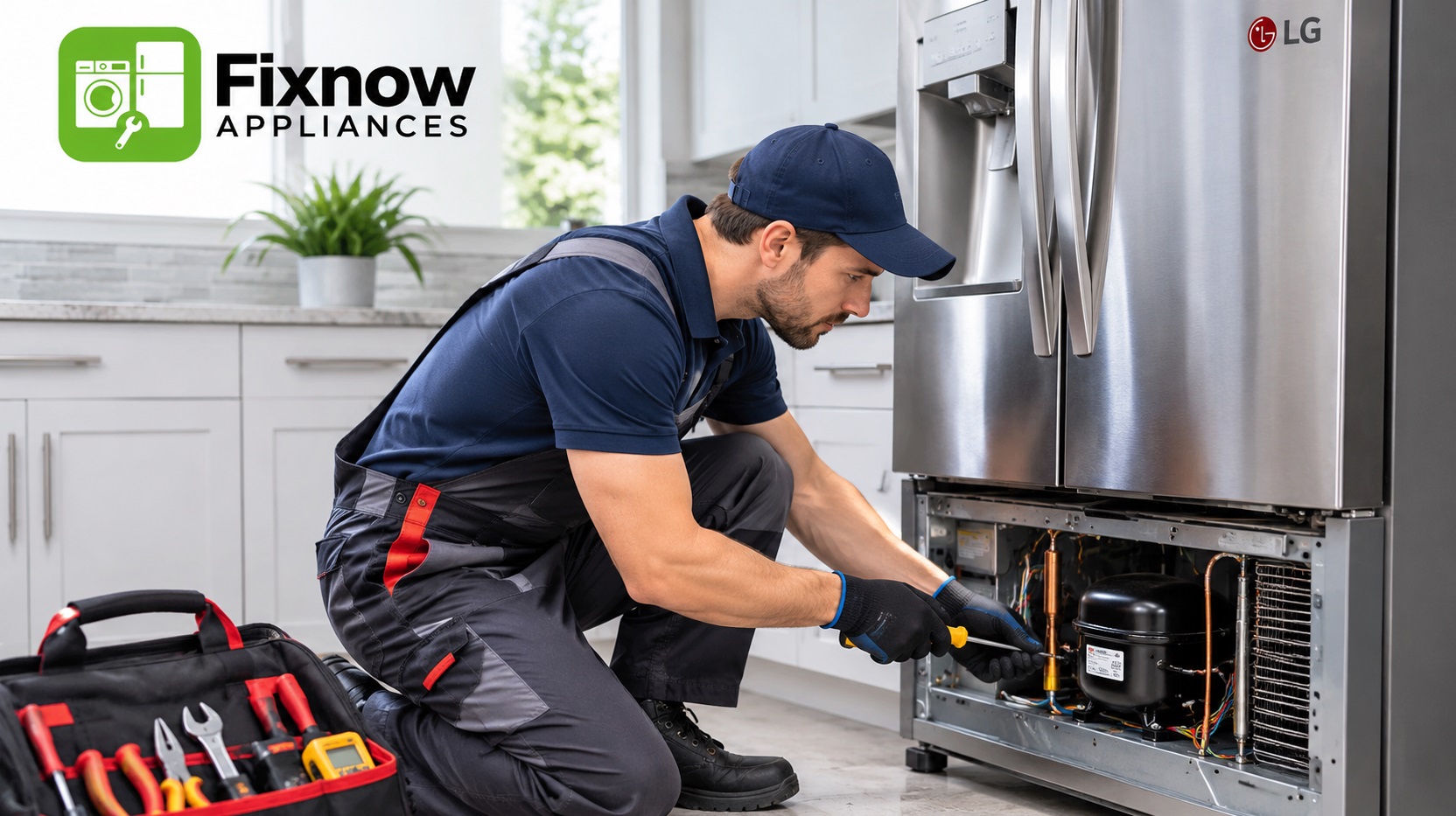
The compressor is a central component of the refrigerator's sealed cooling system. It helps circulate refrigerant through the system so heat can be removed from the appliance.
When the compressor develops a fault, the refrigerator may lose its ability to cool effectively.
Possible warning signs include:
Refrigerator and freezer both becoming warm.
Repeated clicking sounds.
Compressor attempting to start but switching off.
Cooling system running without achieving the expected temperature.
Unusual changes in appliance noise.
Compressor problems can be complex and may involve electrical starting components or sealed-system faults.
Do not attempt compressor testing or refrigerant-system repairs yourself. These tasks require appropriate technical equipment and qualifications.
This is a common refrigerator problem and can be confusing for homeowners.
If the freezer is cold but the refrigerator compartment is warm, the cooling system may still be operating, but cold air may not be reaching the fresh-food section properly.
Possible causes include:
Evaporator fan failure.
Blocked air vents.
Excessive frost buildup.
Damaged air damper.
Defrost-system malfunction.
Make sure food containers are not blocking the refrigerator's internal air vents.
Check that the door closes properly and review the temperature settings.
If the refrigerator compartment continues warming while the freezer remains cold, a technician should inspect the airflow and defrost systems.
A refrigerator needs adequate space for cold air to circulate.
When shelves are packed too tightly, airflow can become restricted. This may create uneven temperatures, especially around areas where air enters the compartment.
Signs of poor airflow include:
Some food items remain colder than others.
Certain shelves feel warmer.
Cooling takes longer after grocery shopping.
Air vents are covered by containers or packaging.
Avoid overfilling the refrigerator and leave space around internal air vents.
After loading a large amount of groceries, allow the appliance time to return to its normal operating temperature.
Before arranging refrigerator repair in Calgary, there are several basic checks you can perform without opening the appliance.
| What to check | Why it matters |
|---|---|
| Temperature settings | Incorrect settings may affect cooling |
| Door closure | Poor sealing allows warm air inside |
| Door gasket | Damaged seals reduce cooling efficiency |
| Air vents | Blocked vents restrict cold-air circulation |
| Food arrangement | Overloading can interfere with airflow |
| Condenser area | Dust accumulation may affect heat release |
| Error codes | Warning messages can help identify faults |
Always follow the manufacturer's instructions.
Do not remove electrical panels, handle exposed wiring, open refrigerant lines or attempt internal compressor repairs.
If a breaker trips repeatedly, leave it off and arrange professional inspection.
A refrigerator that is not maintaining a safe temperature requires prompt attention, particularly when it contains perishable food.
Follow these practical steps:
Keep the doors closed: Opening the refrigerator repeatedly allows warm air to enter and makes it harder to maintain the remaining cold temperature.
Check the actual temperature: Use an appliance thermometer to determine whether the refrigerator is maintaining 4°C or colder.
Protect perishable food: Transfer vulnerable food to another properly operating refrigerator or suitable cold storage when necessary.
Avoid repeatedly switching the appliance on and off: If the refrigerator shows signs of an electrical fault, follow the manufacturer's safety instructions and arrange inspection.
Record unusual symptoms: Note any clicking, buzzing, error codes or changes in cooling performance.
For food safety, do not rely on smell or appearance alone to determine whether perishable food is safe to eat. Follow current food-safety guidance when deciding what to keep or discard.
Some refrigerator issues can be identified through basic checks, but persistent cooling problems generally require professional diagnosis.
Consider booking refrigerator repair if:
Refrigerator temperature remains above the recommended level.
Freezer and refrigerator sections are both warming up.
Freezer works but refrigerator does not cool.
Compressor repeatedly clicks or fails to start.
Fan noises become unusual.
Excessive frost keeps returning.
Refrigerator leaks water.
Temperature changes unexpectedly.
Error codes continue appearing.
Cooling performance does not improve after basic checks.
A technician can inspect the cooling system, airflow, electrical components, temperature sensors and other relevant parts.
Early diagnosis may help prevent additional damage and reduce the risk of food spoilage.
The cost of refrigerator repair in Calgary depends on the appliance brand, model, fault and replacement parts required.
Some repairs involve straightforward component replacement, while others require more extensive diagnosis and specialised work.
Common cost factors include:
| Repair type | Factors affecting cost |
|---|---|
| Evaporator fan | Motor type and replacement requirements |
| Condenser fan | Part availability and labour |
| Door gasket | Model compatibility and installation |
| Temperature sensor | Testing and replacement |
| Defrost system | Heater, sensor or control component |
| Compressor | Component cost and sealed-system work |
| Electronic control board | Model-specific parts and diagnosis |
Before approving any repair, request a clear estimate covering the diagnosis, parts, labour and applicable charges.
Comparing the full repair scope is more useful than selecting a service provider based only on the lowest advertised price.
A refrigerator that stops cooling does not automatically need replacement.
In many cases, a faulty fan, sensor, door gasket or other replaceable component may be responsible.
However, the right decision depends on the appliance's age, condition and repair estimate.
Repair may be a practical option when:
The refrigerator is relatively new.
The appliance is otherwise in good condition.
The problem is limited to a replaceable component.
Suitable replacement parts are available.
The estimated repair cost is reasonable.
Replacement may be worth considering when:
The appliance has repeated major failures.
Compressor or sealed-system repairs are very expensive.
Essential replacement parts are unavailable.
The refrigerator has significant overall wear.
Repair costs approach the price of a suitable replacement.
A professional assessment can help you compare the financial and practical benefits of both options.
Regular maintenance can help maintain refrigerator performance and identify potential problems before they become serious.
Follow these practical habits:
Keep the refrigerator at 4°C or colder.
Maintain the freezer at approximately -18°C.
Clean the interior regularly.
Avoid blocking internal air vents.
Check door seals for visible damage.
Keep the appliance properly ventilated.
Clean accessible condenser areas according to the manual.
Avoid overloading shelves.
Pay attention to unusual sounds or temperature changes.
Arrange professional inspection when cooling performance declines.
These simple habits can help support reliable operation and reduce avoidable appliance problems.
A refrigerator that stops cooling can put groceries at risk and disrupt your household routine. Whether the issue involves a faulty fan, temperature sensor, defrost system or compressor, identifying the underlying cause is essential.
FixNow Appliances provides appliance repair assistance for homeowners experiencing common household appliance problems.
If your refrigerator is not cooling, your freezer is not maintaining temperature or your appliance is making unusual noises, keep the brand, model number and symptoms ready when contacting the service team.
If you are in Calgary and need refrigerator repair assistance, contact FixNow Appliances to discuss the problem and confirm current service availability in your area.
Call: (587) 962-2861
Website: https://fixnowappliances.ca/
Possible causes include dirty condenser coils, a faulty evaporator fan, a temperature sensor problem, restricted airflow or a compressor-related fault. A technician can identify the exact cause.
This may happen when cold air cannot circulate properly between the freezer and refrigerator compartments. Possible causes include a blocked vent, faulty evaporator fan, excessive frost or a damaged air damper.
For food safety, keep your refrigerator at 4°C or colder. The freezer should generally be maintained at approximately -18°C.
Dirty condenser coils can reduce heat-transfer efficiency and make cooling less effective. Cleaning accessible coils according to the manufacturer's instructions may help.
Warning signs may include repeated clicking, difficulty starting, unusual operating noises and poor cooling in both compartments. These symptoms can also have other causes, so professional diagnosis is important.
If the appliance is not maintaining a safe food-storage temperature, move perishable food to suitable cold storage. Arrange inspection promptly, particularly if the refrigerator shows signs of an electrical fault.
Allow sufficient time for the appliance to stabilise, following the manufacturer's guidance. Avoid repeatedly changing the settings while waiting for the temperature to adjust.
You can contact FixNow Appliances at (587) 962-2861 to discuss your refrigerator problem and confirm service availability in your area.
Leave A Reply
Your email address will not be published. Required fields are marked *