-
-
-
Edmonton, Alberta, Canada
Mon – Sat: 8:00 AM – 7:00 PM
Please tap the button to book your appliance repair on WhatsApp.
Booking Enquiry on WhatsApp
FixNow Appliances provides fast, professional appliance repair across Edmonton, Sherwood Park, Beaumont, St. Albert, Stony Plain and nearby areas. Our licensed technicians repair fridges, washers, dryers, dishwashers, ovens, stoves and more using OEM parts and manufacturer-approved methods.
16
Nov
Most household appliances provide years of reliable service without demanding much attention. But when a refrigerator stops cooling, a washing machine starts flooding the laundry room or a dryer produces a burning smell, the situation can quickly become more serious.
Not every appliance breakdown is an emergency. Some problems can wait for a scheduled repair appointment, while others require immediate safety action to protect your home and family.
The difference matters.
A leaking dishwasher may cause flooring damage. A faulty electrical connection can create a fire or shock hazard. A gas smell near a stove should never be treated as an ordinary appliance malfunction.
For Calgary homeowners, understanding these warning signs can help prevent further damage and ensure the right response.
This guide from FixNow Appliances explains which appliance faults need urgent attention, what to do when they occur and when to arrange professional appliance repair.
An appliance problem becomes urgent when it creates an immediate risk to people, property, food safety or the home's essential services.
Some faults require emergency safety action before an appliance technician is contacted.
Smell of natural gas near a stove or gas appliance.
Smoke, sparks or flames coming from an appliance.
Burning smells accompanied by electrical symptoms.
Water leaking near electrical outlets or wiring.
Repeated electrical breaker trips.
Severe overheating or unusual electrical noises.
Carbon monoxide alarm activation or possible exposure symptoms.
Refrigerator unable to maintain a safe temperature.
Freezer no longer keeping food frozen.
Washing machine leaking water.
Dryer not heating or taking unusually long to dry.
Dishwasher overflowing or failing to drain.
Oven not maintaining its temperature.
Stove burner or ignition malfunction without a gas leak.
The important distinction is that immediate danger requires emergency safety action, while other appliance faults may need prompt professional repair.
A gas smell is one of the most serious warning signs involving household appliances.
Natural gas is commonly given a distinctive rotten-egg-like odour to help people detect leaks.
If you smell gas near a stove, oven or other gas appliance, do not attempt to investigate the source yourself.
Leave the building immediately and take other occupants and pets with you.
Do not light matches, candles or cigarettes.
Do not operate electrical switches, appliances or plugs.
Do not use a phone inside the building.
Once safely outside and away from the area, call your gas utility or 911.
Do not re-enter until authorities or the gas utility confirm it is safe.
Do not attempt to repair the appliance or restart its ignition system.
A gas leak is not a routine appliance repair appointment. The immediate priority is evacuation and professional emergency response.
A burning smell from a refrigerator, dryer, oven, dishwasher or washing machine should never be ignored.
It may indicate overheating, damaged wiring, a failing motor or another electrical problem.
Burning plastic or rubber smell.
Smoke coming from the appliance.
Sparks near a plug or electrical connection.
Unusually hot power cord or outlet.
Repeated circuit breaker trips.
Buzzing or crackling electrical sounds.
Damaged electrical wiring.
Overheating motor.
Faulty heating element.
Loose electrical connection.
Damaged power cord.
Internal component failure.
Stop using the appliance.
If there is smoke or fire, evacuate if necessary and call 911. Do not use water on an electrical fire.
If there is no immediate danger and the power connection can be safely isolated without touching a hot, damaged or wet area, switch off the supply. Otherwise, stay away and seek qualified assistance.
Do not repeatedly reset a circuit breaker that keeps tripping.
The City of Calgary identifies burning or rubbery odours from appliances, warm or discoloured outlets and recurring breaker trips as warning signs requiring electrical attention.
A refrigerator that stops cooling can become a household priority because perishable food depends on consistent temperatures.
A refrigerator should generally maintain 4°C (40°F) or below, while a freezer should remain at -18°C (0°F) or below.
Refrigerator compartment becoming warm.
Freezer no longer freezing food.
Milk and other perishables becoming warm.
Temperature fluctuating unexpectedly.
Compressor running continuously.
Unusual clicking or humming sounds.
Faulty evaporator fan.
Dirty condenser coils.
Damaged door gasket.
Defrost system failure.
Temperature sensor problem.
Compressor or start relay fault.
Keep refrigerator and freezer doors closed.
Check the temperature using an appliance thermometer.
Move vulnerable food to a working refrigerator or cooler with ice packs.
Avoid repeatedly changing temperature settings.
Record any unusual noises or error codes.
Arrange professional refrigerator repair if cooling does not return.
Health Canada's guidance recommends keeping refrigerators at or below 4°C and freezers at or below -18°C. During a power outage, an unopened refrigerator generally keeps food cold for about four hours. These are useful food-safety reference points, not a guarantee for every mechanical failure.
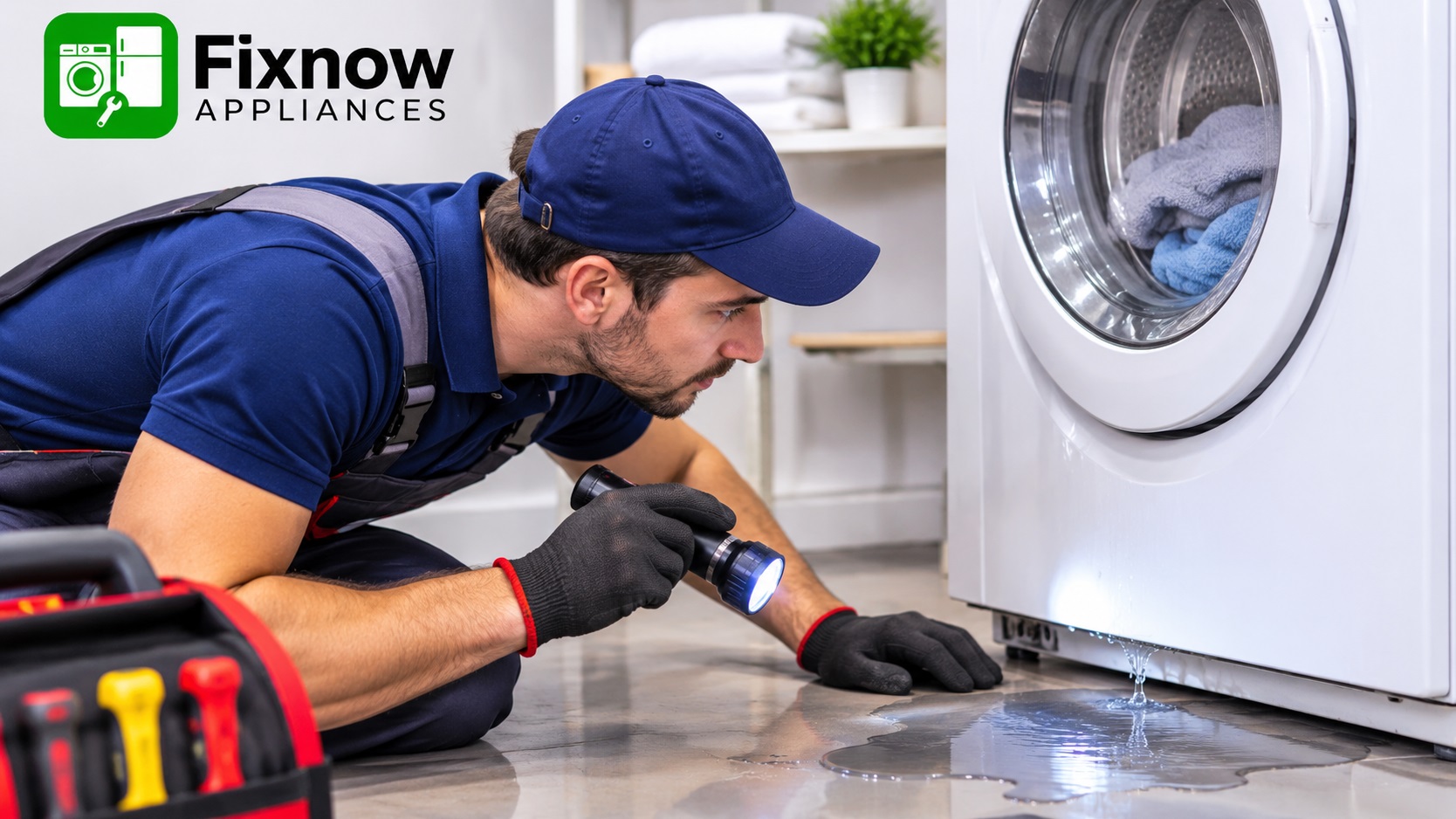
A washing machine leak can quickly affect laundry-room flooring, nearby cabinets and lower-level ceilings.
A small leak may come from a loose hose, while a larger leak may indicate a damaged pump, seal or internal connection.
Water collecting underneath the washer.
Leakage during the spin cycle.
Water escaping from the door.
Drain hose dripping.
Water remaining inside the drum.
Unusual vibration alongside leakage.
Damaged inlet hose.
Loose drain connection.
Worn door gasket.
Faulty drain pump.
Blocked filter.
Overfilling problem.
Stop the washing cycle if it is safe.
Turn off the water supply if the valves are safely accessible from a dry area.
Keep people away from wet flooring.
Do not touch wet electrical plugs or connections.
Arrange professional inspection if the leak continues.
If water is near electrical equipment, do not enter the wet area or attempt to unplug the washer. Keep away and seek appropriate electrical assistance.
A dryer that becomes unusually hot or produces a burning smell needs prompt attention.
Lint accumulation in the lint screen and exhaust system can create a fire hazard.
Burning or smoky smell.
Dryer exterior becoming unusually hot.
Clothes taking multiple cycles to dry.
Dryer stopping unexpectedly.
Excessive heat around the exhaust.
Unusual rattling or grinding noises.
Restricted exhaust ventilation.
Excessive lint buildup.
Faulty thermostat.
Damaged heating element.
Motor problem.
Electrical fault.
Stop the dryer.
Do not continue running additional cycles.
Allow the appliance to cool if there is no immediate fire danger.
Clean the user-accessible lint filter according to the manual.
Do not dismantle the exhaust or internal heating system without appropriate training.
Arrange professional inspection if overheating or burning smells persist.
Dryer lint and exhaust-pipe buildup can ignite at high temperatures, making ventilation maintenance an important fire-prevention measure.
A dishwasher leak can become urgent when water spreads across the kitchen floor or reaches electrical outlets and nearby appliances.
Water escaping from the door.
Water pooling underneath the dishwasher.
Dishwasher overflowing.
Drainage failure.
Water leaking during a wash cycle.
Unusual pump noises.
Damaged door gasket.
Blocked drain filter.
Faulty drain pump.
Loose water inlet connection.
Defective water inlet valve.
Overfilling or control problem.
Stop the dishwasher if it is safe to use its controls.
If water is near electrical connections, stay away from the affected area. Do not touch wet plugs, switches or wiring.
If the water supply valve is safely accessible from a dry location, turn it off. Arrange professional inspection before using the dishwasher again.
Ovens and stoves combine high temperatures with electrical or gas systems. A fault can affect both cooking performance and household safety.
Sparks or smoke.
Burning smell.
Controls becoming unusually hot.
Repeated breaker trips.
Heating element visibly damaged.
Oven overheating unexpectedly.
Electric burner failing with unusual electrical sounds.
Damaged heating element.
Faulty wiring.
Defective control board.
Damaged switch.
Loose electrical connection.
Temperature control failure.
Stop using the appliance if you notice smoke, sparks or an electrical burning smell.
Do not touch damaged elements or attempt internal electrical repairs.
If there is a fire, evacuate and call emergency services. For a non-fire electrical fault, arrange inspection by a qualified professional before using the appliance again.
A freezer that stops maintaining its temperature can put stored food at risk.
This is especially important when the appliance is full of meat, seafood, prepared meals and other frozen products.
Frozen food beginning to soften.
Ice cream becoming unusually soft.
Temperature display showing a higher reading.
Excessive frost buildup.
Compressor or fan making unusual noises.
Faulty evaporator fan.
Defrost system failure.
Damaged door gasket.
Temperature sensor malfunction.
Compressor or cooling-system problem.
Keep the freezer door closed and monitor its temperature.
If necessary, transfer food to another functioning freezer or a suitable insulated cooler.
Health Canada advises that during a power outage, a full freezer may keep food frozen for about 48 hours and a half-full freezer for about 24 hours when the door remains closed. A mechanical failure may behave differently, so monitor the actual temperature rather than relying only on elapsed time.
Some household appliances use natural gas or other fuels. If combustion equipment is malfunctioning, carbon monoxide may become a serious concern.
Carbon monoxide is colourless and odourless. You cannot reliably detect it by smell.
Carbon monoxide alarm sounding.
Headache.
Dizziness.
Nausea.
Weakness or unusual fatigue.
Multiple occupants feeling unwell at the same time.
If a carbon monoxide alarm activates or you suspect exposure:
Leave the building immediately.
Take everyone outside, including pets.
Call 911 from a safe location.
Do not re-enter until emergency responders say it is safe.
Do not assume the alarm is faulty or attempt to repair a fuel-burning appliance yourself.
Not every appliance fault requires an emergency response.
Some problems are inconvenient but may not present an immediate safety risk, provided the appliance is switched off or used only as directed by the manufacturer.
Examples include:
Refrigerator interior light not working while cooling remains normal.
Dishwasher leaving minor residue on dishes.
Washing machine display buttons responding slowly.
Oven preheating more slowly than usual without other warning signs.
Ice maker producing fewer ice cubes.
Dryer making a mild, intermittent noise without overheating.
Microwave turntable not rotating.
These issues still deserve attention, especially if performance continues to decline.
However, if a fault is accompanied by smoke, sparks, gas odour, water near electrical components or repeated breaker trips, treat the situation as a safety concern rather than an ordinary repair request.
When an appliance develops a serious fault, use the following response guide.
| Warning sign | Immediate response |
|---|---|
| Smell of gas | Evacuate; call gas utility or 911 from outside |
| Smoke or flames | Evacuate and call 911 |
| Electrical sparks | Stay away; seek emergency or qualified electrical assistance |
| Water near electrical connections | Keep away; do not touch wet equipment |
| Refrigerator not cooling | Protect food and arrange prompt repair |
| Washing machine leaking | Stop use; isolate water only if safely accessible |
| Dryer overheating | Stop use; call for inspection |
| Carbon monoxide alarm | Evacuate and call 911 |
The priority is always personal safety. Appliance repair should begin only after immediate hazards have been addressed.
Once the immediate safety issue is under control, preparing a few details can make the repair process more efficient.
Mention whether the problem involves a refrigerator, freezer, washer, dryer, dishwasher, oven or stove.
The model number is usually printed on a label inside the appliance door, around the frame or in another location specified by the manufacturer.
Instead of saying only that the appliance is not working, explain the exact symptoms.
For example:
Refrigerator runs but does not cool.
Washing machine leaks during spinning.
Dryer stops after producing a burning smell.
Dishwasher overflows during filling.
Oven trips the circuit breaker.
Stove burner fails to ignite.
Tell the service provider if you noticed smoke, unusual heat, electrical interruptions, water leakage or error codes.
If gas or carbon monoxide is involved, contact the appropriate emergency service first.
Mention whether the fault happened suddenly or developed over several days.
Before arranging the visit, ask about:
Appointment availability.
Diagnostic arrangements.
Expected arrival window.
Repair process.
Compatible replacement parts.
Applicable warranty terms.
Same-day or urgent service depends on the technician's availability, location and nature of the fault. Confirm the appointment directly rather than assuming immediate availability.
An appliance emergency does not automatically mean the appliance must be replaced.
Many faults involve individual components that may be repairable.
For example:
A refrigerator may need a fan or sensor replacement.
A washing machine may have a damaged drain pump.
A dryer may require a heating-system component.
A dishwasher may need a new inlet valve.
An oven may have a faulty heating element.
However, extensive electrical damage, major structural failure or repeated breakdowns may make replacement worth considering.
Before making a decision, consider:
Age of the appliance.
Overall condition.
Type and extent of damage.
Availability of compatible parts.
Previous repair history.
Expected reliability after repair.
A professional diagnosis can help determine whether repair or replacement is the more practical option.
Preventive maintenance cannot eliminate every failure, but it can reduce avoidable problems.
Clean accessible condenser areas according to the manual.
Inspect door seals.
Keep internal air vents clear.
Monitor temperature settings.
Check accessible water connections.
Avoid overloading.
Inspect accessible hoses.
Clean the drain filter as recommended.
Check for excessive vibration.
Remove trapped objects from the door gasket.
Clean the lint filter after every cycle.
Maintain the exhaust system.
Avoid overloading.
Watch for unusual heat or burning smells.
Clean filters and spray arms.
Inspect the door gasket.
Use suitable detergent.
Check for visible leaks.
Clean spills and grease buildup.
Keep ventilation openings clear.
Follow manufacturer maintenance guidance.
Do not ignore ignition or electrical problems.
Regular checks can help identify developing faults before they become more serious.
An appliance breakdown can interrupt daily routines, but some faults require more than a routine repair appointment.
Gas leaks, smoke, electrical sparks and carbon monoxide concerns require immediate safety action. Persistent cooling failures, water leaks, dryer overheating and other mechanical problems may need prompt professional diagnosis.
FixNow Appliances provides appliance repair services for major household appliances.
Whether your refrigerator has stopped cooling, your washer is leaking, your dryer is overheating or your dishwasher is not draining, sharing the symptoms and appliance model can help the repair team understand your requirements.
Calgary homeowners can visit the company website to discuss their appliance problem and confirm current service availability.
Company: FixNow Appliances
Website: https://fixnowappliances.ca/
Calgary Contact: (587) 962-2861
Gas leaks, smoke, flames, electrical sparks, carbon monoxide alarms and water near electrical connections require immediate safety action. Other faults, such as refrigerator cooling failure or significant water leakage, may need prompt professional repair.
Do not approach or touch a hot, smoking, wet or visibly damaged appliance to unplug it. If there is smoke or fire, evacuate and call 911. Otherwise, keep away and seek qualified assistance.
Leave the building immediately. Do not operate switches, appliances or phones inside. Call your gas utility or 911 from a safe location outside.
It can become urgent because perishable food may become unsafe. Keep the doors closed, monitor the temperature, protect food and arrange prompt professional diagnosis.
A leak can damage property and create an electrical hazard if water reaches electrical connections. Stop using the washer and avoid touching wet electrical equipment.
Possible causes include lint buildup, restricted ventilation, overheating components or electrical faults. Stop using the dryer and arrange inspection. If there is smoke or fire, evacuate and call 911.
No. Repeated breaker trips can indicate an electrical fault. Stop using the appliance and arrange qualified electrical inspection.
Yes. Continued leakage can damage flooring, cabinets and nearby electrical connections. Stop the cycle if safe and keep away from wet electrical areas.
The timing depends on the fault. Safety hazards require emergency response first. Cooling failures, significant leaks and overheating problems should receive prompt attention. Confirm appointment availability with the repair provider.
Visit https://fixnowappliances.ca/ or call (587) 962-2861 to discuss your appliance problem and confirm current service availability.
Share the appliance brand, model number, symptoms, error codes and when the problem started. Mention any smoke, unusual smell, leakage or electrical warning signs.
It depends on the appliance's age, overall condition, type of fault, parts availability and expected reliability after repair. A professional diagnosis can help you compare the options.
Leave A Reply
Your email address will not be published. Required fields are marked *