-
-
-
Edmonton, Alberta, Canada
Mon – Sat: 8:00 AM – 7:00 PM
Please tap the button to book your appliance repair on WhatsApp.
Booking Enquiry on WhatsApp
FixNow Appliances provides fast, professional appliance repair across Edmonton, Sherwood Park, Beaumont, St. Albert, Stony Plain and nearby areas. Our licensed technicians repair fridges, washers, dryers, dishwashers, ovens, stoves and more using OEM parts and manufacturer-approved methods.
30
Nov
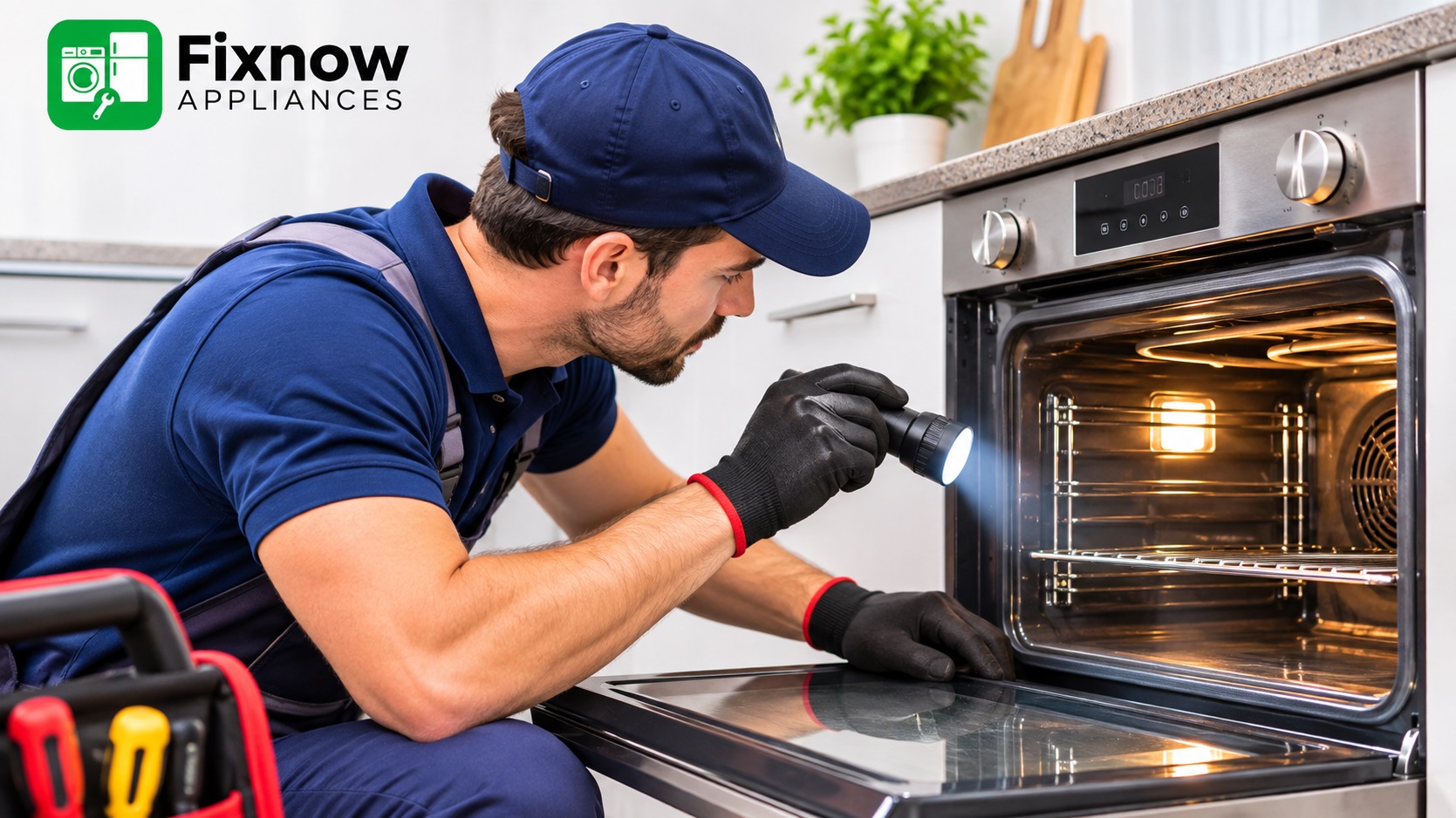
An oven that heats unevenly can turn an ordinary cooking task into a frustrating experience. One side of a cake may rise faster than the other, vegetables may brown unevenly, and food placed on the same tray may finish cooking at different times.
If your oven is not heating evenly, the problem may involve more than the temperature setting. Faulty heating elements, inaccurate temperature sensors, blocked airflow, damaged convection fans and worn door seals can all affect cooking performance.
Sometimes, the issue is related to how the oven is being used. Incorrect rack positioning, overcrowded trays or unsuitable cookware can also create uneven results.
Understanding the possible causes helps you identify basic issues and determine when professional oven repair is necessary.
This guide from FixNow Appliances explains why ovens develop uneven heating, what homeowners can safely check and when to arrange a technician's inspection.
In many electric ovens, heating elements generate the heat required for baking and broiling.
Depending on the selected cooking mode, the oven may use the lower bake element, upper broil element or a combination of heating components.
If an element becomes damaged, the oven may struggle to maintain a consistent temperature.
Food cooks faster on one side.
The oven takes longer to preheat.
Baking results are inconsistent.
The upper or lower section does not brown properly.
A heating element has visible damage.
Burned-out heating element.
Electrical connection problems.
Element deterioration over time.
Faulty control relay.
Damage caused by repeated heating cycles.
If the oven is completely cool and switched off, visually inspect the accessible heating elements for obvious cracks, blistering or damage.
Do not touch the element or attempt to test electrical connections.
If an element appears damaged or one section of the oven is not heating, professional inspection can determine whether the element or another electrical component needs attention.
Modern ovens use temperature sensors to monitor internal heat and help regulate cooking temperatures.
If the sensor provides inaccurate readings, the oven may heat beyond or below the selected temperature.
For example, you may set the oven to a particular temperature, but the actual internal temperature may fluctuate significantly.
Food cooks too quickly or too slowly.
Baking results vary between batches.
Oven temperature changes unexpectedly.
The oven overheats or does not reach the selected temperature.
Temperature-related error codes appear.
Review the oven's temperature settings.
Check whether the selected cooking mode is correct.
Consult the manufacturer's manual for temperature calibration instructions.
Record any error codes displayed.
A faulty temperature sensor may require testing and replacement. A technician can also check its wiring and related control components.
A convection oven uses a fan to circulate heated air throughout the cooking chamber.
This airflow helps distribute heat more consistently around food.
If the convection fan stops working or becomes inefficient, some areas of the oven may become hotter than others.
Food cooks unevenly on different racks.
Baking results are inconsistent.
Air circulation appears weak.
Unusual noises come from the oven.
Convection cooking takes longer than expected.
Faulty fan motor.
Damaged fan blade.
Electrical connection problem.
Obstruction around the fan.
Worn internal components.
With the oven switched off and completely cool, check whether there is visible food debris or an obstruction around the accessible fan cover.
Do not remove internal panels or attempt to operate the fan manually.
If the fan does not operate correctly during a convection cycle, professional diagnosis may be required.
Ovens are designed with specific airflow paths that allow heat to circulate through the cooking chamber.
When these vents become blocked, heat distribution may become inconsistent.
Food or grease covering ventilation openings.
Incorrect placement of cookware.
Overcrowded oven racks.
Foil covering airflow openings.
Incorrectly installed oven accessories.
Keep ventilation openings clear.
Avoid covering vents with aluminium foil.
Leave enough space between trays.
Follow the recommended rack positions.
Avoid placing oversized cookware inside the oven.
Proper airflow is important for consistent cooking, especially in convection models.
If the oven continues heating unevenly after correcting loading and airflow issues, another component may be responsible.
The oven door gasket helps retain heat inside the cooking chamber.
If the seal becomes worn, cracked or loose, hot air may escape during cooking.
This can cause temperature fluctuations and longer cooking times.
Heat escapes around the oven door.
Food takes longer to cook.
The oven struggles to maintain temperature.
The door gasket appears cracked or flattened.
Nearby cabinets become unusually warm.
When the oven is completely cool:
Inspect the visible door gasket.
Look for cracks, gaps or loose sections.
Check for food residue around the sealing area.
Make sure the door closes properly.
Do not pull or stretch the gasket unnecessarily.
A damaged seal may need replacement to restore proper heat retention.
Uneven cooking is not always caused by a mechanical fault.
Using the wrong rack position can affect how heat reaches food.
For example, food placed too close to the upper heating element may brown more quickly on top, while food positioned too low may receive stronger heat from the lower element.
Cakes brown too quickly on top.
Pizza bases cook faster than toppings.
Cookies on the lower rack become darker.
Food cooks differently on separate shelves.
Use the rack position recommended by the recipe.
Follow the oven manufacturer's cooking guidance.
Avoid placing food too close to heating elements.
Rotate trays when appropriate.
Use the correct cooking mode for the recipe.
If changing rack position does not improve results, investigate other possible causes.
Placing too many trays or large cookware items inside the oven can restrict airflow.
This is particularly important in convection ovens, where hot air needs sufficient space to circulate.
Food in the centre cooks differently from food near the edges.
Multiple trays produce inconsistent results.
Cooking takes longer than expected.
Some areas brown while others remain undercooked.
Leave sufficient space between trays.
Avoid blocking fan outlets.
Use cookware that fits the oven properly.
Follow the recommended rack arrangement.
Cook in separate batches when necessary.
A properly arranged oven allows heat to move more effectively around the food.
Sometimes, the oven's selected temperature does not match its actual internal temperature.
For example, the display may show the desired setting while the cooking chamber operates noticeably hotter or cooler.
This can happen because of calibration settings, sensor inaccuracies or control-system problems.
Recipes consistently take longer than expected.
Food burns despite following recommended settings.
Oven temperature readings appear inconsistent.
Baking results change without changing the recipe.
An oven-safe thermometer can help you compare the displayed setting with the approximate internal temperature.
Follow the thermometer manufacturer's instructions and allow the oven to stabilise before comparing readings.
Keep in mind that oven temperatures naturally cycle during operation. A single reading does not necessarily indicate a fault.
If the temperature difference is persistent, consult the manufacturer's calibration guidance or arrange professional inspection.
The electronic control board manages several oven functions, including heating elements, temperature regulation and cooking programmes.
If the control board develops a fault, the oven may not activate the correct heating components at the right time.
Oven temperature fluctuates unexpectedly.
Heating elements fail to operate correctly.
Cooking programmes behave inconsistently.
Display shows recurring error codes.
Oven starts but does not maintain the selected temperature.
Control-board problems can sometimes resemble sensor or heating-element failures.
A technician may need to test the control system and connected components before deciding whether the board requires repair or replacement.
Gas ovens use a burner system to generate heat.
If the burner does not ignite properly or the flame is inconsistent, the oven may struggle to maintain an even cooking temperature.
Oven takes longer to heat.
Food cooks unevenly.
Burner ignition is inconsistent.
The oven repeatedly fails to reach the selected temperature.
Unusual ignition behaviour occurs.
Faulty igniter.
Burner obstruction.
Gas supply issue.
Defective temperature sensor.
Control-system problem.
Gas appliance components should be inspected by a qualified professional.
If you smell gas, do not attempt to ignite the oven or operate electrical switches. Leave the area and contact your gas utility or emergency service from a safe location.
If food cooks differently depending on its rack position, airflow and heating distribution may be involved.
Some variation between racks is normal, but significant differences may indicate an underlying problem.
Faulty convection fan.
Blocked airflow.
Incorrect rack placement.
Heating element problems.
Temperature sensor malfunction.
Overcrowded oven.
Does food cook evenly on the middle rack?
Does the top rack brown food faster?
Does the bottom rack leave food undercooked?
Does the problem occur in every cooking mode?
Does the oven behave differently when using convection?
These observations can help narrow down the possible cause.
Electric and gas ovens use different heating systems, so the possible causes can vary.
| Electric oven | Gas oven |
|---|---|
| Faulty bake element | Ignition or igniter problems |
| Broil element failure | Burner obstruction |
| Temperature sensor fault | Gas burner performance |
| Control board problems | Gas control system issues |
| Convection fan failure | Convection fan failure, if fitted |
Both oven types can also develop airflow, door-seal and temperature-regulation problems.
The appliance brand, model and cooking technology are important when diagnosing uneven heating.
Before arranging a service visit, homeowners can perform a few basic checks.
Always follow the manufacturer's safety instructions.
Make sure the selected mode matches your cooking requirements.
A bake, broil and convection setting may use different heating components.
Confirm that the oven is set to the correct temperature.
Check whether any temperature offset or calibration setting has been changed.
Use the recommended rack position and avoid placing food too close to heating elements.
Make sure cookware is not blocking ventilation openings or the convection fan outlet.
With the oven completely cool, look for visible gaps or damage around the gasket.
Note whether the oven heats unevenly on every rack or only in a particular cooking mode.
Write down any warning messages displayed on the control panel.
If the oven produces smoke, sparks, burning smells or unusual electrical sounds, stop using it and arrange professional inspection.
Do not remove electrical panels, test live components or attempt gas-system repairs yourself.
Some uneven cooking problems can be improved by changing rack position, reducing overcrowding or correcting airflow restrictions.
However, persistent heating problems may indicate a faulty internal component.
Consider professional oven repair if:
The oven does not reach the selected temperature.
Food repeatedly cooks unevenly.
One heating element does not operate.
The convection fan makes unusual noises.
The temperature fluctuates significantly.
The oven displays recurring error codes.
The door seal is visibly damaged.
The oven overheats or stops heating unexpectedly.
A gas oven has ignition or burner problems.
A technician can inspect the heating elements, temperature sensor, fan motor, door seal and electronic control system to identify the actual fault.
An oven that heats unevenly does not automatically need replacement.
Many problems involve individual components that can be repaired or replaced.
The right decision depends on the oven's age, overall condition and extent of the damage.
Consider these factors:
Age of the appliance.
Frequency of previous breakdowns.
Condition of the heating elements.
Availability of compatible replacement parts.
Condition of the control board and wiring.
Repair requirements.
Expected reliability after repair.
An oven with a faulty sensor, heating element or door gasket may be a suitable repair candidate.
An older appliance with multiple failing components or extensive damage may require a replacement assessment.
A professional diagnosis can help you compare both options before making a decision.
Regular oven maintenance can help improve cooking consistency and identify developing problems.
Remove food spills and grease buildup according to the manufacturer's cleaning instructions.
Keep the designed airflow paths clear.
Check for visible wear, cracks or loose sections.
Choose cookware that fits the oven and allows appropriate airflow.
Use the rack arrangement specified in your cooking instructions.
Leave sufficient room between trays and dishes.
Use recommended cleaning and calibration procedures for your particular oven.
Routine maintenance cannot prevent every mechanical failure, but it can help maintain reliable performance.
An oven that does not heat evenly can affect cooking quality, increase preparation time and make everyday kitchen tasks difficult.
The important step is identifying whether the problem comes from the heating elements, temperature sensor, convection fan, door seal or electronic control system.
FixNow Appliances provides appliance repair services for household ovens and other major kitchen appliances.
Whether your oven is taking too long to heat, burning food on one side, producing inconsistent temperatures or failing to maintain the selected setting, sharing the symptoms and appliance model number can help the repair team understand your requirements.
Visit the company website to discuss your oven problem and confirm service availability for your location.
Company: FixNow Appliances
Website: https://fixnowappliances.ca/
Common causes include faulty heating elements, temperature sensor problems, blocked airflow, a damaged convection fan, incorrect calibration or a worn door seal.
Uneven heat distribution, incorrect rack positioning, blocked airflow or a faulty heating component may cause food to brown more quickly on one side.
Yes. If the bake or broil element does not operate correctly, the oven may struggle to distribute heat as intended.
Yes. A damaged or malfunctioning convection fan may reduce hot-air circulation and create inconsistent cooking results.
Inconsistent cooking results, inaccurate temperature readings and repeated temperature-related error codes may indicate a sensor problem. Professional testing can confirm the cause.
Some temperature variation is normal, but significant differences may result from rack positioning, airflow restrictions, heating-element faults or temperature-control problems.
Yes. A damaged gasket can allow heat to escape, making it harder for the oven to maintain a stable cooking temperature.
Yes. Many ovens cycle their heating elements on and off to maintain an average temperature. However, extreme or persistent fluctuations may indicate a fault.
Possible reasons include incorrect temperature calibration, a weak heating element, a faulty sensor or heat escaping through a damaged door seal.
An oven-safe thermometer can help you compare the displayed setting with the approximate internal temperature. Allow the oven to stabilise and follow the thermometer's instructions.
In many cases, yes. A faulty sensor, heating element or fan may be repairable. The decision depends on the appliance's age, condition and repair requirements.
Stop using the oven if you notice smoke, sparks, a strong burning smell, unusual electrical behaviour or a gas smell. Follow the appropriate safety precautions and seek professional assistance.
Visit https://fixnowappliances.ca/ to discuss your oven heating problem and confirm repair service availability for your location.
Leave A Reply
Your email address will not be published. Required fields are marked *