-
-
-
Edmonton, Alberta, Canada
Mon – Sat: 8:00 AM – 7:00 PM
Please tap the button to book your appliance repair on WhatsApp.
Booking Enquiry on WhatsApp
FixNow Appliances provides fast, professional appliance repair across Edmonton, Sherwood Park, Beaumont, St. Albert, Stony Plain and nearby areas. Our licensed technicians repair fridges, washers, dryers, dishwashers, ovens, stoves and more using OEM parts and manufacturer-approved methods.
29
Nov
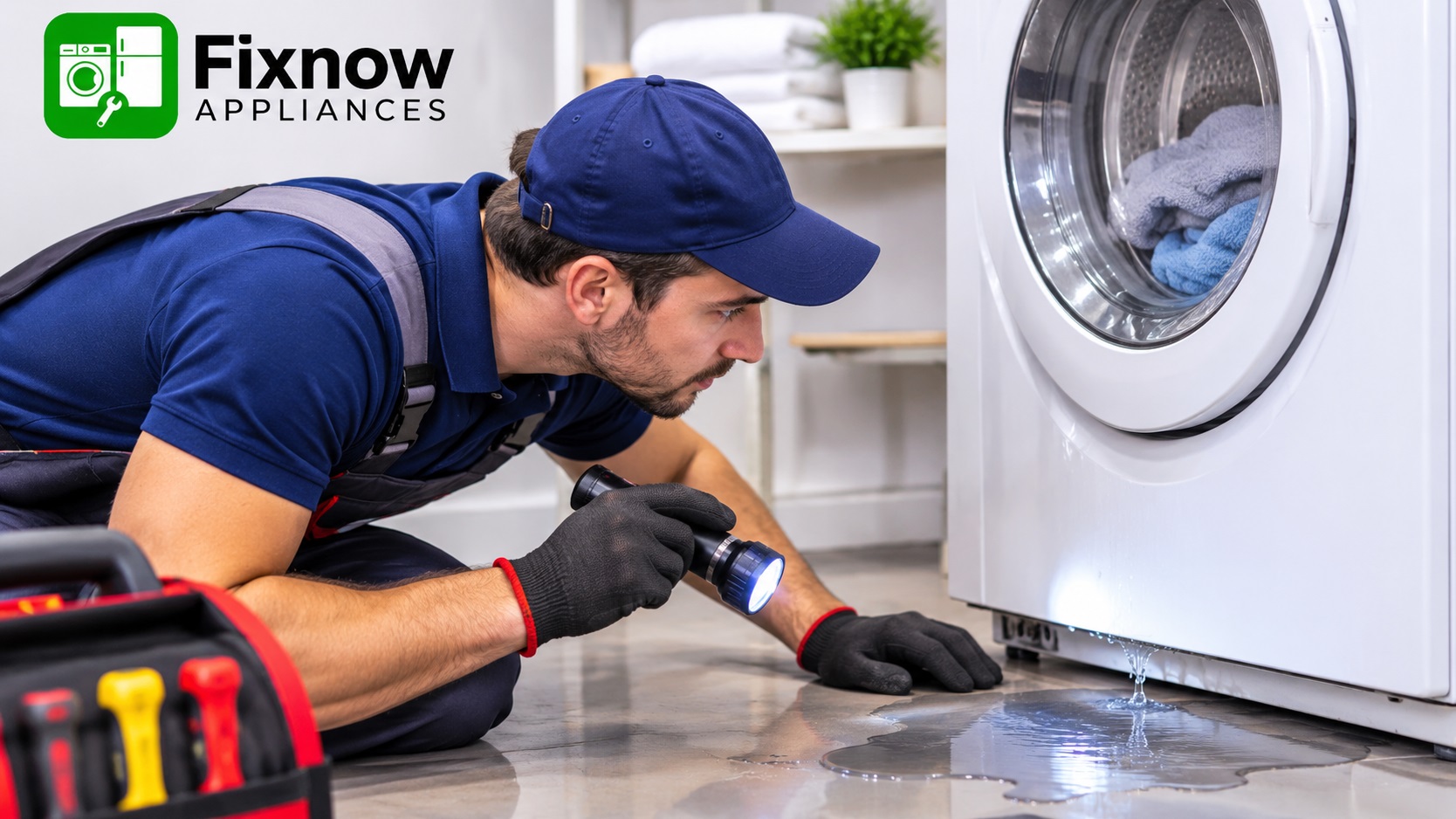
Finding water around your washing machine can be frustrating. A small puddle after a wash cycle may seem harmless, but repeated leakage can damage flooring, nearby cabinets and other parts of your laundry area.
A washing machine can leak from several places, including the door, water supply hoses, drain hose, detergent dispenser or internal pump assembly. The location and timing of the leak often provide useful clues about the underlying problem.
Some leaks are caused by simple issues, such as an overloaded drum or excessive detergent. Others may indicate a damaged door gasket, loose connection, cracked hose or faulty internal component.
Understanding why your washer is leaking water can help you identify warning signs and decide when professional repair is necessary.
This guide from FixNow Appliances explains the common causes of washing machine leaks, safe checks homeowners can perform and when to arrange a professional inspection.
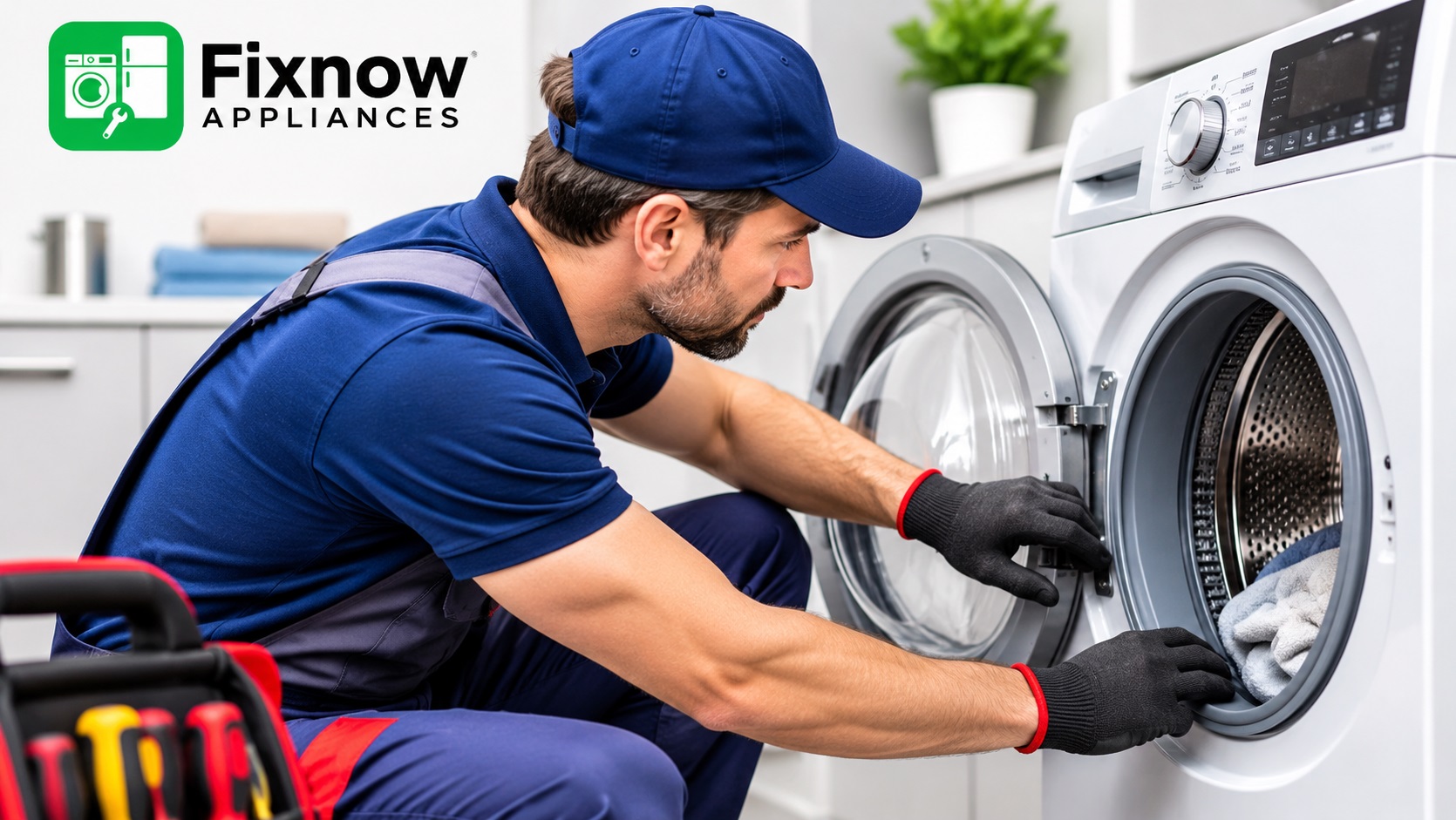
A damaged door seal is a common reason front-load washing machines leak water.
The rubber gasket around the door creates a watertight barrier during washing. Over time, it can collect detergent residue, develop tears or become damaged by trapped objects.
Water leaking from the front of the washer.
Moisture around the door during washing.
Visible cracks or tears in the rubber gasket.
Mould or residue around the seal.
Water collecting near the bottom of the door.
Worn or damaged rubber gasket.
Coins or sharp objects trapped in the seal.
Detergent and dirt accumulation.
Incorrect loading of laundry.
Damage caused by repeated contact with clothing or objects.
Switch off the washing machine.
Inspect the visible rubber gasket.
Look for trapped objects or visible damage.
Clean accessible residue using the manufacturer's recommended method.
Avoid pulling or stretching the rubber seal.
If the gasket is torn, hardened or badly damaged, cleaning will not resolve the leak. It may need professional replacement.
The water inlet hose supplies fresh water to the washing machine.
If the hose connection becomes loose or the hose develops cracks, water may leak from the back or side of the appliance.
Water collecting behind the washer.
Leakage when the machine fills.
Dripping near the water supply connection.
Visible moisture around the hose.
Water appearing even when the washer is not running.
Loose hose connection.
Cracked or damaged hose.
Worn rubber washer inside the connector.
Corrosion or damage around the connection.
Excessive strain on the hose.
Turn off the water supply if it is safe to access.
Inspect visible hose sections for cracks or bulges.
Look for moisture around accessible connections.
Check whether the hose is twisted or under tension.
Do not tighten damaged connections excessively or continue using a visibly deteriorated hose. Replace damaged hoses with compatible parts according to the manufacturer's instructions.
If water continues leaking, arrange a professional inspection.
The drain hose carries wastewater away from the washing machine.
If it becomes loose, cracked, blocked or incorrectly positioned, water may leak during the draining stage.
Water leaking during the drain cycle.
Puddles near the rear of the washer.
Water overflowing from the drain connection.
Slow drainage.
Unusual gurgling sounds.
Loose drain hose connection.
Cracked or damaged hose.
Kinked or crushed hose.
Blocked household drain.
Incorrect drain hose installation.
Inspect the visible drain hose for damage, kinks or loose positioning.
Check whether the household drain is functioning normally. If the hose is visibly damaged, stop using the washer until it has been repaired or replaced.
Avoid disconnecting drainage connections while the appliance contains water unless you can safely manage the water release and follow the manufacturer's instructions.
Many washing machines have an accessible drain filter that collects lint, coins, buttons and other small objects.
When the filter becomes blocked, water may drain slowly or escape from the filter access area if it is not correctly installed or sealed.
Water collecting near the bottom front of the washer.
Slow or incomplete drainage.
Unusual pump noises.
Water remaining inside the drum.
Leakage near the filter cover.
Accumulated lint and debris.
Coins or small objects.
Filter not properly secured.
Damaged filter seal.
Dirt preventing the filter from closing correctly.
Switch off the appliance.
Consult the user manual for the filter location.
Place towels and a suitable container underneath the access point.
Follow the manufacturer's instructions for releasing residual water.
Remove and clean the filter if it is designed for user maintenance.
Reinstall it securely.
Never open the filter while the washer is operating. If the filter housing or seal is damaged, professional repair may be necessary.
The drain pump moves wastewater out of the washing machine.
If the pump housing, seal or connected components become damaged, water may leak from underneath the appliance.
Water leaking from the bottom of the washer.
Puddles appearing during drainage.
Unusual humming or grinding sounds.
Water remaining inside the drum.
Repeated drainage problems.
Damaged pump housing.
Worn pump seal.
Loose pump connection.
Internal blockage.
Faulty pump assembly.
The drain pump is an internal component. Inspecting it may require access to electrical and mechanical parts.
Do not remove internal panels or attempt electrical testing yourself. A technician can inspect the pump and determine whether cleaning, repair or replacement is required.
Using too much detergent can create excessive foam inside a washing machine.
When foam builds up beyond the appliance's normal operating conditions, it may escape through the dispenser, door area or other openings.
Excessive foam inside the drum.
Water or foam around the door.
Detergent residue on clothing.
Longer-than-normal wash cycles.
Leakage during rinsing.
Use detergent designed for your washer type.
Follow the recommended detergent quantity.
Check whether the detergent is suitable for high-efficiency machines, if applicable.
Avoid adding extra detergent unnecessarily.
Clean the detergent drawer according to the manual.
If leakage continues even when using the correct detergent quantity, the problem may involve a seal, dispenser or internal component.
The detergent dispenser directs detergent and water into the washing machine during the selected cycle.
If the drawer becomes blocked or damaged, water may overflow from the dispenser area.
Detergent residue buildup.
Fabric softener blockage.
Incorrectly fitted dispenser drawer.
Damaged dispenser housing.
Water inlet restriction.
Water leaking from the detergent drawer.
Residue around the dispenser.
Water dripping down the front panel.
Detergent remaining inside the drawer.
Overflow during the filling stage.
Remove the dispenser drawer only if the manufacturer's instructions allow it.
Clean accessible residue and make sure the drawer is reinstalled correctly. Do not force the drawer or use sharp objects to clear internal passages.
If water continues overflowing, the dispenser assembly or water inlet system may require inspection.
A washing machine is designed to control how much water enters the drum.
If the appliance takes in more water than expected, it may overflow or leak through seals and other openings.
Faulty water-level sensor.
Pressure-system blockage.
Defective water inlet valve.
Electronic control fault.
Incorrect installation or water supply issue.
Water level appears unusually high.
Water escapes during filling.
Washer continues filling unexpectedly.
Water remains above the normal level.
Overfilling-related error appears.
If your washer continues filling when it should stop, turn off the water supply if safe to do so and stop using the appliance.
Overfilling can involve internal electrical or water-control components. Professional diagnosis is recommended.
The outer tub holds water during the washing process. Seals and connected components help prevent water from escaping.
If the tub develops a crack or an internal seal becomes damaged, leakage may appear underneath the appliance.
Water leaking from underneath the washer.
Leakage during washing or spinning.
Repeated puddles despite checking external hoses.
Water appearing near the centre or rear of the appliance.
Damaged tub.
Worn internal seal.
Physical impact.
Long-term component deterioration.
Loose internal connection.
Internal tub and seal problems are not generally suitable for basic home troubleshooting.
A technician can inspect the appliance and determine whether the damaged component can be repaired or needs replacement.
If your washing machine leaks mainly during spinning, the problem may be related to components that experience increased movement or water flow at higher speeds.
Damaged door gasket.
Loose or damaged drain hose.
Faulty pump seal.
Tub or bearing-area seal problem.
Excessive vibration.
Overloaded or unbalanced laundry.
Does the leak begin when the drum starts spinning?
Does water appear near the door or underneath?
Does the washer shake excessively?
Is the drainage hose visibly damaged?
Does the problem occur with every load?
Recording when the leak occurs can help a technician identify the likely source.
If the washer shakes severely or leaks heavily, stop using it until it has been inspected.
Front-load and top-load washers have different designs, so the common leakage points can vary.
| Front-load washer | Top-load washer |
|---|---|
| Door gasket damage | Lid or tub-related leakage |
| Door seal contamination | Water inlet hose problems |
| Detergent dispenser overflow | Drain hose leakage |
| Drain filter seal problems | Internal tub or hose leaks |
| Door-lock area issues | Overfilling problems |
Both types can develop faulty hoses, drain pump problems, internal seal damage and water inlet faults.
The appliance brand and model number are important when identifying compatible repair procedures and replacement components.
Water leakage should be addressed promptly, especially when the appliance is connected to electricity.
Follow these precautions:
Step 1: Stop the Washing Machine
Use the normal controls to stop the cycle if it is safe to do so.
Step 2: Avoid Wet Electrical Connections
If water is near the plug, socket or electrical components, do not touch them or stand in water to disconnect the appliance.
Step 3: Turn Off the Water Supply
If the supply valves are safely accessible from a dry area, turn them off to reduce further leakage.
Step 4: Keep People Away From the Wet Area
Prevent slipping and keep children and pets away from the affected area.
Step 5: Identify the Visible Leak Location
If safe, observe whether water is coming from the front, rear, dispenser or underneath the washer.
Step 6: Arrange Professional Inspection
If the leak is persistent, heavy or near electrical components, stop using the washer and seek appropriate assistance.
Do not continue running repeated wash cycles to identify the source of a leak.
Some minor problems, such as an overloaded drum or dirty dispenser drawer, may be resolved through basic maintenance.
However, persistent leakage often requires proper diagnosis.
Consider professional washing machine repair if:
Water continues leaking after basic checks.
The drain pump appears damaged.
The door gasket has visible tears.
Water leaks from underneath the appliance.
The washer overfills unexpectedly.
Internal hoses or seals may be damaged.
The machine displays repeated error codes.
Leakage occurs near electrical components.
The washer makes unusual noises alongside leakage.
A professional technician can inspect the water inlet system, drainage components, seals and internal connections to identify the actual cause.
Providing accurate information before a service visit can help make the repair process more efficient.
Note whether you have a front-load or top-load washing machine.
The model number is usually located around the door opening, beneath the lid or on the manufacturer's label.
Explain where the water appears:
Front of the washer.
Behind the appliance.
Underneath the machine.
Around the detergent drawer.
Near the water supply connection.
Mention whether the leak occurs:
During filling.
During washing.
During rinsing.
During spinning.
During drainage.
Even when the machine is switched off.
Take note of warning messages or error codes displayed on the control panel.
Before confirming an appointment, ask about diagnostic charges, repair estimates, compatible replacement parts and the warranty applicable to completed repairs.
A leaking washing machine does not automatically need replacement.
Many leaks can be resolved by replacing an individual hose, gasket, pump or other repairable component.
However, the right decision depends on the appliance's overall condition.
Consider:
Age of the washing machine.
Frequency of previous repairs.
Extent of water damage.
Condition of the tub and drum.
Availability of compatible replacement parts.
Repair estimate.
Expected reliability after repair.
A washer with a damaged inlet hose or replaceable door gasket may be a suitable repair candidate.
An older appliance with extensive tub damage, repeated breakdowns or multiple failing components may require a replacement assessment.
A professional diagnosis can help you compare the available options.
Regular maintenance can help identify developing problems and reduce avoidable leakage.
Check accessible inlet and drain hoses periodically for cracks, bulges, loose connections or visible damage.
For front-load washers, remove trapped objects and clean the gasket according to the manufacturer's instructions.
Follow the recommended load capacity to reduce unnecessary movement and stress on the appliance.
Choose detergent suitable for your washer type and use the recommended quantity.
Remove detergent and fabric-softener residue regularly.
Clean the accessible filter according to the manufacturer's instructions.
A properly levelled washer can reduce excessive movement and vibration.
Look for unexplained moisture around the appliance after wash cycles. Early detection can help prevent further water damage.
Regular care cannot prevent every failure, but it can help homeowners identify warning signs before a small issue becomes a bigger problem.
A washing machine leak can originate from several different components. The important step is identifying the exact source before replacing parts or attempting repairs.
FixNow Appliances provides appliance repair services for household washing machines and other major appliances.
Whether your washer is leaking from the door, dripping underneath, overflowing during filling or losing water during the spin cycle, sharing the symptoms and model number can help the repair team understand your requirements.
For service information and appointment availability, visit the company website.
Company: FixNow Appliances
Website: https://fixnowappliances.ca/
Contact FixNow Appliances to discuss your washing machine leakage problem and confirm service availability for your location.
Possible causes include a damaged drain pump, loose internal hose, faulty tub seal, blocked filter housing or damaged drainage connection. Professional inspection may be needed to locate the source.
Front leakage can be caused by a damaged door gasket, excessive detergent foam, blocked dispenser or incorrectly fitted detergent drawer.
Possible causes include a damaged door seal, drain hose problem, pump seal leak, excessive vibration or internal tub damage.
Yes. Excessive detergent can create too much foam, which may escape through the door, dispenser or other openings.
A leaking water inlet hose, loose connection or faulty inlet valve may allow water to escape even when the washer is switched off.
Look for visible tears, cracks, hardened rubber, trapped objects or water leaking around the door during operation.
Yes. A clogged filter or incorrectly fitted filter cover can contribute to drainage problems and leakage around the filter access area.
It is best to stop using a leaking washer until the cause is identified. If water is near electrical connections, stay away from the affected area and seek appropriate assistance.
Not necessarily. Many leaks can be repaired by replacing a damaged hose, gasket, pump or other individual component. A professional diagnosis can help determine whether repair or replacement makes more sense.
Inspect hoses, clean the door gasket and detergent drawer, avoid overloading, use the correct detergent and follow the manufacturer's maintenance recommendations.
Contact a professional if leakage continues, water comes from underneath the appliance, internal components appear damaged or the washer shows signs of an electrical or mechanical fault.
Visit https://fixnowappliances.ca/ to discuss your washing machine problem and confirm service availability for your location.
Leave A Reply
Your email address will not be published. Required fields are marked *