-
-
-
Edmonton, Alberta, Canada
Mon – Sat: 8:00 AM – 7:00 PM
Please tap the button to book your appliance repair on WhatsApp.
Booking Enquiry on WhatsApp
FixNow Appliances provides fast, professional appliance repair across Edmonton, Sherwood Park, Beaumont, St. Albert, Stony Plain and nearby areas. Our licensed technicians repair fridges, washers, dryers, dishwashers, ovens, stoves and more using OEM parts and manufacturer-approved methods.
28
Nov
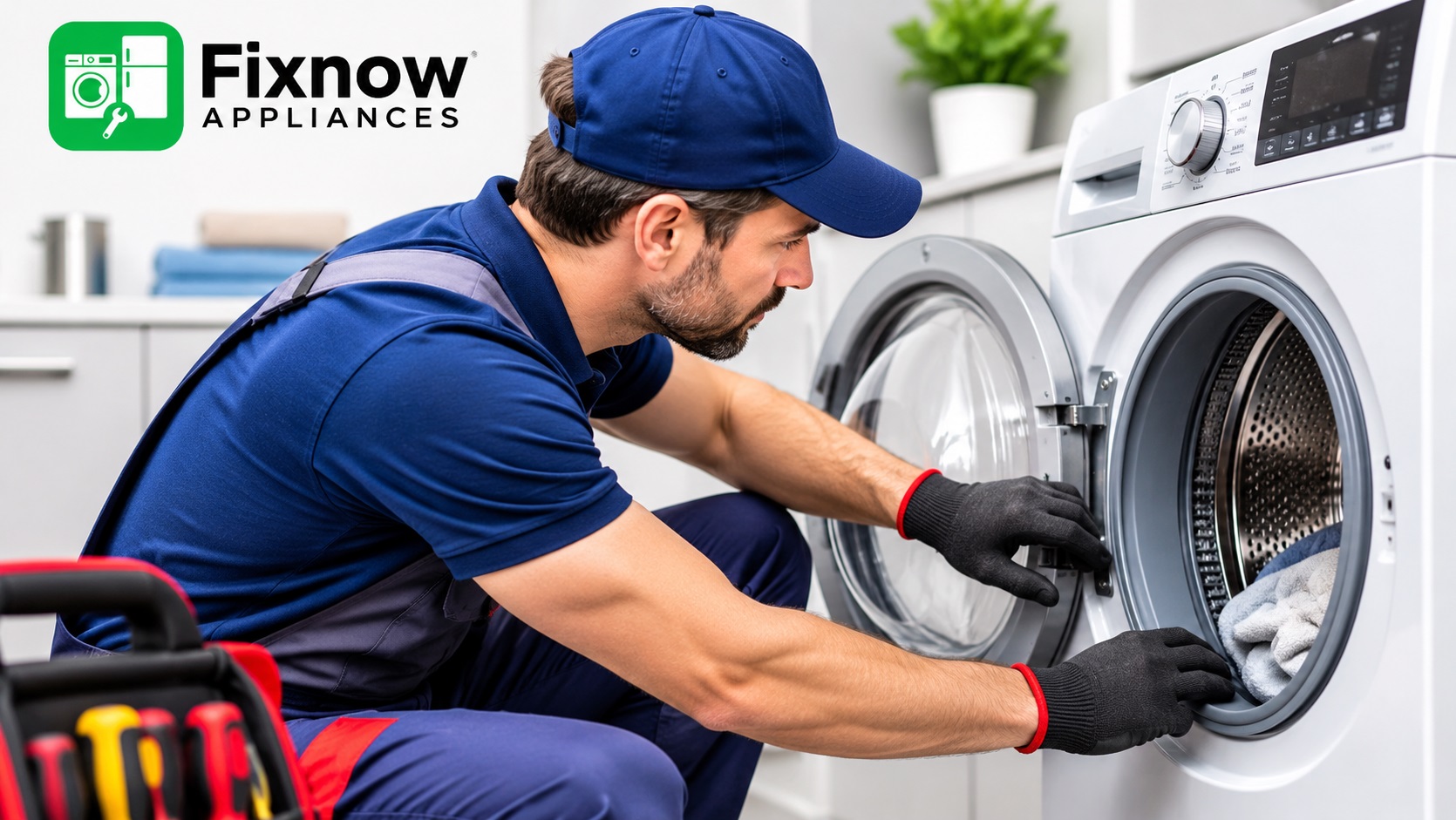
A washing machine that washes clothes but refuses to spin can quickly disrupt your daily routine. Instead of removing excess water, the appliance leaves laundry soaking wet, making drying slower and more difficult.
Sometimes, the problem is simple. An overloaded drum, unevenly distributed clothes or a blocked drain filter can prevent the washer from entering its spin cycle.
In other situations, the cause may involve a faulty door lock, worn drive belt, damaged motor, pump failure or electronic control issue.
Understanding why your washing machine is not spinning can help you identify basic problems, avoid unnecessary troubleshooting and decide when professional repair is needed.
This guide from FixNow Appliances explains the common causes, safe checks and warning signs homeowners should know.
An unbalanced laundry load is one of the most common reasons a washing machine refuses to spin at high speed.
When heavy clothes collect on one side of the drum, the washer may detect excessive movement and automatically reduce or stop the spin cycle.
Washing machine shakes during spinning.
Clothes remain wet after the cycle.
Washer repeatedly attempts to redistribute laundry.
Spin cycle takes longer than usual.
Unbalanced-load error appears.
Open the washer after it has safely unlocked.
Redistribute clothes evenly inside the drum.
Remove some items if the machine is overloaded.
Avoid washing a single heavy item without suitable balancing items, following the manufacturer's guidance.
Run an appropriate spin cycle again.
If the machine continues vibrating excessively with a balanced load, there may be an installation or internal suspension problem.
A washing machine usually needs to remove water before completing its spin cycle.
If water remains inside the drum, many models will prevent high-speed spinning to avoid operating under unsafe conditions.
Blocked drain filter.
Kinked drain hose.
Faulty drain pump.
Obstruction in the drainage system.
Plumbing connection problem.
Water remains inside the drum.
Washer stops before spinning.
Drainage error appears.
Pump makes unusual humming sounds.
Clothes remain extremely wet.
Switch off the washing machine.
Check the visible drain hose for kinks.
Consult the manual for the drain-filter location.
Follow the manufacturer's instructions before cleaning the filter.
Prepare towels and a suitable container because residual water may escape.
Never open the filter while the machine is operating. If water is near electrical connections, avoid touching the appliance or plug and seek appropriate assistance.
If the washer still does not drain, the pump or internal drainage system may need professional inspection.
Modern washing machines include safety mechanisms that prevent spinning when the door or lid is not securely locked.
If the locking system fails, the washer may refuse to start the spin cycle even when the drum and other components are working.
Door-lock warning appears.
Washer starts but stops before spinning.
Door does not lock properly.
Machine displays a door-related error code.
Spin cycle does not begin.
Damaged door latch.
Faulty door-lock assembly.
Defective lid switch.
Wiring problem.
Electronic control fault.
Make sure clothing is not trapped between the door and gasket.
Check for visible obstructions around the latch.
Close the door or lid properly.
Consult the user manual for the meaning of any displayed error.
Do not force the door open or bypass the safety lock. If the problem continues, a technician can inspect the locking mechanism and associated controls.
Some washing machines use a drive belt to transfer motor movement to the drum.
If the belt becomes loose, worn or broken, the motor may operate without rotating the drum correctly.
Drum does not spin.
Motor sound is audible but the drum remains still.
Burning-rubber smell.
Unusual squealing sounds.
Spin performance becomes inconsistent.
Not all washing machines use a traditional drive belt. Some models have direct-drive systems or different motor arrangements.
A damaged belt generally requires inspection and replacement by someone familiar with the appliance's design. Avoid removing internal panels while the machine is connected to power.
The motor plays an important role in rotating the drum during washing and spinning.
If the motor or its supporting components develop a fault, the washer may struggle to rotate or fail to spin completely.
Drum does not rotate.
Washer stops during the cycle.
Unusual humming or mechanical noise.
Burning smell.
Motor-related error code.
Motor wear or damage.
Electrical connection fault.
Motor control issue.
Damaged supporting components.
Overheating protection activating.
Motor problems require proper testing. A technician can inspect the motor, wiring and control system to determine whether repair or replacement is appropriate.
A drain pump removes water from the washing machine before or during the spin process.
If the pump is blocked or failing, water may remain inside the drum and prevent the washer from completing its cycle.
Washer does not drain.
Spin cycle does not start.
Pump makes a humming noise.
Water remains after washing.
Drain-related error appears.
Small objects such as coins, buttons and lint can sometimes obstruct accessible drainage components.
Check the filter only if your model provides a user-accessible cleaning procedure. If the pump itself appears faulty, professional diagnosis is recommended.
Putting too many clothes into a washer can affect drum movement and place unnecessary strain on the motor and drive system.
An overloaded drum may struggle to distribute laundry evenly, especially during high-speed spinning.
Check the recommended load capacity.
Remove excess clothing.
Avoid compressing laundry into the drum.
Wash bulky items according to the manufacturer's instructions.
Use a suitable programme for heavy fabrics.
If the washer spins normally with a smaller load, overloading or load distribution may have contributed to the problem.
However, repeated spin failures with normal loads should not be ignored.
Washing machines use suspension components to control drum movement and reduce vibration.
If these components become worn or damaged, the appliance may shake excessively during spinning.
Some machines respond by reducing spin speed or stopping the cycle.
Washer moves across the floor.
Loud banging during spinning.
Excessive vibration.
Drum appears unstable.
Spin cycle repeatedly stops.
Confirm that the washer is level.
Make sure it is positioned on a stable floor.
Redistribute laundry evenly.
Check whether the appliance has enough clearance from nearby surfaces.
If excessive vibration continues, internal suspension components may need inspection.
Modern washing machines use electronic control boards to manage motor speed, water levels, cycle timing and other functions.
If the control system develops a fault, the washer may fail to activate the spin cycle correctly.
Washer stops unexpectedly.
Spin cycle does not respond.
Error codes appear repeatedly.
Buttons or settings behave inconsistently.
Machine starts but does not complete the programme.
Electronic problems can have several possible causes, including wiring, sensors, control boards or motor-control components.
A displayed error code can help narrow down the issue, but it does not always identify the failed part. Proper diagnosis is important before replacing electronic components.
Sometimes, the washing machine is working normally but the selected programme does not use a high-speed spin.
Delicate, hand-wash and certain specialised programmes may use reduced spin speeds to protect fabrics.
Some washers also allow users to disable or reduce spinning.
Review the selected wash programme.
Check the spin-speed setting.
Confirm that a no-spin option has not been selected.
Consult the manual for programme-specific behaviour.
Try a suitable spin-only cycle.
If the washer still refuses to spin with the correct settings, another issue may be responsible.
An error code can provide useful information about why a washer has stopped or refused to spin.
However, error-code meanings vary between brands and models.
| Error category | What it may indicate |
|---|---|
| Drainage error | Water is not draining correctly |
| Door-lock error | Door or lid is not securely locked |
| Unbalanced-load error | Laundry is unevenly distributed |
| Motor error | Motor or drive-system problem |
| Water-level error | Incorrect water-level reading |
| Sensor error | Sensor may be providing incorrect information |
| Control error | Electronic control-system problem |
Record the exact error code.
Note when it appears during the cycle.
Find the washer's brand and model number.
Check the manufacturer's manual.
Avoid repeatedly resetting the machine without investigating the cause.
Sharing the error code with a repair technician can make the diagnostic process more efficient.
Before arranging a repair, homeowners can perform a few basic checks, provided the appliance is safe to access.
Follow this simple troubleshooting sequence:
Step 1: Check the Laundry Load
Remove excess clothes and redistribute the remaining items evenly.
Step 2: Review the Programme
Make sure the selected wash cycle includes the required spin setting.
Step 3: Check for Standing Water
If water remains inside the drum, investigate the accessible drainage system according to the manufacturer's instructions.
Step 4: Inspect the Door or Lid
Make sure the door closes securely and no clothing is trapped.
Step 5: Look for Visible Hose Problems
Check the accessible drain hose for kinks or crushing.
Step 6: Record Error Messages
Write down any displayed code or warning.
Step 7: Stop if the Problem Continues
If the washer makes unusual noises, smells burnt, leaks water or repeatedly fails to spin, stop using it and arrange professional inspection.
Do not attempt electrical testing or internal component repairs without the appropriate training.
It depends on the underlying problem.
A simple unbalanced load may be resolved by redistributing clothes. However, continued operation with a mechanical, electrical or drainage fault can create additional problems.
Stop using the appliance if you notice:
Burning smells.
Smoke or sparks.
Water leaking near electrical connections.
Loud grinding or banging.
Repeated electrical interruptions.
Excessive movement or vibration.
If there is a burning smell, smoke or electrical concern, keep away from the appliance and seek appropriate assistance. Do not touch wet electrical connections.
Basic troubleshooting may resolve some spin-cycle problems, but persistent faults often require technical inspection.
Consider professional repair if:
The drum does not spin even with a small, balanced load.
Water remains inside after the cycle.
The washer repeatedly displays error codes.
The motor runs but the drum does not rotate.
The machine makes grinding or banging noises.
The door-lock warning keeps appearing.
The washer stops during every spin cycle.
Cleaning the accessible filter does not resolve drainage problems.
A technician can inspect the pump, motor, drive system, suspension, sensors and electronic controls to identify the actual cause.
A washer that refuses to spin does not automatically need replacement.
Many spin-cycle problems can be resolved by repairing an individual component. The right decision depends on the appliance's age, overall condition and extent of the fault.
Consider these factors:
Age of the washing machine.
Frequency of previous breakdowns.
Condition of the drum and motor.
Availability of compatible replacement parts.
Extent of mechanical or electronic damage.
Repair estimate.
Expected reliability after repair.
A washer with an isolated drainage, door-lock or drive-system problem may be a suitable repair candidate.
An older machine with repeated breakdowns or extensive damage may require a replacement assessment.
A professional diagnosis can help you compare both options before making a decision.
Regular maintenance can help reduce avoidable problems and support reliable washing machine performance.
Follow the manufacturer's recommended load capacity.
Mix suitable items and avoid concentrating heavy fabrics on one side of the drum.
Inspect and clean the filter according to the manufacturer's instructions.
Look for visible kinks, crushing or signs of damage.
A stable installation can reduce unnecessary vibration during spinning.
Choose detergent suitable for your washer type and follow the recommended quantity.
For front-load washers, remove trapped objects and clean the gasket according to the manual.
Use recommended cleaning cycles and maintenance procedures for your specific model.
Consistent care cannot prevent every mechanical failure, but it can help identify developing problems early.
A washing machine that is not spinning can have several possible causes, from an unbalanced load to a faulty drain pump, motor or electronic control system.
The important step is identifying the actual problem before replacing components.
FixNow Appliances provides appliance repair services for household washing machines and other major appliances.
Whether your washer is leaving clothes soaking wet, refusing to drain, making unusual noises or stopping before the spin cycle, sharing the symptoms and appliance model number can help the repair team understand your requirements.
Visit the website to discuss your washing machine problem and confirm service availability for your location.
Website: https://fixnowappliances.ca/
The washer may have an unbalanced load, drainage problem, faulty door lock, worn drive component or motor-related issue. The exact cause depends on the model and symptoms.
Your washer may not be completing its spin cycle. Common causes include poor drainage, an overloaded drum, unbalanced laundry or a mechanical fault.
Yes. Many modern washers detect excessive drum movement and reduce or stop spinning to protect the appliance.
Yes. If water cannot drain properly, many washing machines will not proceed to the high-speed spin stage.
Possible causes include a damaged drive belt, motor problem, obstructed drum or faulty drive components. The design of the washer determines which parts need inspection.
Possible reasons include drainage problems, an unbalanced load, door-lock faults, sensor issues or electronic control problems.
It can be, particularly when the problem involves an individual repairable component. The decision depends on the machine's age, condition, repair requirements and replacement options.
A washer that does not rotate, makes unusual sounds or displays motor-related errors may have a motor or drive-system issue. Professional testing is needed to confirm the cause.
Some temporary control errors may clear after following the manufacturer's reset procedure. However, a reset will not repair a blocked pump, damaged belt or faulty motor.
Stop using it if you notice burning smells, smoke, sparks, water near electrical connections, severe vibration or unusual mechanical noises.
Share the washer brand, model number, error code, symptoms and when the problem occurs. This information can help the repair team understand the issue before the service visit.
Visit https://fixnowappliances.ca/ to discuss your washing machine problem and confirm repair service availability for your location.

Leave A Reply
Your email address will not be published. Required fields are marked *