-
-
-
Edmonton, Alberta, Canada
Mon – Sat: 8:00 AM – 7:00 PM
Please tap the button to book your appliance repair on WhatsApp.
Booking Enquiry on WhatsApp
FixNow Appliances provides fast, professional appliance repair across Edmonton, Sherwood Park, Beaumont, St. Albert, Stony Plain and nearby areas. Our licensed technicians repair fridges, washers, dryers, dishwashers, ovens, stoves and more using OEM parts and manufacturer-approved methods.
21
Nov
Household appliances are easy to take for granted until one stops working. A refrigerator that cannot maintain its temperature, a washing machine that refuses to drain or a dryer that leaves clothes damp can quickly interrupt everyday routines.
For homeowners in West Edmonton, Alberta, knowing how to recognise appliance problems and when to arrange professional repair can help prevent further inconvenience.
Not every appliance issue means a major component has failed. Sometimes, a blocked filter, incorrect setting or restricted airflow is responsible. Other problems involve electrical components, motors, pumps, sensors or control systems that require professional diagnosis.
Understanding the difference is an important first step towards making a sensible repair decision.
This guide covers common household appliance problems, safe checks homeowners can perform, what to expect from a repair appointment and how to choose an appliance repair service in West Edmonton.
Most households depend on several appliances every day. When one stops functioning, the impact can extend beyond the appliance itself.
For example:
A refrigerator problem can put stored food at risk.
A washing machine failure can disrupt laundry routines.
A dryer that does not heat can make laundry take much longer.
A dishwasher leak can affect kitchen flooring and cabinets.
An oven that does not heat can interrupt meal preparation.
Addressing a fault early may help prevent additional damage, although the right solution depends on the appliance's condition and the underlying problem.
A professional diagnosis helps identify what has failed, whether the appliance can be repaired and what options are available.
A refrigerator should maintain a stable temperature to keep food properly stored. If it starts running continuously or the food inside becomes warmer than expected, it may need attention.
Refrigerator not cooling properly.
Freezer working but refrigerator compartment staying warm.
Water collecting underneath the appliance.
Excessive frost buildup.
Unusual humming or clicking sounds.
Refrigerator running constantly.
Ice maker not working.
Door seal appearing loose or damaged.
Refrigerator cooling problems can involve:
Dirty condenser coils.
Faulty evaporator or condenser fan.
Damaged door gasket.
Defrost-system malfunction.
Temperature sensor failure.
Restricted internal airflow.
Compressor or sealed-system problems.
Before arranging refrigerator repair:
Confirm that the appliance has power.
Check the temperature settings.
Make sure food containers are not blocking air vents.
Inspect the visible door gasket.
Confirm that the door closes properly.
Clean accessible areas according to the manufacturer's instructions.
Avoid removing internal panels or attempting refrigerant-system repairs.
If the refrigerator cannot maintain a safe temperature, keep the door closed as much as possible and move perishable food to suitable cold storage.
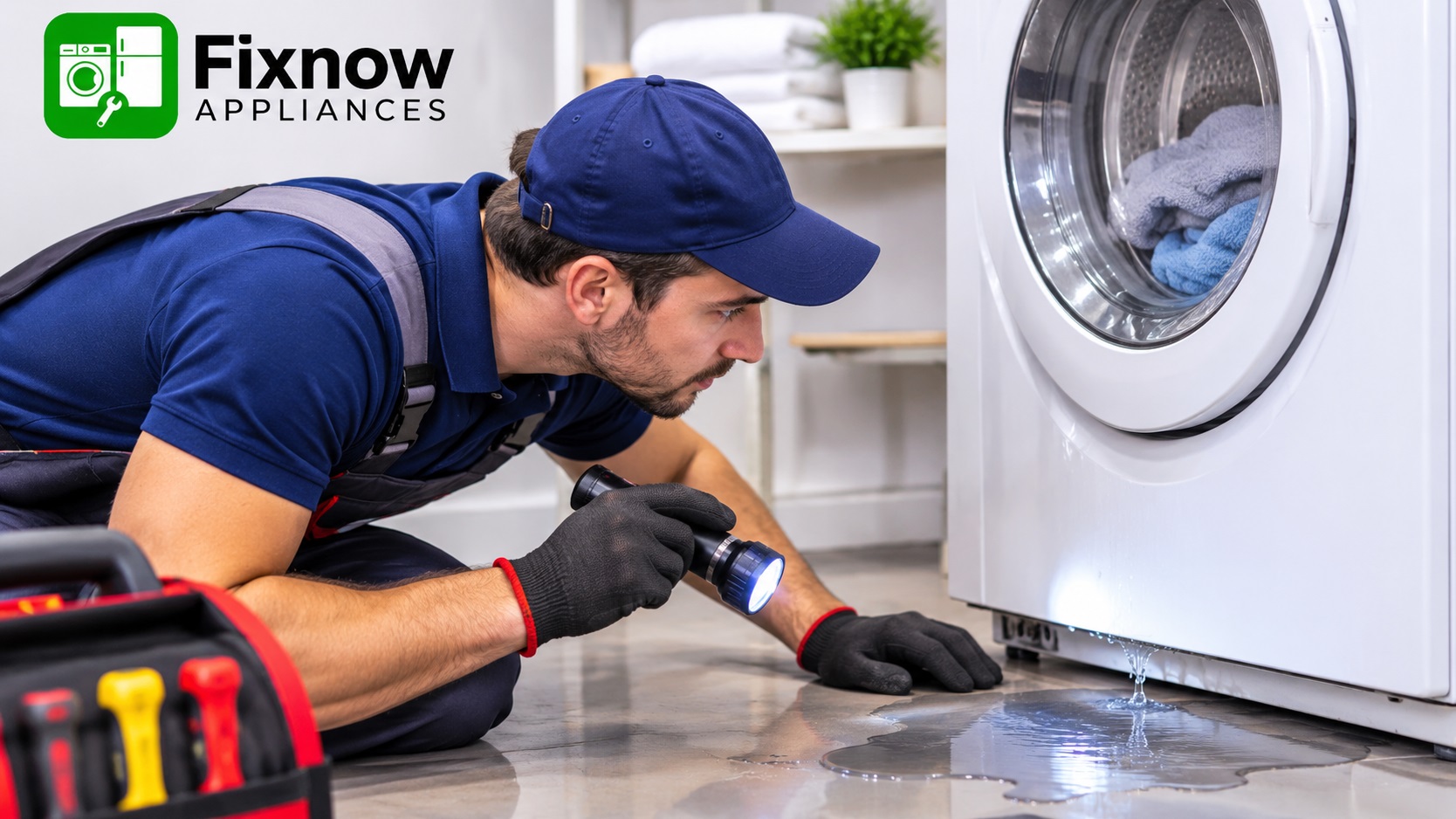
A washing machine that stops midway through a cycle or leaves water inside the drum can create an immediate household inconvenience.
Some washer problems are related to drainage, while others involve the motor, suspension or electronic controls.
Washing machine not draining.
Drum not spinning.
Water leaking during a cycle.
Excessive vibration.
Washer not filling with water.
Door refusing to unlock.
Unusual banging or grinding sounds.
Error codes appearing on the display.
These symptoms may be associated with:
Blocked drain filters.
Faulty drain pumps.
Kinked inlet or drain hoses.
Damaged door seals.
Unbalanced laundry loads.
Worn suspension components.
Door-lock problems.
Motor or control-board faults.
Confirm that the water supply is turned on.
Check visible hoses for kinks.
Avoid overloading the drum.
Distribute laundry evenly.
Clean accessible filters according to the manufacturer's instructions.
Check whether the selected cycle is appropriate.
If the washer is leaking, stop the cycle and turn off the water supply if safely accessible. If water is near electrical connections, avoid touching the wet area.
Persistent drainage, spinning or electrical problems should be assessed by a qualified technician.
A dryer that needs multiple cycles to dry one load may have an airflow, heating or mechanical problem.
Restricted ventilation is particularly important because lint and airflow obstructions can create overheating risks.
Dryer not heating.
Clothes remaining damp.
Drum not turning.
Dryer stopping unexpectedly.
Unusual operating noises.
Burning smell.
Excessive heat.
Error codes on the display.
Blocked lint filter.
Restricted exhaust ventilation.
Faulty heating element.
Blown thermal fuse.
Defective thermostat.
Worn drum belt.
Faulty motor.
Control-system malfunction.
Before booking dryer repair:
Clean the lint filter.
Avoid overloading the drum.
Check the selected drying cycle.
Inspect accessible ventilation areas for visible restrictions.
Confirm that the appliance has power.
If you notice smoke, a burning smell or overheating, stop using the dryer and arrange professional inspection. Do not dismantle the heating assembly or electrical components.
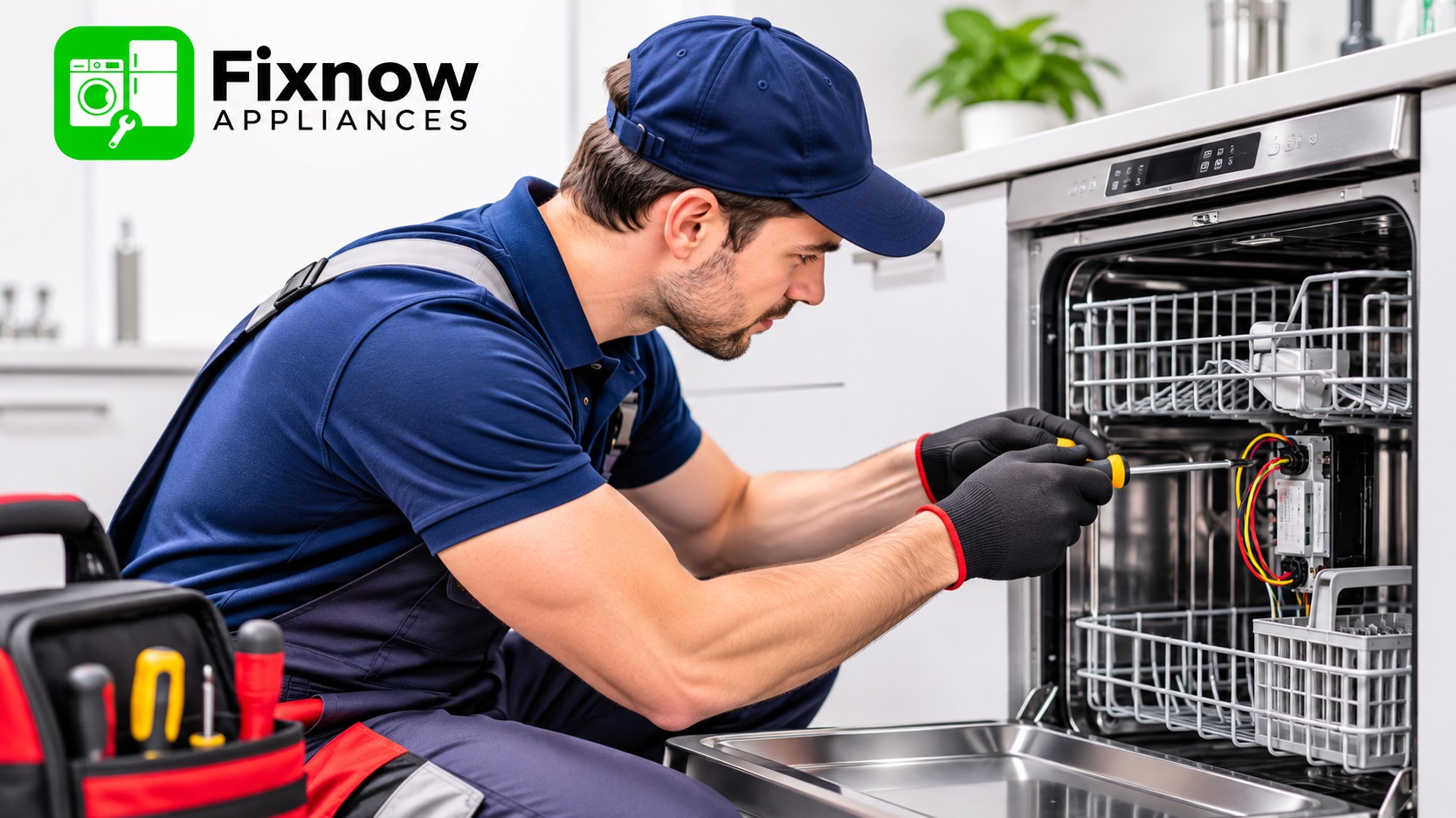
A dishwasher should clean dishes consistently without leaving standing water or creating leaks.
When performance changes, the problem may involve filters, spray arms, drainage components or water circulation.
Dishes remaining dirty after a cycle.
Dishwasher not draining.
Water leaking onto the floor.
Dishwasher not filling.
Detergent not dissolving.
Unusual noises.
Spray arms not rotating properly.
Appliance stopping mid-cycle.
Clogged filters.
Blocked spray-arm openings.
Faulty drain pump.
Damaged door gasket.
Water inlet valve problems.
Circulation pump failure.
Incorrect detergent use.
Electronic control issues.
Clean the dishwasher filter as recommended.
Check that dishes are not blocking the spray arms.
Use suitable dishwasher detergent.
Inspect the visible door seal.
Check that the drain hose is not visibly kinked.
Confirm that the water supply is available.
If the dishwasher continues leaking or fails to drain, stop using it until the issue has been inspected.
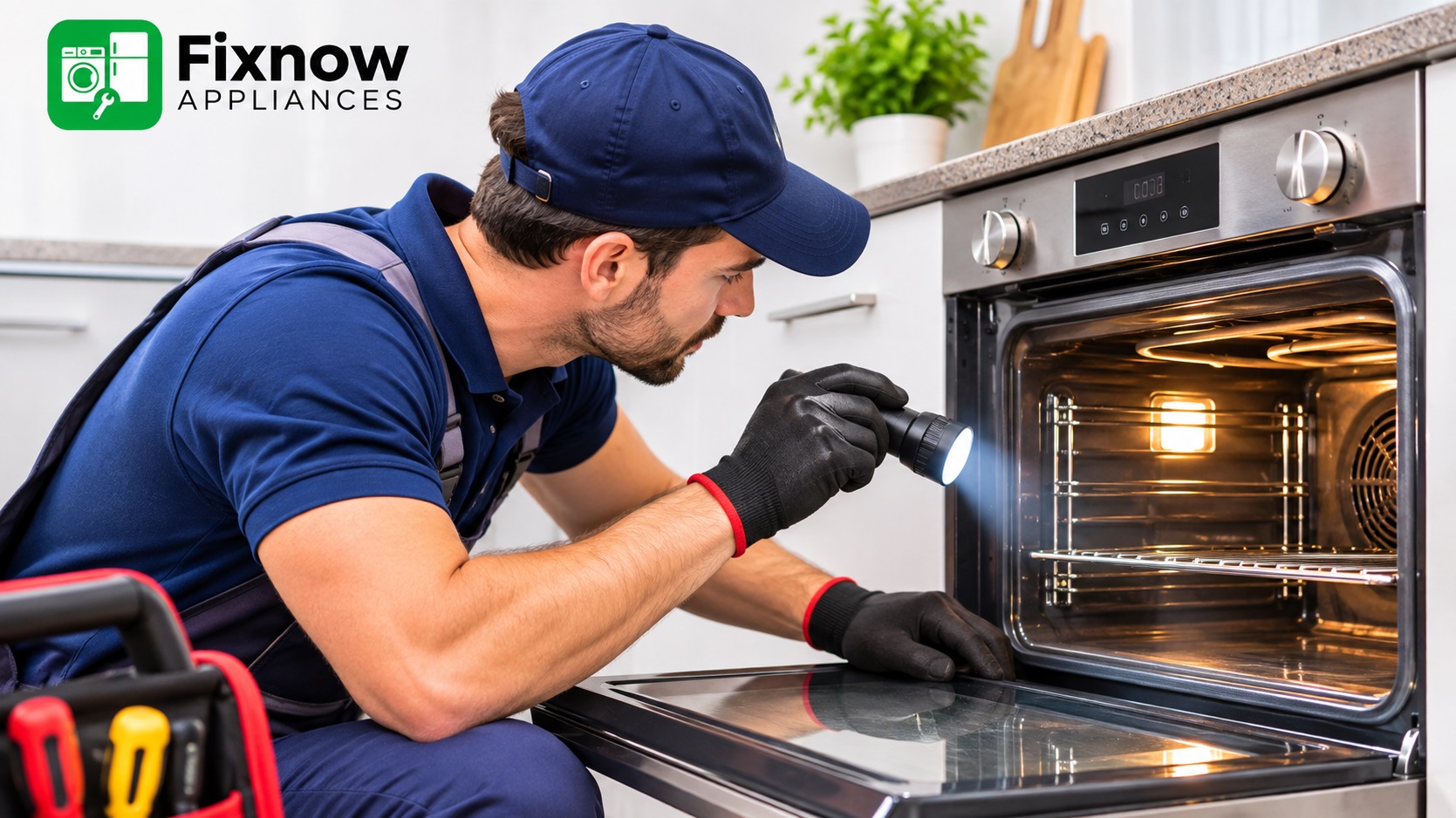
Cooking appliances need to operate consistently. An oven that takes too long to preheat or a stove burner that does not heat properly can make everyday cooking difficult.
Oven not heating.
Uneven cooking.
Temperature fluctuations.
Slow preheating.
Display not responding.
Appliance shutting off unexpectedly.
Possible causes include faulty heating elements, temperature sensors, thermostats, electrical connections or control boards.
Burner not heating.
Gas burner failing to ignite.
Uneven heat distribution.
Induction cooktop not detecting cookware.
Cracked glass surface.
Control panel not responding.
Clicking continuing after ignition.
The underlying fault may involve a burner switch, heating element, ignition system, sensor or electronic control.
Homeowners can:
Confirm that the appliance has power.
Check the selected cooking mode.
Verify temperature settings.
Use compatible cookware on induction cooktops.
Allow the appliance to cool before cleaning.
Inspect visible surfaces for damage.
Do not attempt gas-line repairs or internal electrical work yourself.
Important gas safety advice: If you smell gas, do not operate electrical switches, use flames or attempt to restart the appliance. Leave the building and contact the gas utility or emergency services from a safe location.
A freezer that cannot maintain its temperature may allow food to soften or partially thaw.
Excessive frost can also reduce usable storage space and affect airflow.
Heavy frost buildup.
Food not freezing properly.
Temperature fluctuations.
Water leaking around the appliance.
Ice maker problems.
Unusual fan or compressor noises.
Freezer running continuously.
Damaged door gasket.
Defrost-system failure.
Faulty temperature sensor.
Restricted airflow.
Evaporator fan problems.
Condenser-related issues.
Compressor or refrigeration-system faults.
Confirm that the door closes properly.
Inspect the door seal.
Keep internal vents clear.
Avoid overfilling the freezer.
Check the temperature setting.
Avoid leaving the door open for extended periods.
If food has thawed, assess its safety using appropriate food-safety guidance. Do not assume that refreezing automatically makes food safe.
Some appliance symptoms require immediate attention rather than routine troubleshooting.
Burning smells or smoke: Stop using the appliance. These symptoms may indicate overheating or an electrical fault.
Sparks or repeated breaker trips: Stop operating the appliance and arrange appropriate inspection. Never touch exposed or damaged wiring.
Gas odour: Leave the building without operating electrical switches or creating flames. Contact the gas utility or emergency services from a safe location.
Major water leakage: Stop the appliance and turn off the water supply if safely accessible. Avoid water near electrical connections.
Unusual overheating: Stop using the appliance and arrange an inspection.
Continuing to operate an appliance with these warning signs can increase the risk of damage or injury.
Before contacting an appliance repair company in West Edmonton, gather some basic information.
This helps explain the issue clearly and may help the repair team prepare for the appointment.
| Information | Why it is useful |
|---|---|
| Appliance type | Identifies the equipment requiring attention |
| Brand and model number | Helps identify specifications and compatible parts |
| Problem description | Explains the symptoms |
| Error code | Provides useful diagnostic information |
| When the issue started | Establishes the fault history |
| Previous repairs | Helps identify recurring problems |
| Service address | Helps confirm location coverage |
You can also take photographs of visible leaks, damaged seals or displayed error codes.
Avoid opening appliance panels or attempting repairs before the appointment.
Choosing a repair provider involves more than finding the earliest available appointment. Homeowners should also consider the quality of diagnosis, communication and repair workmanship.
Here are some practical factors to review.
Ask whether the technician has experience with your appliance type, brand and model.
Understand what the estimate includes, such as diagnostic charges, labour and replacement components.
Ask whether suitable replacement parts are available and whether OEM parts can be used where appropriate.
Find out what warranty applies to the completed repair and any replacement components. Ask about applicable conditions and exclusions.
A reliable repair process should explain the identified problem and recommended work before you approve the repair.
Confirm that the company covers your specific West Edmonton address. Ask about appointment windows, travel charges and same-day availability rather than assuming these are guaranteed.
These questions can help homeowners make an informed decision and avoid confusion during the service process.
Not every faulty appliance needs to be replaced. In many cases, repairing a component may restore normal operation.
However, the right decision depends on several factors.
Consider:
The appliance's age and overall condition.
The nature of the fault.
Availability of compatible replacement parts.
Expected reliability after repair.
Energy efficiency.
Whether similar problems have occurred repeatedly.
The overall repair estimate compared with replacement options.
A relatively new appliance with an isolated component failure may be a reasonable repair candidate.
An older appliance with repeated breakdowns or extensive damage may require a different approach.
Ask the technician to explain the repair options so you can compare them before making a decision.
Regular maintenance cannot prevent every breakdown, but it can help appliances operate efficiently and make certain developing problems easier to identify.
Clean accessible condenser areas according to manufacturer instructions.
Keep internal vents clear.
Inspect door seals.
Avoid unnecessary door openings.
Avoid overloading the drum.
Clean detergent drawers and accessible filters.
Inspect visible hoses.
Follow the recommended cleaning cycle.
Clean the lint filter after every cycle.
Keep exhaust ventilation clear.
Avoid operating the appliance when airflow is restricted.
Clean the filter regularly.
Inspect spray arms.
Use suitable detergent.
Avoid blocking internal water circulation.
Clean spills after the appliance has cooled.
Keep ventilation openings clear.
Follow the manufacturer's cleaning instructions.
Inspect the door gasket.
Keep air vents clear.
Monitor unusual frost buildup.
Check temperature settings.
Consistent maintenance supports appliance performance and may help reduce avoidable service problems.
When an essential household appliance stops working, a clear diagnosis and practical repair plan can make the process easier.
FixNow Appliances provides appliance repair services for major household appliances, including refrigerators, freezers, washing machines, dryers, dishwashers, ovens, stoves and cooktops.
The company describes professional diagnostic support, same-day and emergency service options, and the use of OEM parts where possible. Actual appointment availability, service coverage for your address and applicable terms should be confirmed when booking.
Whether your refrigerator is not cooling, your washing machine is leaking, your dryer is not heating or your dishwasher is not draining, explaining the symptoms clearly can help the team understand your repair requirements.
Before contacting the team, keep these details ready:
Appliance type and brand.
Model number, if available.
Description of the problem.
Error codes or visible warning signs.
Your West Edmonton service address.
Preferred appointment availability.
Call: (587) 962-2861
Website: https://fixnowappliances.ca/
Contact FixNow Appliances to discuss your appliance issue and confirm service availability for your address in West Edmonton.
Common problems include refrigerators not cooling, washing machines not draining, dryers not heating, dishwashers leaking, ovens failing to reach the correct temperature and stove burners not working.
Persistent performance problems, repeated error codes, unusual noises, water leakage, heating failures and electrical symptoms may indicate the need for professional diagnosis.
You can perform basic checks, such as confirming power, reviewing settings, checking visible hoses and cleaning accessible filters. Avoid opening electrical panels or attempting gas, refrigerant or internal component repairs.
The decision depends on the appliance's age, condition, fault type, parts availability and repair estimate. A technician can help explain the available repair options.
FixNow Appliances provides repair services for major household appliances, including refrigerators and freezers. Contact the company to discuss your specific problem and confirm service availability.
Contact FixNow Appliances to confirm service coverage for your exact West Edmonton address and available appointment times.
Same-day service depends on technician availability, location, appliance type and parts requirements. Contact the repair team to ask about the earliest available appointment.
Share the appliance type, brand, model number, symptoms, error codes and service address. Photographs of visible problems can also help explain the issue.
Call (587) 962-2861 or visit https://fixnowappliances.ca/ to discuss your appliance repair requirements and confirm service availability in West Edmonton.
Leave A Reply
Your email address will not be published. Required fields are marked *