-
-
-
Edmonton, Alberta, Canada
Mon – Sat: 8:00 AM – 7:00 PM
Please tap the button to book your appliance repair on WhatsApp.
Booking Enquiry on WhatsApp
FixNow Appliances provides fast, professional appliance repair across Edmonton, Sherwood Park, Beaumont, St. Albert, Stony Plain and nearby areas. Our licensed technicians repair fridges, washers, dryers, dishwashers, ovens, stoves and more using OEM parts and manufacturer-approved methods.
25
Nov
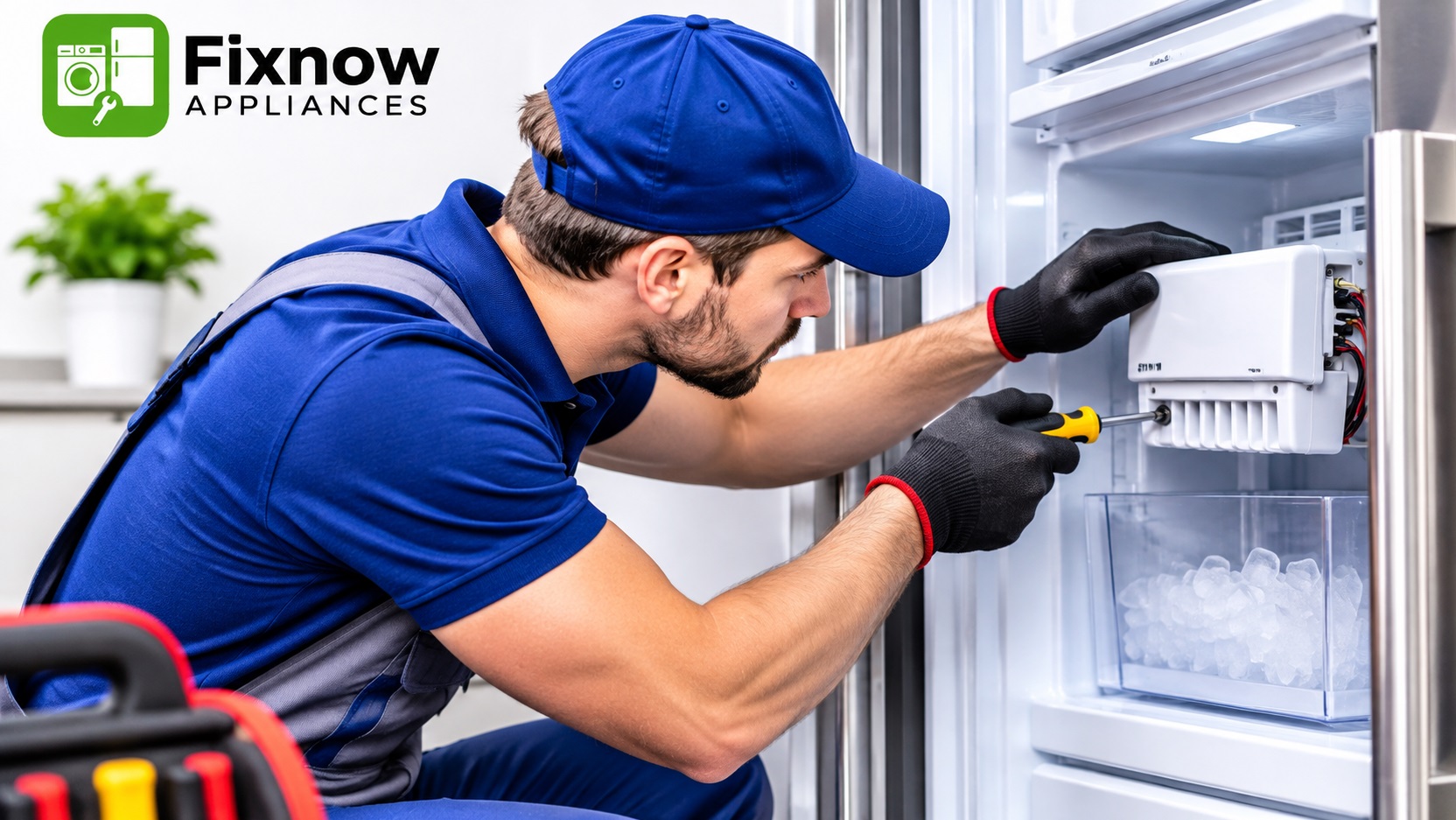
You open the freezer expecting a fresh batch of ice, but the ice bin is empty. Perhaps the ice maker has stopped completely, or it is producing only a few cubes when it normally makes plenty.
It can be frustrating, especially when you rely on your refrigerator every day. The good news is that an ice maker that stops producing ice does not always mean the entire refrigerator needs repair.
The problem may be related to water supply, a clogged filter, incorrect freezer temperature or a faulty ice maker component. Understanding the symptoms can help you identify what might be happening and decide when to call a technician.
For Calgary homeowners, this guide from FixNow Appliances explains the common reasons an ice maker stops working and what to check before arranging refrigerator repair.
An automatic ice maker needs a steady water supply to produce ice. If water cannot reach the appliance, the ice tray will remain empty.
This is one of the first things worth checking when an ice maker suddenly stops working.
Possible causes include:
Water supply valve is turned off.
Water line is kinked or restricted.
Water inlet connection is loose.
Household water pressure is insufficient.
Water inlet valve has developed a fault.
What you can check:
Look behind the refrigerator, if the connection is safely accessible, and check whether the water line appears bent or damaged. Make sure the water supply valve has not accidentally been switched off.
Avoid pulling the refrigerator forcefully or disconnecting water lines without knowing how to shut off the supply.
If the water supply appears normal but the ice maker still does not fill, the inlet valve or another internal component may need inspection.
A refrigerator water filter gradually collects impurities from the water supply. Over time, it can become restricted and reduce the amount of water reaching the ice maker.
A clogged filter may cause:
Smaller ice cubes.
Slow ice production.
Hollow or misshapen ice.
Reduced water dispenser flow.
No ice production in some cases.
What to do:
Check the filter replacement schedule in your refrigerator manual. If the filter is overdue, replace it with a compatible model recommended by the manufacturer.
After replacement, follow the manufacturer's instructions for flushing the filter and restarting normal operation.
If water flow does not improve, the issue may be elsewhere in the supply system.
An ice maker needs the freezer to remain sufficiently cold. If the temperature rises above the recommended operating range, water may not freeze properly.
This can happen when the freezer door is left open, food blocks air vents or the cooling system is struggling.
Common warning signs:
Ice production becomes slower.
Ice cubes are soft or partially frozen.
Frozen food begins to soften.
Ice cream becomes less firm.
The freezer feels warmer than usual.
Check the temperature setting and compare it with the manufacturer's recommendation. Many refrigerators are designed to operate around 0°F (-18°C) in the freezer, although the correct setting depends on the model.
If the freezer cannot maintain its temperature, the problem may involve the cooling system rather than the ice maker itself.
This may sound obvious, but an accidentally disabled ice maker is a surprisingly simple reason for an empty ice bin.
Some refrigerators have a physical switch, while others use electronic controls or a menu on the display panel.
Check the following:
Ice maker power switch.
Control panel ice-making setting.
Ice maker arm position, where applicable.
Child lock or control lock settings.
Any displayed warning message.
Refer to your refrigerator manual because the controls differ between brands and models.
If the ice maker is enabled but still does not operate, further troubleshooting may be necessary.
Sometimes water reaches the refrigerator but cannot pass through the internal supply line because the line has frozen.
This can prevent the ice maker from filling even when the household water supply is working normally.
Possible symptoms:
Ice maker stops producing cubes.
Water dispenser flow becomes weak.
Ice production returns temporarily and stops again.
No water enters the ice tray.
A frozen line may be linked to temperature settings, insulation problems or the position of the water line.
Do not use sharp tools, open flames or excessive heat to thaw an internal water line. A technician can inspect the affected area and determine why freezing is occurring.
The water inlet valve controls the flow of water into the refrigerator. When it fails, the ice maker may not receive enough water to produce ice.
A faulty valve can cause:
No water entering the ice tray.
Incomplete ice cubes.
Slow ice production.
Water leakage around the refrigerator.
The valve is an internal component connected to the refrigerator's water supply and electrical system.
Its operation may require professional testing. Replacing it without confirming the fault can lead to unnecessary repairs.
The ice maker assembly contains several components that work together to fill, freeze and release ice cubes.
If one of these components fails, the entire ice-making process may stop.
Possible problems include:
Faulty motor.
Damaged ice tray mechanism.
Defective thermostat or sensor.
Faulty internal switch.
Electronic control failure.
If the refrigerator has a normal water supply and the freezer temperature is correct, the ice maker assembly may need closer inspection.
Sometimes the ice maker is still working, but existing cubes become stuck inside the mechanism.
A jam can prevent new ice from being released into the storage bin.
Signs of a jammed ice maker:
Ice cubes are stuck together.
The ice maker makes unusual noises.
The storage bin does not receive new cubes.
Ice production stops unexpectedly.
If the ice bin is removable, check the manufacturer's instructions before taking it out. Remove loose ice only when it can be done safely without forcing the mechanism.
Do not use sharp objects to break ice inside the assembly. You could damage the tray, motor or surrounding components.
Sometimes the ice maker produces cubes, but the refrigerator does not dispense them properly.
This is a different problem from an ice maker that produces no ice.
Possible causes include:
Ice dispenser motor failure.
Jammed ice chute.
Frozen or clumped ice.
Faulty dispenser switch.
Damaged control components.
Check whether the ice storage bin is correctly positioned and whether visible ice is blocking the chute.
If the dispenser remains unresponsive, professional inspection may be needed.
Modern refrigerators use electronic controls to manage temperature, water flow and ice production.
A faulty sensor or control board can interrupt the ice-making cycle even when the other refrigerator functions appear normal.
Common symptoms include:
Ice maker stops without an obvious reason.
Control panel displays an error code.
Ice production starts and stops repeatedly.
Other refrigerator functions behave unexpectedly.
Write down any error code and note when the problem started. This information can help a technician diagnose the issue.
Avoid opening electronic panels or attempting internal electrical repairs yourself.
Before arranging a service visit, you can perform a few basic checks.
Step 1: Check the ice maker setting
Make sure the ice maker has not been accidentally switched off.
Step 2: Inspect the water supply
Look for visible kinks or damage in the accessible water line.
Step 3: Check the water filter
Confirm whether the filter needs replacement according to the manufacturer's schedule.
Step 4: Review the freezer temperature
Make sure the freezer is set to the recommended temperature.
Step 5: Inspect the ice bin
Check whether the bin is correctly positioned and whether visible ice is blocking the mechanism.
Step 6: Record any error codes
Note any message displayed on the refrigerator control panel.
If these checks do not resolve the issue, a technician can test the water supply, inlet valve, ice maker assembly and electronic controls.
A few basic checks may help resolve minor issues, but persistent ice maker problems often require a closer look.
Consider professional refrigerator repair if:
The ice maker does not produce ice after basic checks.
Water is leaking around the refrigerator.
The water inlet valve appears faulty.
The ice maker makes repeated unusual noises.
Ice production stops despite correct freezer temperature.
The dispenser motor does not respond.
Error codes continue appearing.
The refrigerator is also struggling to cool.
A proper diagnosis helps identify whether the issue is limited to the ice maker or connected to another refrigerator system.
An ice maker that stops producing ice does not automatically require a new refrigerator.
In many cases, an individual component can be repaired or replaced.
The right decision depends on:
Fault type: A clogged filter or damaged inlet valve requires a different solution from a failed ice maker assembly.
Appliance age: Older refrigerators may have additional worn components that need consideration.
Parts availability: Compatible replacement parts depend on the refrigerator's brand and model.
Overall condition: The cooling system, water dispenser and other functions should also be considered.
A technician can inspect the refrigerator and explain whether repairing the existing ice maker is a practical option.
A little regular care can help keep your refrigerator's ice-making system working properly.
Replace the water filter as recommended by the manufacturer.
Keep the freezer at its recommended temperature.
Avoid overloading the freezer and blocking air vents.
Keep the ice bin clean.
Make sure the refrigerator door closes properly.
Inspect accessible water lines for visible damage.
Follow the manufacturer's cleaning and maintenance instructions.
If ice production becomes noticeably slower, investigate the issue early rather than waiting for the system to stop completely.
An ice maker that stops producing ice can have several possible causes, from a restricted water supply to a faulty internal component. Identifying the actual problem is important before deciding which repair is needed.
FixNow Appliances helps homeowners with appliance repair requirements. If your refrigerator is not making ice, the dispenser is malfunctioning or the freezer is not maintaining the right temperature, visit the company website to discuss the issue and confirm service availability in your area.
Company: FixNow Appliances
Website: https://fixnowappliances.ca/
Common reasons include a disabled ice maker, clogged water filter, interrupted water supply, frozen water line or faulty ice maker component.
Production time varies by refrigerator model, freezer temperature and water supply. Check your manufacturer's manual for the expected ice-making cycle.
Yes. A restricted filter can reduce water flow and affect ice production.
Low water flow, a clogged filter or a water supply problem may cause smaller-than-normal cubes.
The noise may come from a jammed mechanism, faulty motor, water inlet issue or another internal component.
Yes. If water cannot travel through the supply line, the ice maker may not fill its tray.
Yes. If the freezer is too warm, water may not freeze properly and ice production can slow down or stop.
A blocked ice chute, jammed cubes, faulty dispenser motor or control problem may prevent ice from dispensing.
In many cases, yes. Individual components may be repairable or replaceable, depending on the refrigerator model and the fault.
If basic checks do not restore ice production, or you notice leaks, unusual noises, recurring errors or cooling problems, arrange a professional inspection.
Visit https://fixnowappliances.ca/ to discuss your refrigerator issue and confirm the services available for your location.
Leave A Reply
Your email address will not be published. Required fields are marked *