-
-
-
Edmonton, Alberta, Canada
Mon – Sat: 8:00 AM – 7:00 PM
Please tap the button to book your appliance repair on WhatsApp.
Booking Enquiry on WhatsApp
FixNow Appliances provides fast, professional appliance repair across Edmonton, Sherwood Park, Beaumont, St. Albert, Stony Plain and nearby areas. Our licensed technicians repair fridges, washers, dryers, dishwashers, ovens, stoves and more using OEM parts and manufacturer-approved methods.
20
Nov
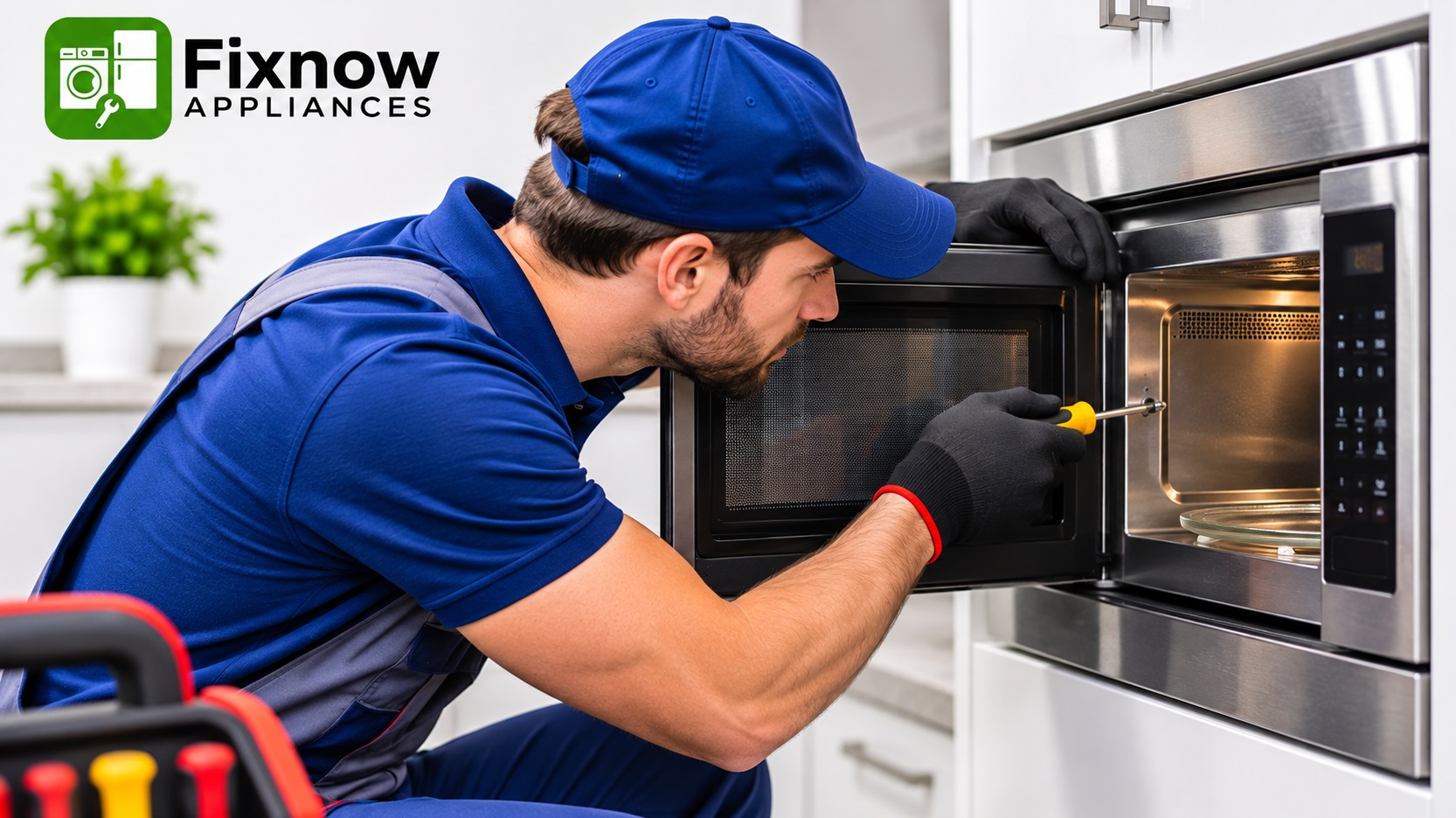
A microwave makes everyday cooking faster and more convenient. From reheating leftovers to preparing quick meals, it is an appliance many households rely on regularly.
But when the microwave turns on, the plate rotates and the timer counts down without heating the food, something may be wrong.
This problem can have several causes, ranging from incorrect settings and door-related faults to failures in internal electrical components.
For Calgary homeowners, understanding the warning signs can help determine whether a simple check is appropriate or professional microwave repair is needed.
This guide from FixNow Appliances explores why microwaves stop heating, what you can safely check and when to arrange a technician's inspection.
One of the most confusing microwave problems occurs when the appliance appears to operate normally but food remains cold.
You may hear the usual operating sound, see the interior light and notice the turntable rotating. However, the microwave does not heat the food.
Microwave starts but food stays cold.
Timer counts down normally.
Turntable rotates without heating.
Food takes unusually long to warm.
Heating performance becomes inconsistent.
Faulty magnetron.
Damaged high-voltage diode.
Capacitor problem.
Door interlock switch failure.
Control board malfunction.
These components are part of the microwave's internal heating and electrical systems. Identifying the actual fault requires appropriate diagnostic procedures.
If the microwave consistently runs without heating, stop using it until the problem has been assessed.
The magnetron is a key component responsible for producing the microwave energy used to heat food.
When it fails, the appliance may continue running without generating heat.
Microwave operates but does not heat.
Food remains cold after a complete cycle.
Heating performance suddenly stops.
Unusual humming or buzzing sounds may occur.
A failed magnetron is one possible explanation, but similar symptoms can result from other internal component failures.
A technician should inspect the relevant electrical and heating components before recommending replacement.
The high-voltage diode is part of the microwave's electrical system. It helps supply the magnetron with the required electrical conditions for heating.
If the diode fails, the microwave may stop heating correctly.
Microwave runs without warming food.
Heating performance suddenly disappears.
Unusual electrical humming or buzzing.
Appliance operates but produces no effective heat.
Diagnosing a diode problem involves working with high-voltage circuitry. This is not a suitable homeowner repair.
A qualified technician can test the component using appropriate safety procedures.
Microwave ovens include door safety interlocks designed to prevent operation when the door is not properly closed.
If the door does not latch correctly, the appliance may refuse to start or may behave unexpectedly.
Damaged door latch.
Worn door hinges.
Misaligned door.
Faulty door interlock switch.
Debris around the door closure area.
Make sure the door is fully closed.
Check for visible food debris around the door edges.
Look for obvious damage to the latch or hinges.
Avoid forcing the door shut.
If the door does not close securely or the microwave operates abnormally when the door is moved, stop using it and arrange professional inspection.
Never bypass or disable a microwave door safety switch.
Door interlock switches help ensure that the microwave operates only when its door is securely closed.
A faulty switch may prevent the heating system from operating correctly.
Microwave does not start consistently.
Appliance stops unexpectedly.
Door appears closed but operation is interrupted.
Controls respond inconsistently when the door is closed.
A damaged switch may require replacement, but the technician should first confirm the actual cause.
Because these switches are connected to the appliance's safety system, avoid attempting an internal repair yourself.
The high-voltage capacitor is part of the circuit that supports microwave heating.
A failure in this component may prevent the magnetron from operating correctly.
Microwave runs without heating.
Unusual buzzing or humming.
Appliance stops heating unexpectedly.
Internal electrical component failure.
Microwave capacitors can retain a dangerous electrical charge even after the appliance has been unplugged.
Never open the microwave casing or attempt to test or discharge the capacitor yourself. Internal microwave repairs should be handled by a qualified technician using appropriate safety procedures.
Modern microwaves use electronic control boards to manage cooking time, power levels and operating functions.
If the control board develops a fault, the appliance may not activate the heating system correctly.
Buttons respond inconsistently.
Microwave starts but does not heat.
Display behaves unusually.
Cooking programmes stop unexpectedly.
Error codes appear.
Possible causes include electronic component failure, damaged connections or other control-system faults.
A technician can inspect the control system and determine whether repair or replacement is appropriate.
Not every microwave heating issue is caused by a damaged component.
Sometimes the appliance is operating on an incorrect setting.
Power level.
Defrost mode.
Timer-only operation.
Delayed-start settings, if available.
Selected cooking programme.
If the microwave is set to a low power level or defrost programme, heating may take longer than expected.
Review the manufacturer's instructions and select an appropriate cooking programme.
If the appliance still fails to heat under normal settings, further inspection may be necessary.
A microwave depends on a stable electrical supply to operate correctly.
Depending on the appliance design, a blown internal fuse or electrical fault may prevent normal operation.
Microwave does not turn on.
Display switches off unexpectedly.
Appliance stops during operation.
Circuit breaker trips.
Controls become unresponsive.
Confirm that the power outlet is working.
Check whether the appliance plug is securely connected.
Inspect the accessible power cord for visible damage.
Check the household circuit breaker if safe.
Do not replace internal fuses or open electrical panels yourself.
If the breaker trips repeatedly, stop using the appliance and arrange qualified electrical or appliance inspection.
Sometimes a microwave does heat food, but the results are inconsistent.
One section may become hot while another remains cold.
Turntable not rotating correctly.
Incorrect placement of food.
Damaged turntable support.
Internal heating-system fault.
Incorrect power or cooking settings.
Confirm that the turntable is correctly positioned.
Check that the roller ring is clean and properly seated.
Use microwave-safe cookware.
Arrange food according to the manufacturer's cooking guidance.
Follow recommended standing times for more even heating.
If uneven heating continues across different foods and settings, a technician can investigate the appliance.
A microwave normally produces some operating sounds, including fan noise and the sound of the turntable rotating.
However, new or unusually loud noises should not be ignored.
Loud humming or buzzing.
Grinding sounds.
Repeated clicking.
Sparking or crackling.
Noise accompanied by a burning smell.
Possible causes include turntable problems, loose components or internal electrical faults.
If you notice sparks, smoke, burning smells or unusual electrical noises, stop the microwave immediately. Disconnect power only if it is safe to do so, and do not use the appliance again until it has been inspected.
Before arranging a service visit, homeowners can perform a few basic external checks.
These checks should not involve opening the microwave casing or accessing internal components.
Make sure the microwave is not operating in timer-only or defrost mode.
Confirm that the door closes normally and that there is no visible damage to the latch or hinges.
Make sure the turntable and roller ring are correctly positioned.
Confirm that the outlet is working and the plug is properly connected.
Record any error code displayed on the control panel.
If there are no signs of electrical damage, sparking, smoke, unusual odours or door problems, you can place a microwave-safe cup containing water inside and run a short heating cycle according to the manufacturer's instructions.
If the water remains cold, stop using the microwave and arrange professional inspection.
Do not operate an empty microwave.
Microwaves contain high-voltage components that can remain dangerous even after the appliance has been unplugged.
The capacitor, magnetron circuit and related electrical components require specialised knowledge and safety procedures.
Opening the outer casing can expose you to serious electrical hazards.
Homeowners should not attempt to:
Replace a magnetron.
Test a high-voltage capacitor.
Repair internal wiring.
Bypass door interlock switches.
Replace internal fuses without appropriate qualifications.
Modify microwave safety systems.
Professional diagnosis is the safer option for internal microwave faults.
A microwave that consistently fails to heat may have an internal component problem.
Consider arranging professional microwave repair if:
The microwave runs but does not heat food.
Heating performance has become inconsistent.
The door does not close properly.
The appliance displays recurring error codes.
The microwave makes unusual electrical noises.
The turntable stops working despite correct positioning.
The microwave repeatedly trips the circuit breaker.
You notice sparks, smoke or burning smells.
For smoke, sparks or suspected electrical damage, stop using the appliance immediately.
A technician can inspect the door interlock system, heating circuit, control board and other relevant components to identify the underlying fault.
A microwave that stops heating does not automatically need replacement.
Some faults may be repairable, while others may make replacement a more practical option.
Consider these factors before deciding:
Age of the appliance: Older microwaves may have more worn components, but age alone does not determine whether repair is worthwhile.
Type of fault: A door switch or other replaceable component may be repairable. Major heating-system or control-board failures require a more detailed assessment.
Repair history: Repeated breakdowns may indicate that replacement deserves consideration.
Parts availability: Some older models may have limited access to compatible replacement components.
Overall condition: Consider the condition of the door, hinges, interior cavity, controls and power cord.
Repair suitability: A professional diagnosis can help determine whether the expected repair is practical for the appliance's condition.
The goal is not simply to get the microwave running again, but to make a safe and informed repair decision.
Regular care can help maintain microwave performance and reduce avoidable problems.
Remove food splashes and grease using cleaning methods recommended by the manufacturer.
Avoid metal objects and unsuitable cookware unless the manufacturer specifically permits their use.
Remove food residue around the door edges and ensure the door closes properly.
Operating an empty microwave can damage internal components.
Stop using the appliance if new buzzing, sparking or burning smells occur.
Use the recommended power settings, cooking times and maintenance procedures.
Recurring heating problems should be assessed rather than ignored.
A microwave that runs without heating can be frustrating, especially when it is part of your everyday kitchen routine.
Whether the problem involves a faulty door switch, magnetron, high-voltage component, control board or another internal fault, identifying the actual cause is the first step towards a practical repair decision.
FixNow Appliances provides appliance repair services for major household appliances.
Calgary homeowners experiencing microwave heating problems can visit the company website to discuss their appliance concerns and confirm current service availability for their location.
Company: FixNow Appliances
Website: https://fixnowappliances.ca/
Calgary Contact: (587) 962-2861
Common causes include a faulty magnetron, high-voltage diode, capacitor, door interlock switch or control board. Professional diagnosis is needed to identify the exact fault.
Yes. Microwave door interlock switches are part of the appliance's safety system. A faulty switch may prevent normal operation.
A magnetron may be replaceable, depending on the appliance model, parts availability and overall condition. A technician should assess whether repair is practical.
A loud or unusual buzzing sound may indicate an internal electrical or heating-system problem. Stop using the appliance if the sound is new or accompanied by other warning signs.
Yes. Defrost, low-power or timer-only settings may make heating appear ineffective. Check the selected programme before assuming a component has failed.
No. Microwaves contain high-voltage components that can retain dangerous electrical charges even when unplugged. Internal inspection should be handled by a qualified technician.
Possible causes include turntable problems, incorrect food placement, unsuitable cookware or an internal heating-system fault.
Yes. A high-voltage capacitor can retain a dangerous charge after the appliance is disconnected from power. Never attempt to test or discharge it yourself.
No. Stop the appliance immediately. Do not continue using it until the cause has been identified and the microwave has been checked.
It depends on the appliance's age, overall condition, fault type and replacement-part availability. A professional diagnosis can help you compare repair and replacement options.
Keep the interior clean, use suitable cookware, avoid operating the appliance empty, maintain the door and follow the manufacturer's instructions.
Visit https://fixnowappliances.ca/ or call (587) 962-2861 to discuss your microwave problem and confirm current service availability for your location.
Leave A Reply
Your email address will not be published. Required fields are marked *