-
-
-
Edmonton, Alberta, Canada
Mon – Sat: 8:00 AM – 7:00 PM
Please tap the button to book your appliance repair on WhatsApp.
Booking Enquiry on WhatsApp
FixNow Appliances provides fast, professional appliance repair across Edmonton, Sherwood Park, Beaumont, St. Albert, Stony Plain and nearby areas. Our licensed technicians repair fridges, washers, dryers, dishwashers, ovens, stoves and more using OEM parts and manufacturer-approved methods.
24
Nov
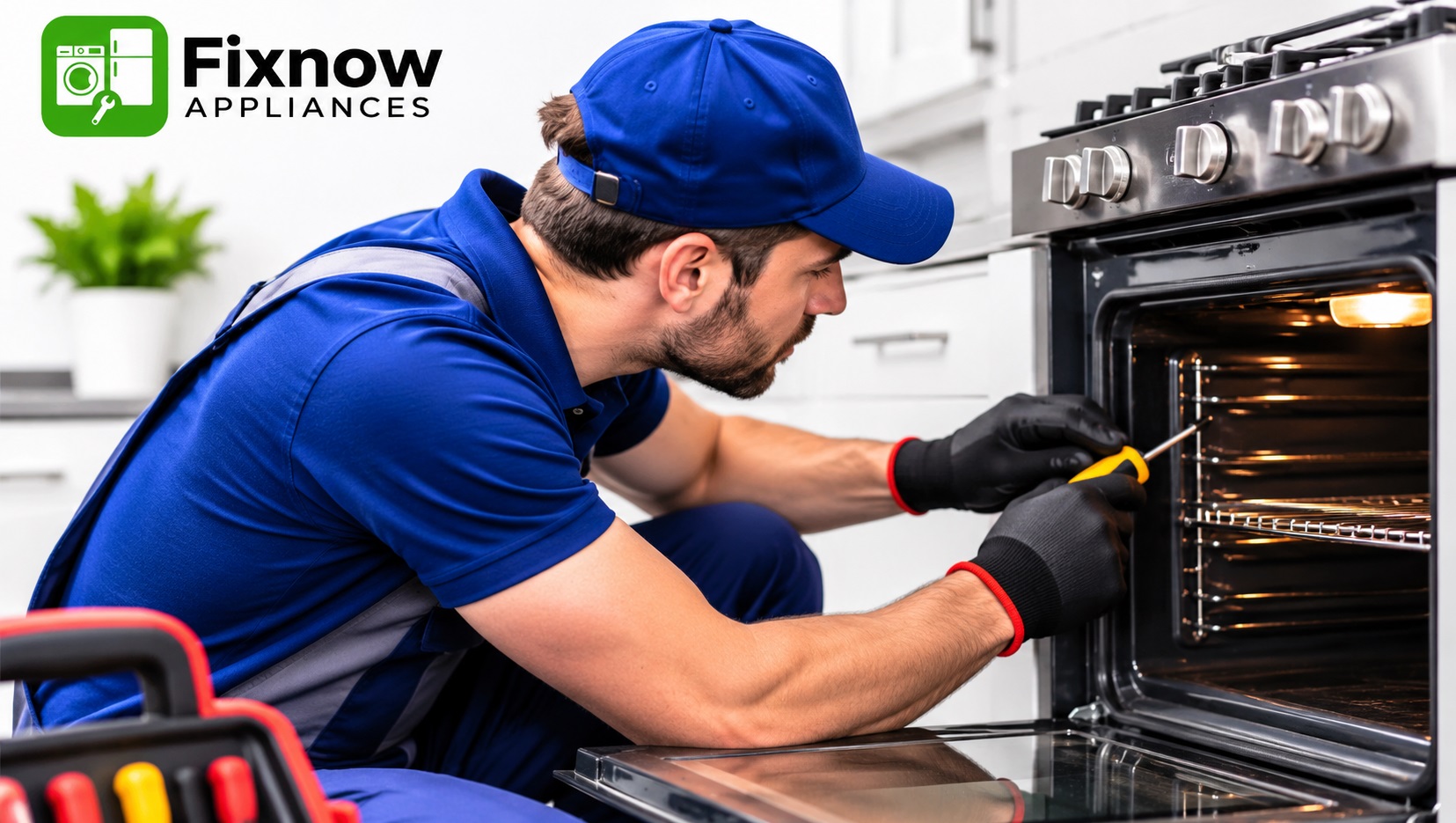
A range or stove is one of the hardest-working appliances in any kitchen. From preparing everyday meals to cooking for family gatherings, homeowners rely on it to work consistently. When the oven stops heating, a burner refuses to turn on or the control panel becomes unresponsive, even a small fault can disrupt the entire cooking routine.
The challenge is that different stove problems can produce similar symptoms. An oven that takes too long to heat, for example, may have a faulty heating element, temperature sensor or electrical connection. A burner that will not ignite may have an ignition issue, blocked ports or a gas supply problem.
Understanding these warning signs can help homeowners make safer decisions and know when professional range or stove repair is necessary.
This guide from FixNow Appliances explains common oven, burner and control faults, along with practical checks you can perform before arranging service.
An oven that does not heat properly is one of the most common range-related complaints. You may notice that food takes longer to cook, remains undercooked or does not reach the expected temperature.
Faulty bake or broil heating element.
Defective temperature sensor.
Damaged electrical connection.
Malfunctioning control board.
Incorrect oven settings.
Door not closing or sealing properly.
In an electric oven, a damaged heating element may prevent the appliance from reaching the required temperature. In a gas oven, ignition or gas-control problems may affect heating performance.
First, confirm that the oven is set to the correct cooking mode and temperature. Check whether the door closes completely and look for visible damage to the heating element.
If the oven still does not heat, avoid removing panels or testing internal electrical components yourself. A technician can inspect the heating system and identify the faulty part.
A burner that suddenly stops working can make cooking difficult, particularly when the remaining burners are needed for several dishes.
The possible causes depend on whether your range uses gas or electricity.
A gas burner may fail to ignite because of:
Blocked burner openings.
Misaligned burner cap.
Moisture around the ignition electrode.
Faulty spark igniter.
Interrupted gas supply.
An electric burner may stop heating because of:
Burned-out heating element.
Damaged burner receptacle.
Faulty control switch.
Internal wiring issue.
Electronic control problem.
For removable burner components, allow the appliance to cool completely before checking their positioning. Follow the manufacturer's cleaning instructions and avoid touching internal connections.
If a burner repeatedly fails, professional diagnosis is the safer option.
Sometimes an oven switches on and appears to work normally, but the actual cooking results tell a different story.
Food may burn before the expected cooking time, or baking may remain uneven despite following the recipe.
Temperature sensor fault: The sensor helps the oven monitor internal temperature. If its readings are inaccurate, the oven may not regulate heat correctly.
Control board problem: Electronic control faults can interfere with temperature management.
Heating element issue: A damaged element may cause inconsistent heating.
Door seal damage: Heat escaping through a worn gasket can affect cooking performance.
Food burns on one side.
Baking takes longer than expected.
Oven temperature fluctuates.
The appliance overheats.
Cooking results are inconsistent.
An oven thermometer may help you identify a temperature difference, but it cannot confirm which component has failed. If the problem continues, arrange a proper inspection.
A clicking sound is normal while a gas burner is trying to ignite. However, continuous clicking after the burner has been switched off or successfully lit may indicate an ignition problem.
Moisture around the ignition system.
Food residue near the burner.
Incorrectly positioned burner cap.
Faulty ignition switch.
Damaged spark module.
Switch off the burner and allow the cooktop to cool. If there has been a recent spill or cleaning, let the affected components dry according to the manufacturer's instructions.
If clicking continues, stop using the affected burner and arrange professional service.
Gas safety reminder: If you smell gas, do not attempt further troubleshooting. Avoid operating electrical switches or creating flames, leave the building and contact your gas utility or emergency service from a safe location.
Control knobs allow homeowners to adjust burner heat and select cooking settings. When a knob becomes loose, stuck or unresponsive, controlling the appliance can become difficult.
Damaged control knob.
Worn internal switch.
Faulty temperature regulator.
Broken control shaft.
Internal electrical or gas-control fault.
Sometimes a removable knob may simply be incorrectly positioned. Check it only when the appliance is switched off and cool.
If the knob does not operate normally or the burner cannot be controlled reliably, stop using the affected section until it has been inspected.
Modern ranges often use electronic control panels for temperature settings, cooking modes, timers and other functions.
A problem with the display does not always mean the entire appliance has failed.
Buttons do not respond.
Display remains blank.
Settings change unexpectedly.
Oven refuses to start.
Error codes appear.
Touch controls become intermittent.
Electrical supply interruption.
Activated control lock.
Faulty touch panel.
Damaged wiring.
Electronic control board failure.
Check the owner's manual for control-lock settings and manufacturer-approved reset instructions.
If the panel remains unresponsive, avoid opening the control area. Internal electrical components should be inspected by a qualified technician.
An oven door that does not close completely can affect cooking performance and allow heat to escape.
Worn door gasket.
Damaged hinges.
Misaligned door.
Obstruction around the door frame.
Loose or damaged door components.
Heat escaping around the door.
Uneven cooking results.
Door feels loose.
Visible gaps around the seal.
Oven takes longer to reach the selected temperature.
Check for visible obstructions and inspect the gasket for tears or deterioration. If the hinges or door assembly appear damaged, professional repair may be required.
An electric range that repeatedly trips the circuit breaker should never be ignored.
The problem may involve the appliance's electrical system or the household circuit.
Damaged heating element.
Short circuit.
Faulty internal wiring.
Electrical insulation failure.
Circuit overload.
Defective control component.
If the breaker trips repeatedly, stop using the range. Do not keep resetting the breaker to continue cooking.
An electrician or qualified appliance technician can help determine whether the issue is related to the household circuit or the appliance itself.
A gas oven that takes unusually long to reach the selected temperature may have an ignition or heating-system problem.
Weak or faulty igniter.
Gas supply issue.
Temperature sensor malfunction.
Burner obstruction.
Control-system fault.
A weak igniter may struggle to operate the oven burner correctly. However, the exact cause should be confirmed through testing rather than replacing components based on symptoms alone.
If the oven repeatedly struggles to heat, arrange professional inspection.
Some sounds are part of normal oven operation. For example, fans may run during cooking or cooling cycles, and metal components can make occasional expansion sounds.
However, sudden or persistent unusual noises deserve attention.
Repeated clicking.
Loud buzzing.
Grinding from a fan.
Unusual popping.
Electrical humming.
Rattling from loose components.
The source of the noise matters. A gas ignition system, cooling fan, convection fan or electrical component may produce different sounds.
If you notice burning smells, sparks or unusual electrical noises, stop using the appliance and arrange an inspection.
Before arranging a service visit, homeowners can perform a few basic checks without dismantling the appliance.
Confirm whether your range uses gas, electricity or a combination of both. This helps narrow down possible causes.
Make sure the correct cooking mode, temperature and burner have been selected.
When the appliance is cool and switched off, look for visible damage to burner caps, removable coils, door gaskets and control knobs.
Food residue around removable burner components or objects preventing the oven door from closing may affect operation.
If the control panel displays an error, note the exact message and appliance model.
Do not continue using an appliance that has a gas smell, exposed wiring, uncontrolled heating, repeated electrical tripping or visible sparks.
Never attempt internal gas repairs or live electrical testing without the required qualifications.
Some problems involve simple external checks, while others require specialised tools and technical knowledge.
Consider professional repair if:
The oven does not heat.
Temperature remains inconsistent.
A burner repeatedly fails to ignite.
An electric element does not work.
Control knobs become unresponsive.
The display shows recurring error codes.
The oven door does not seal properly.
The circuit breaker repeatedly trips.
The appliance produces unusual electrical sounds.
A proper diagnosis helps identify the actual fault and reduces the risk of unnecessary component replacement.
When a range develops a fault, replacement is not always the only option. Many problems can be addressed by repairing an individual component.
Before making a decision, consider:
Nature of the problem: A faulty heating element or damaged knob may require a different repair approach from a major control-board or gas-system fault.
Appliance condition: Consider the condition of the oven, burners, controls, door and electrical connections.
Parts availability: Confirm whether compatible components are available for your particular model.
Repair history: Repeated faults may indicate that a broader assessment is necessary.
Long-term reliability: Consider whether the expected repair will restore dependable operation.
A technician's assessment can help you understand the appliance's condition and make a practical decision.
Regular care can help reduce avoidable problems and support consistent cooking performance.
Clean spills after the appliance has cooled.
Keep gas burner caps correctly positioned.
Avoid blocking burner openings with food residue.
Do not force control knobs.
Keep oven door seals clean.
Follow the manufacturer's cleaning instructions.
Avoid placing heavy objects on glass cooktops.
Pay attention to unusual sounds or heating changes.
Arrange inspection when a fault repeatedly returns.
Small maintenance habits can help you notice developing problems before they interrupt your kitchen routine.
A range or stove combines several systems, including heating elements, burners, ignition components, temperature sensors and electronic controls. When one part stops working, identifying the underlying fault is important before deciding on a repair.
Whether your oven is not heating, a burner refuses to ignite, the control panel is unresponsive or the appliance is showing unusual symptoms, FixNow Appliances can help homeowners discuss their appliance repair requirements.
Visit the company website to learn more about available services and confirm service availability for your location.
Company: FixNow Appliances
Website: https://fixnowappliances.ca/
Common issues include ovens that do not heat, burners that stop working, ignition failures, temperature fluctuations, faulty control knobs and unresponsive electronic panels.
A faulty heating element, igniter, temperature sensor or control component may prevent the oven from heating correctly even when the display remains operational.
Moisture, food residue, a misaligned burner cap or a faulty ignition component may cause continuous clicking.
Possible causes include a damaged heating element, faulty burner receptacle, control switch problem or internal electrical fault.
Uneven cooking may be related to heating element problems, inaccurate temperature sensing, restricted airflow or a damaged door seal.
Depending on the appliance model and fault, the knob, control switch or related component may be repairable or replaceable.
It depends on the underlying problem. If there is a gas smell, electrical damage, sparks or uncontrolled heating, stop using the appliance and seek professional assistance.
A damaged heating element, short circuit, wiring fault or household electrical issue may cause repeated breaker trips. Stop using the range until the cause is identified.
Persistent heating problems, ignition failures, recurring error codes, damaged controls and electrical or gas-related warning signs are reasons to arrange an inspection.
Many oven models have replaceable heating elements. Compatibility and repair requirements depend on the appliance's make and model.
The decision depends on the fault, overall condition, parts availability and repair history. A professional assessment can help you compare both options.
Visit https://fixnowappliances.ca/ to discuss your appliance problem and confirm the repair services currently available for your location.
Leave A Reply
Your email address will not be published. Required fields are marked *