-
-
-
Edmonton, Alberta, Canada
Mon – Sat: 8:00 AM – 7:00 PM
Please tap the button to book your appliance repair on WhatsApp.
Booking Enquiry on WhatsApp
FixNow Appliances provides fast, professional appliance repair across Edmonton, Sherwood Park, Beaumont, St. Albert, Stony Plain and nearby areas. Our licensed technicians repair fridges, washers, dryers, dishwashers, ovens, stoves and more using OEM parts and manufacturer-approved methods.
13
Nov
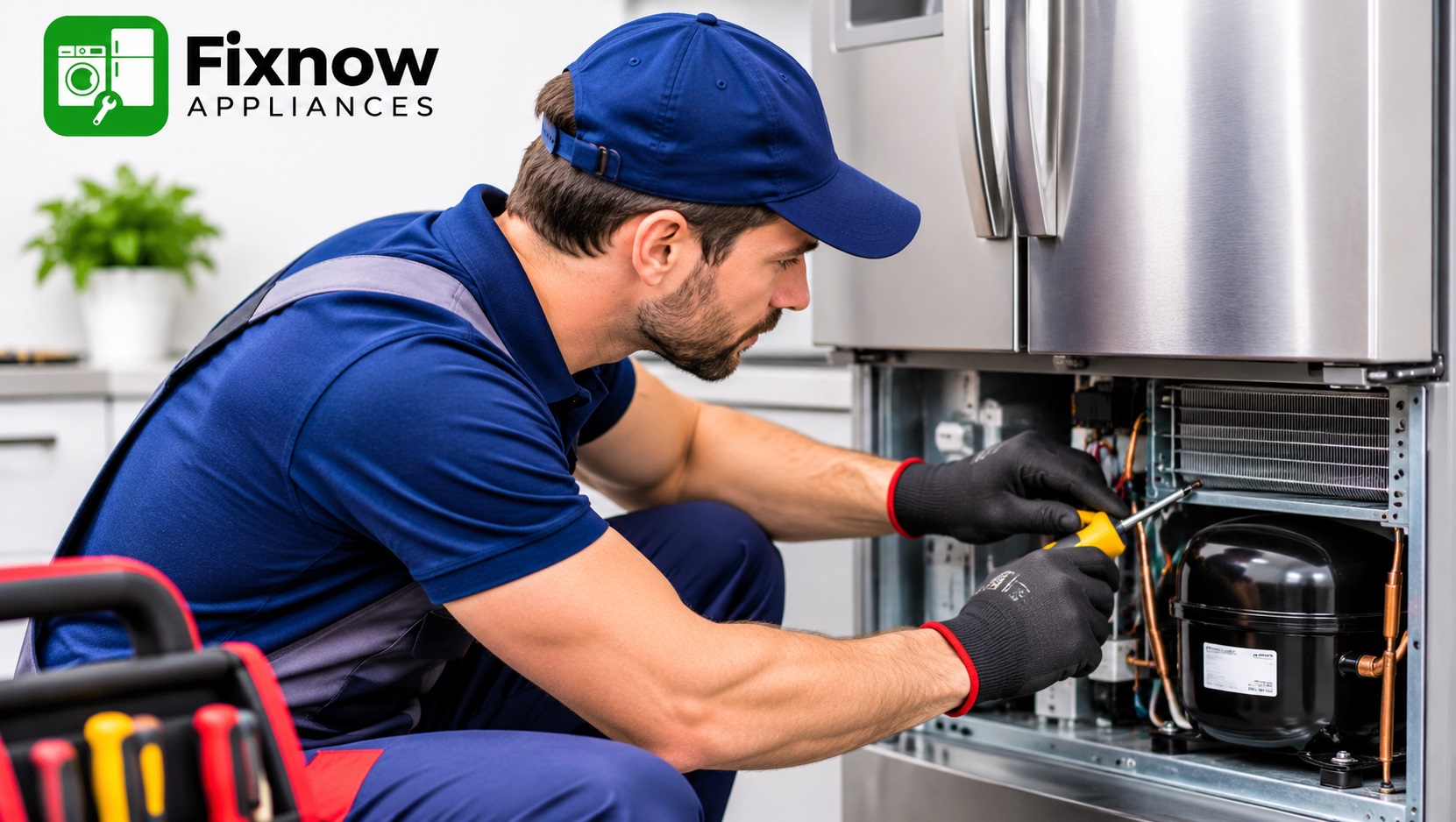
A refrigerator is one of the few household appliances that needs to work around the clock. From keeping fresh groceries safe to preserving frozen food, its performance directly affects everyday household routines.
When a refrigerator starts losing its cooling ability, leaking water or making unusual noises, it is important not to ignore the warning signs.
A small puddle underneath the fridge may indicate a drainage problem. A freezer that works while the refrigerator section stays warm may point towards an airflow issue. Repeated clicking or loud humming may suggest a problem with a fan, relay or another internal component.
For Calgary homeowners, identifying these symptoms early can help prevent further appliance damage and reduce the risk of food spoilage.
This guide from FixNow Appliances explains common refrigerator problems, their possible causes, safe checks homeowners can perform and when professional fridge repair may be necessary.
One of the most common refrigerator problems is inadequate cooling.
You may notice that drinks are not as cold as usual, dairy products spoil sooner or the refrigerator compartment feels warmer than expected.
Food is not staying cold.
Refrigerator temperature fluctuates.
Milk and other perishables spoil quickly.
Freezer works but the refrigerator section remains warm.
Refrigerator runs continuously.
Cooling performance becomes inconsistent.
Dirty condenser coils: Dust and debris can reduce heat dissipation and affect cooling performance.
Faulty evaporator fan: The fan circulates cold air through the refrigerator and freezer compartments. If it stops working, airflow may become restricted.
Damaged door gasket: A worn door seal allows cold air to escape and warm air to enter.
Temperature sensor problems: An inaccurate sensor may cause the refrigerator to regulate cooling incorrectly.
Defrost system failure: Excessive frost can block airflow and affect cooling.
Make sure the refrigerator door closes completely.
Check whether food containers are blocking internal air vents.
Confirm the temperature setting is appropriate.
Inspect the visible door gasket for cracks or gaps.
Check whether the appliance has enough ventilation around it.
Clean accessible areas according to the manufacturer's instructions.
If the refrigerator continues struggling to maintain temperature, professional inspection can help identify the underlying fault.
Water underneath or inside a refrigerator can indicate a drainage, defrost or water-supply problem.
Even a small leak deserves attention because repeated moisture can damage flooring, cabinets and nearby electrical connections.
Water collecting underneath the refrigerator.
Puddles appearing near the front or rear.
Water collecting inside the refrigerator.
Ice forming around the freezer floor.
Moisture appearing near the water dispenser.
Water leaking after a defrost cycle.
Blocked defrost drain: Water produced during automatic defrosting normally flows through a drain. If the drain becomes blocked, water may collect inside the appliance or escape onto the floor.
Damaged water supply line: Refrigerators with ice makers or water dispensers use water connections that may become loose or damaged.
Faulty inlet valve: A damaged water inlet valve may allow water to leak around its connections.
Drain pan problems: A damaged or incorrectly positioned drain pan may cause water to escape.
Door seal problems: Warm air entering the refrigerator can increase condensation and moisture buildup.
Check whether the refrigerator door closes properly.
Look for visible moisture around accessible water connections.
Inspect the floor around the appliance.
Check whether food or ice is blocking internal drainage openings.
Turn off the water supply if a visible supply-line leak is suspected and the valve is safely accessible.
Avoid pulling apart internal drainage or water connections without the proper experience.
If water is near electrical components, do not touch wet plugs, sockets or wiring. Keep away from the affected area and seek professional assistance.
Refrigerators naturally produce some operating sounds. Humming, clicking and occasional changes in fan noise can be normal.
However, loud, repeated or unfamiliar noises may indicate a developing problem.
| Noise | Possible explanation |
|---|---|
| Loud humming | Fan, compressor or vibration issue |
| Repeated clicking | Start relay or compressor-related problem |
| Grinding sound | Fan obstruction or motor problem |
| Rattling | Loose components or contact with nearby objects |
| Buzzing | Water valve, electrical component or vibration |
| Squealing | Fan motor or moving component issue |
A refrigerator may produce louder humming when its compressor or fans are operating.
However, if the sound becomes unusually loud or continues alongside poor cooling, the appliance should be inspected.
Repeated clicking can sometimes indicate that the compressor is struggling to start or that a start-related component is malfunctioning.
A technician can inspect the relay, compressor and associated electrical components to determine the cause.
Make sure the refrigerator is standing level.
Check whether it is touching nearby cabinets or walls.
Remove objects resting on top of the appliance.
Look for visible obstructions around accessible ventilation areas.
Observe whether the noise changes when the refrigerator door opens.
Do not remove electrical covers or attempt to test internal components yourself.
This is a particularly confusing refrigerator problem.
You may find that frozen food remains solid while the refrigerator compartment becomes noticeably warmer.
In many models, the refrigerator and freezer share parts of the cooling and airflow system.
Blocked air vents.
Faulty evaporator fan.
Excessive frost buildup.
Damaged air damper.
Defrost system malfunction.
Temperature sensor fault.
First, make sure food containers are not blocking the air vents between the compartments.
Next, check whether excessive frost has developed around the freezer's internal rear panel.
If the refrigerator section remains warm despite normal settings and clear vents, an internal airflow or defrost-system issue may require professional diagnosis.
A small amount of frost may occur under certain operating conditions, but thick ice buildup can indicate a problem.
Excessive frost can interfere with airflow and reduce cooling efficiency.
Thick ice around the freezer walls.
Frost collecting near the door.
Freezer drawers becoming difficult to open.
Ice forming around internal vents.
Refrigerator compartment becoming warmer.
Damaged door gasket: Warm, moist air enters through gaps in the seal and creates frost.
Frequent door opening: Repeatedly opening the freezer allows humid air to enter.
Defrost system failure: A faulty heater, sensor or control component may prevent normal frost removal.
Door not closing properly: Misaligned drawers or food packages may prevent a complete seal.
Inspect the freezer door gasket.
Make sure drawers do not obstruct the door.
Avoid leaving the freezer open unnecessarily.
Follow the manufacturer's defrosting instructions.
If frost repeatedly returns or covers the internal rear panel, arrange a professional inspection.
Most refrigerators cycle their compressors on and off to maintain the selected temperature.
If your refrigerator appears to run continuously, it may be working harder than necessary.
Dirty condenser coils.
Damaged door gasket.
Poor ventilation around the appliance.
Incorrect temperature setting.
Faulty temperature sensor.
Cooling-system problem.
Compressor running for unusually long periods.
Refrigerator becoming warm despite continuous operation.
Increased operating noise.
Temperature fluctuations.
Excessive frost buildup.
Make sure the door closes properly and the appliance has sufficient ventilation.
Clean accessible condenser areas only as recommended by the manufacturer.
If the refrigerator continues running constantly and cannot maintain the correct temperature, a technician can inspect its cooling and control systems.
Refrigerators with built-in ice makers and water dispensers depend on water supply connections, valves and electronic controls.
When one of these components fails, ice production or water dispensing may stop.
Ice maker not producing ice.
Water dispenser producing little or no water.
Ice cubes becoming unusually small.
Water leaking around the dispenser.
Ice maker making unusual noises.
Water supply line blockage.
Frozen water line.
Faulty water inlet valve.
Incorrect ice maker settings.
Clogged water filter.
Faulty ice maker assembly.
Confirm the water supply is turned on.
Check whether the dispenser lock is enabled.
Inspect the accessible water line for visible damage.
Check the water filter according to the manufacturer's instructions.
Confirm that the ice maker has not been switched off.
If the problem continues, professional inspection may be needed to identify a faulty valve, ice maker or control component.
A refrigerator door that does not seal correctly can affect cooling performance and increase frost formation.
Even a small gap allows warm air to enter continuously.
Worn or damaged door gasket.
Misaligned door.
Overloaded door shelves.
Food containers blocking closure.
Uneven refrigerator positioning.
Damaged hinges.
Cold air escaping around the door.
Moisture near the door opening.
Frost around the freezer entrance.
Refrigerator running more frequently.
Door opening unexpectedly.
Remove any items preventing the door from closing and inspect the visible gasket.
Check that the refrigerator is level according to the manufacturer's installation guidance.
If the door remains misaligned or the gasket is damaged, the affected component may need adjustment or replacement.
A refrigerator may continue cooling even when its internal light or display stops working.
However, these symptoms can sometimes indicate an electrical or control-system problem.
Interior light not turning on.
Temperature display blank.
Buttons not responding.
Warning lights appearing unexpectedly.
Refrigerator settings changing without input.
Burned-out light.
Faulty door switch.
Power supply issue.
Damaged control board.
Loose internal connection.
Confirm that the appliance is receiving power and check the household circuit breaker if it is safe to do so.
Consult the manufacturer's manual for any recommended display reset procedure.
If the control panel remains unresponsive or cooling is affected, professional diagnosis is recommended.
The compressor is a key component of the refrigerator's cooling system. It helps circulate refrigerant through the sealed cooling circuit.
A compressor-related fault can cause significant cooling problems.
Refrigerator not cooling.
Repeated clicking near the compressor area.
Unusual humming.
Compressor becoming unusually hot.
Refrigerator running without maintaining temperature.
Faulty start relay.
Electrical supply issue.
Compressor failure.
Control-system malfunction.
Sealed-system problem.
Not every cooling problem means the compressor has failed. A technician should test the related components before recommending compressor replacement.
Sealed-system repairs require specialised equipment and appropriate professional handling.
Household refrigerators operate in changing indoor and outdoor conditions.
In Calgary, seasonal temperature differences can affect how some refrigerators operate, particularly when appliances are installed in garages, basements or other spaces with fluctuating temperatures.
Garage refrigerator placement: Some refrigerators are designed for controlled indoor environments and may not operate reliably in spaces outside their recommended ambient temperature range.
Ventilation: Appliances installed too close to walls or cabinets may not release heat effectively.
Seasonal temperature changes: Large changes in the surrounding environment can affect certain models, especially those used in unheated areas.
Power interruptions: Electrical interruptions can affect refrigerator operation and temperature stability.
Check the manufacturer's recommended operating temperature range.
Keep ventilation clear.
Avoid installing refrigerators in unsuitable locations.
Monitor internal temperatures after a power interruption.
Arrange inspection if cooling performance changes unexpectedly.
Always check the specific model's installation requirements rather than assuming every refrigerator is suitable for garage or outdoor use.
Before arranging a repair visit, homeowners can perform a few basic checks.
These steps may help identify simple problems without opening the appliance.
Make sure the refrigerator and freezer settings have not been changed accidentally.
Look for visible cracks, gaps or damaged rubber around the doors.
Move food packages away from the air vents.
If your refrigerator has an ice maker or water dispenser, look for visible moisture around accessible connections.
Note whether the sound is humming, clicking, grinding or rattling.
Make sure the appliance has the clearance recommended by the manufacturer.
Note when the problem occurs and whether the refrigerator or freezer compartment is affected.
Do not remove internal panels, handle refrigerant lines or attempt electrical testing.
If you notice smoke, sparks, a burning smell or water near electrical components, stop using the appliance if safe and seek appropriate professional assistance.
Some refrigerator issues can be resolved through basic cleaning, correct food placement or adjustment of the temperature setting.
However, persistent cooling problems, water leakage and unusual noises may indicate an internal component failure.
Consider professional refrigerator repair if:
The refrigerator cannot maintain a safe temperature.
The freezer is working but the fridge compartment is warm.
Water repeatedly leaks underneath the appliance.
The compressor makes repeated clicking sounds.
The refrigerator runs constantly without cooling properly.
Excessive frost continues returning.
The ice maker or water dispenser stops working.
The control panel displays repeated error codes.
The refrigerator produces unusual grinding or electrical noises.
A technician can inspect the fans, sensors, defrost system, drainage components, water valves and cooling system to identify the actual fault.
A refrigerator that develops a fault does not automatically need replacement.
Many common problems involve individual components that can be repaired or replaced.
However, the right decision depends on the appliance's overall condition.
Consider these factors:
Age of the refrigerator: Older appliances may have more wear, but age alone does not determine whether repair is worthwhile.
Type of fault: A damaged gasket, fan or sensor may be a suitable repair candidate. Extensive sealed-system damage requires a more detailed assessment.
Repair history: Frequent breakdowns may indicate that replacement deserves consideration.
Parts availability: Older or discontinued models may have limited access to compatible components.
Energy efficiency: If an older refrigerator consumes significantly more electricity, compare its operating efficiency with that of a replacement.
Expected reliability: Consider whether the recommended repair is likely to restore dependable performance.
A professional diagnosis can help you understand the problem and compare repair and replacement options.
Regular maintenance can help identify developing issues and support reliable refrigerator operation.
Follow the manufacturer's instructions for cleaning accessible condenser coils or ventilation areas.
Remove dirt and food residue from the door gasket using an approved cleaning method.
Leave sufficient room for cold air to circulate around food.
Use the temperature recommendations provided by the manufacturer.
Maintain the recommended clearance around the appliance.
If your refrigerator has an ice maker or dispenser, periodically check accessible water lines for visible leaks.
Remove spills and expired food regularly.
Pay attention to new or unusually loud noises, especially when accompanied by cooling problems.
Routine maintenance cannot prevent every failure, but it can help homeowners recognise warning signs earlier.
A refrigerator problem can affect food storage, household convenience and everyday routines.
Whether your fridge is not cooling, leaking water, building up excessive frost or making unusual noises, identifying the actual cause is the first step towards a practical repair decision.
FixNow Appliances provides appliance repair services for household refrigerators and other major appliances.
When discussing a refrigerator problem, sharing the brand, model number, symptoms and any error codes can help the repair team understand your requirements.
Calgary homeowners can visit the company website to discuss their refrigerator issue and confirm current service availability for their location.
Company: FixNow Appliances
Website: https://fixnowappliances.ca/
Common causes include dirty condenser coils, faulty fans, damaged door seals, temperature sensor problems and defrost-system faults. The exact cause depends on the refrigerator's symptoms and design.
Possible causes include a blocked defrost drain, damaged water supply line, faulty inlet valve or incorrectly positioned drain pan.
Humming can come from the compressor or fans during normal operation. If the noise becomes unusually loud or occurs alongside poor cooling, professional inspection may be necessary.
Repeated clicking may indicate a start relay, compressor or electrical control problem. A technician can inspect the related components.
Possible causes include blocked air vents, a faulty evaporator fan, excessive frost buildup, a damaged air damper or a defrost-system problem.
Common causes include damaged door seals, frequent door opening, poor door closure and a faulty automatic defrost system.
A refrigerator may run longer because of dirty condenser coils, poor ventilation, damaged door seals, incorrect temperature settings or a cooling-system fault.
A leak can damage flooring and cabinets. If water reaches electrical connections, it may also create an electrical hazard. Avoid touching wet electrical components and seek appropriate assistance.
It depends on the appliance's condition, the type of fault, parts availability and expected reliability after repair. A professional diagnosis can help you make an informed decision.
Follow the manufacturer's maintenance schedule. Clean interior surfaces and door seals regularly, and inspect accessible ventilation and condenser areas as recommended.
Stop using the appliance if you notice smoke, sparks, a strong burning smell or signs of electrical damage. If cooling fails, protect perishable food by moving it to a safely operating refrigerator or cooler and follow food-safety guidance.
Visit https://fixnowappliances.ca/ to discuss your refrigerator problem and confirm current service availability for your Calgary location.
Share the refrigerator brand, model number, cooling symptoms, leak location, unusual noises and any error codes. This information can help the repair team understand the issue before the service visit.

Leave A Reply
Your email address will not be published. Required fields are marked *