-
-
-
Edmonton, Alberta, Canada
Mon – Sat: 8:00 AM – 7:00 PM
Please tap the button to book your appliance repair on WhatsApp.
Booking Enquiry on WhatsApp
FixNow Appliances provides fast, professional appliance repair across Edmonton, Sherwood Park, Beaumont, St. Albert, Stony Plain and nearby areas. Our licensed technicians repair fridges, washers, dryers, dishwashers, ovens, stoves and more using OEM parts and manufacturer-approved methods.
15
Nov
A refrigerator that suddenly stops cooling can quickly become a household emergency. Fresh groceries, dairy products, meat and leftovers depend on consistent refrigeration. When the temperature starts rising, every hour matters.
The first reaction is often to unplug the appliance, adjust the temperature or search for a replacement. However, taking a few sensible steps before booking a repair can help protect your food, identify possible causes and make the technician's visit more productive.
Not every cooling failure means the compressor has stopped working. A blocked air vent, damaged door seal, faulty fan, defrost problem or electrical issue may also affect refrigerator performance.
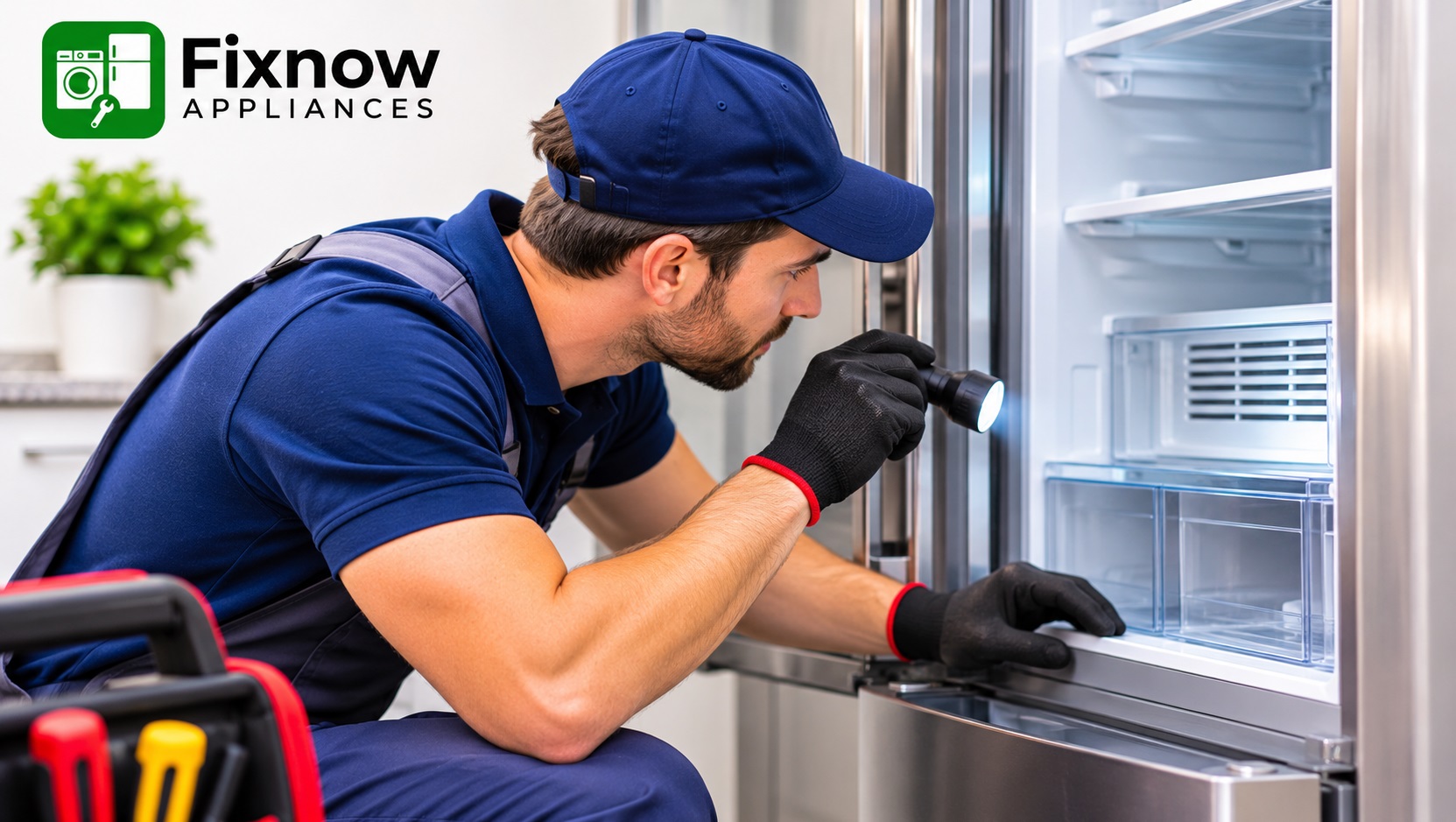
This guide from FixNow Appliances explains what to do when your refrigerator stops cooling, which checks are safe for homeowners and how to prepare for same-day refrigerator repair.
The first step is simple: avoid opening the refrigerator unnecessarily.
Every time the door opens, cold air escapes and warmer air enters. Keeping it closed helps preserve the remaining cold temperature while you arrange the next steps.
If the refrigerator has stopped cooling completely, keeping the door closed will not repair the fault, but it can help slow down temperature changes.
What to do:
Avoid repeatedly opening the refrigerator.
Do not spend unnecessary time checking stored food.
Keep the freezer door closed as well.
Prepare an alternative cold-storage option if needed.
Food safety should be a priority when a refrigerator stops cooling.
Use an appliance thermometer if available to check the actual internal temperature rather than relying on how cold the refrigerator feels.
The recommended refrigerator temperature is 4°C (40°F) or below. The freezer should generally be maintained at -18°C (0°F).
If the refrigerator cannot maintain a safe temperature, transfer perishable food to another working refrigerator or an insulated cooler with sufficient ice packs.
Pay particular attention to:
Milk and dairy products
Meat and poultry
Seafood
Cooked leftovers
Prepared meals
Other temperature-sensitive groceries
Perishable food that has been above 4°C (40°F) for more than two hours should generally be discarded. If the surrounding temperature is above 32°C (90°F), the recommended limit is one hour.
Do not taste food to determine whether it is safe. When in doubt, follow official food-safety guidance.
Before assuming that an internal component has failed, check the external power supply.
A refrigerator may stop cooling because of a power interruption or electrical supply issue.
Is the refrigerator's interior light working?
Is the display panel switched on?
Is the power cord visibly damaged?
Has the household circuit breaker tripped?
Is the refrigerator plug properly connected?
If the circuit breaker has tripped repeatedly, do not continue resetting it. Arrange appropriate electrical assistance.
Never touch damaged wiring or wet electrical connections.
If you notice sparks, smoke or a burning smell, stop using the appliance if safe and seek appropriate professional assistance.
Sometimes, cooling problems begin with an accidental change in temperature settings.
Check the control panel and confirm that the refrigerator has not been set to a warmer temperature.
Also look for:
Vacation mode
Demo mode
Cooling-off mode
Energy-saving settings
Unusual temperature warnings
Some refrigerator models have special modes that change normal cooling behaviour.
Refer to the manufacturer's manual to understand the settings available on your appliance.
If the settings appear correct but the refrigerator remains warm, the problem may involve an internal component.
Refrigerators use internal airflow to distribute cold air between compartments.
When food containers, bags or other items block the air vents, cold air may not circulate properly.
Freezer is cold but refrigerator section is warm.
Some shelves feel colder than others.
Food near the vents freezes.
Refrigerator temperature becomes inconsistent.
Move food containers away from visible air vents.
Avoid overcrowding shelves.
Leave sufficient space for air circulation.
Check whether large packages are blocking internal openings.
If cooling does not improve after clearing the vents, a fan or airflow-control problem may require professional inspection.
A damaged door gasket can allow cold air to escape continuously.
This forces the refrigerator to work harder and may prevent it from maintaining the selected temperature.
Cracked or torn rubber.
Loose sections around the door.
Visible gaps when the door is closed.
Moisture around the door opening.
Excessive frost inside the freezer.
Inspect the visible rubber seal for dirt, damage or gaps. Clean it according to the manufacturer's instructions.
Make sure food containers and shelves are not preventing the door from closing completely.
If the gasket is damaged or the door remains misaligned, a technician can assess whether adjustment or replacement is required.
Changes in operating sounds can provide useful clues about a cooling problem.
Some humming, clicking and fan noises are normal. However, unfamiliar or unusually loud sounds should not be ignored, especially when the refrigerator is no longer cooling.
| Sound | Possible cause |
|---|---|
| Repeated clicking | Start relay or compressor-related issue |
| Loud humming | Compressor or fan problem |
| Grinding | Fan obstruction or motor issue |
| Rattling | Loose component or vibration |
| Buzzing | Electrical component, water valve or vibration |
Do not remove internal covers to investigate the noise.
Instead, note when the sound occurs and whether it continues while the refrigerator is running.
This information can help the repair technician narrow down the possible fault.
Thick frost buildup can interfere with airflow and affect refrigerator cooling.
Modern frost-free refrigerators use an automatic defrost system to prevent excessive ice accumulation.
If the defrost system fails, ice may build up around the evaporator and restrict cold-air circulation.
Thick frost on the freezer's internal rear panel.
Freezer drawers becoming difficult to open.
Refrigerator section becoming warm.
Reduced airflow from internal vents.
Cooling performance gradually declining.
A faulty defrost heater, sensor or control component may be responsible.
Do not use sharp tools or knives to remove ice. Avoid attempting to dismantle internal freezer panels.
If excessive frost repeatedly returns, arrange professional inspection.
Several components work together to keep a refrigerator cold. A failure in one area can affect the entire cooling system.
Here are some common possibilities.
The evaporator fan circulates cold air through the refrigerator and freezer compartments.
A damaged fan motor or obstruction can reduce airflow and create uneven temperatures.
Condenser coils release heat from the refrigeration system. Dust and debris can reduce heat transfer and affect cooling efficiency.
Accessible coils should be cleaned only according to the manufacturer's instructions.
Temperature sensors help regulate cooling cycles. Incorrect readings may cause the refrigerator to operate at unsuitable temperatures.
A faulty defrost heater, sensor or control component can allow excessive frost to restrict airflow.
The compressor circulates refrigerant through the cooling system. A faulty start relay or compressor-related issue may prevent normal cooling.
However, poor cooling does not automatically mean the compressor has failed. Proper testing is needed before replacing major components.
The electronic control board manages several refrigerator functions. A fault may affect cooling cycles, fans or temperature regulation.
A technician can inspect these components to identify the actual cause.
This is a common refrigerator complaint.
You may find that frozen food remains solid while drinks, vegetables and dairy products in the refrigerator section become warm.
Possible causes include:
Blocked air vents
Faulty evaporator fan
Excessive frost buildup
Damaged air damper
Defrost system malfunction
Temperature sensor problem
Start by checking whether food is blocking the air vents.
If the refrigerator compartment remains warm despite clear vents and correct settings, professional diagnosis may be necessary.
Unplugging a refrigerator is not automatically the right solution.
If the appliance has simply stopped cooling, repeatedly disconnecting and reconnecting it may not address the underlying fault.
Before taking action, consider the symptoms.
If the display is working but cooling has stopped, arrange diagnosis.
If the circuit breaker trips repeatedly, do not keep resetting it.
If you notice smoke, sparks or a burning smell, stop using the appliance if safe.
If the power cord is damaged, do not touch or use it.
Follow the manufacturer's instructions and avoid handling electrical components.
If you are unsure whether the appliance is safe to operate, keep away from it and seek professional assistance.
Some refrigerator problems may be related to simple settings or blocked airflow. Others require immediate professional attention.
Consider requesting same-day service when:
The refrigerator cannot maintain a safe temperature.
Both refrigerator and freezer compartments are warming.
The freezer has stopped freezing.
The appliance runs continuously without cooling.
Repeated clicking occurs alongside cooling failure.
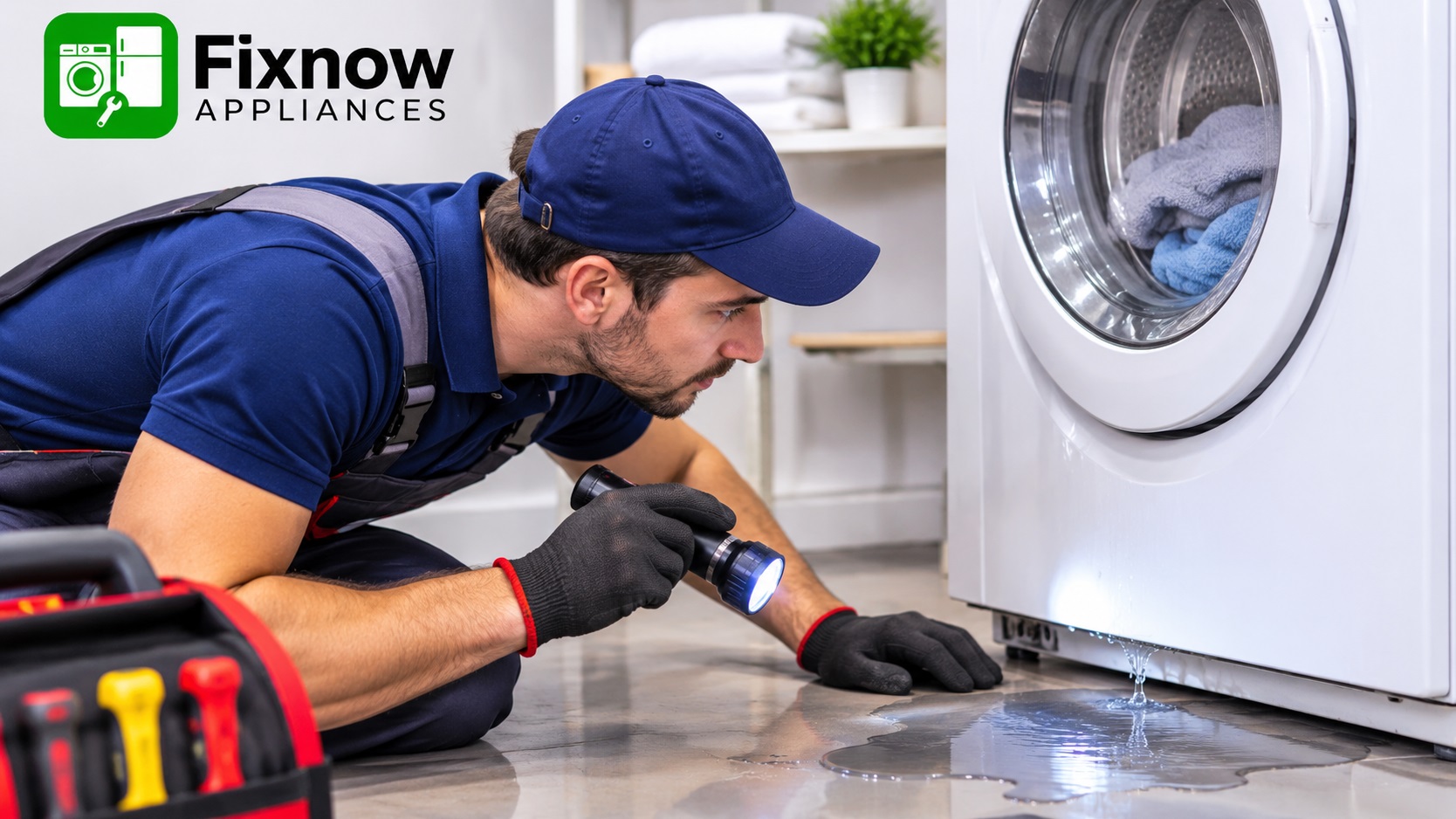
Water is leaking near the appliance.
Error codes appear and cooling performance changes.
The refrigerator has stopped cooling despite correct settings.
Same-day service depends on technician availability, location, appliance type and the nature of the fault. Confirm the appointment and expected arrival window directly with the service provider.
A little preparation can help make the service visit more efficient.
The model number is usually printed on a label inside the refrigerator compartment, around the door frame or in another location specified by the manufacturer.
Be specific about what is happening.
For example:
Refrigerator completely stopped cooling.
Freezer works but refrigerator section is warm.
Both compartments are not cooling.
Refrigerator makes repeated clicking sounds.
Cooling stops intermittently.
Water is leaking underneath.
Mention whether the cooling failure happened suddenly or developed gradually.
Take a photograph of any error message displayed on the control panel.
Tell the technician about recent power interruptions, appliance movement, unusual noises or changes in temperature settings.
Remove nearby items that may obstruct safe access to the refrigerator.
Before approving repair work, ask about:
Same-day appointment availability.
Diagnostic arrangements.
Repair recommendations.
Parts requirements.
Applicable warranty terms.
A refrigerator that stops cooling does not automatically need replacement.
Many cooling problems involve individual components that may be repaired or replaced.
The decision depends on the appliance's age, overall condition and the extent of the failure.
Consider the following factors:
Type of fault: A damaged fan, sensor, start relay or door gasket may be repairable. Extensive sealed-system damage needs careful evaluation.
Appliance age: Older refrigerators may have more worn components, but age alone does not determine whether replacement is necessary.
Previous breakdowns: Frequent repairs may indicate that replacement deserves consideration.
Parts availability: Older models may have limited access to compatible components.
Energy efficiency: Compare the operating efficiency of an older appliance with modern alternatives.
Expected reliability: Consider whether the recommended repair is likely to restore dependable cooling.
A professional diagnosis can help you make an informed decision instead of replacing the appliance without understanding the fault.
Regular maintenance can help identify developing faults and support reliable refrigerator operation.
Follow the manufacturer's instructions for cleaning accessible coils and ventilation areas.
Inspect the gasket for cracks, gaps and visible damage.
Leave sufficient space for cold air to circulate.
Follow the manufacturer's recommended settings.
Avoid placing food packages directly in front of internal airflow openings.
If your refrigerator has an ice maker or water dispenser, inspect accessible water lines for visible leaks.
Do not ignore new clicking, grinding or loud humming sounds, especially when accompanied by cooling problems.
Maintenance cannot prevent every mechanical failure, but it can help you identify warning signs before they become more serious.
A refrigerator that suddenly stops cooling requires prompt attention. Protecting food, checking safe external factors and arranging the right diagnosis can help reduce further inconvenience.
Whether your fridge is completely warm,
Leave A Reply
Your email address will not be published. Required fields are marked *