-
-
-
Edmonton, Alberta, Canada
Mon – Sat: 8:00 AM – 7:00 PM
Please tap the button to book your appliance repair on WhatsApp.
Booking Enquiry on WhatsApp
FixNow Appliances provides fast, professional appliance repair across Edmonton, Sherwood Park, Beaumont, St. Albert, Stony Plain and nearby areas. Our licensed technicians repair fridges, washers, dryers, dishwashers, ovens, stoves and more using OEM parts and manufacturer-approved methods.
23
Nov
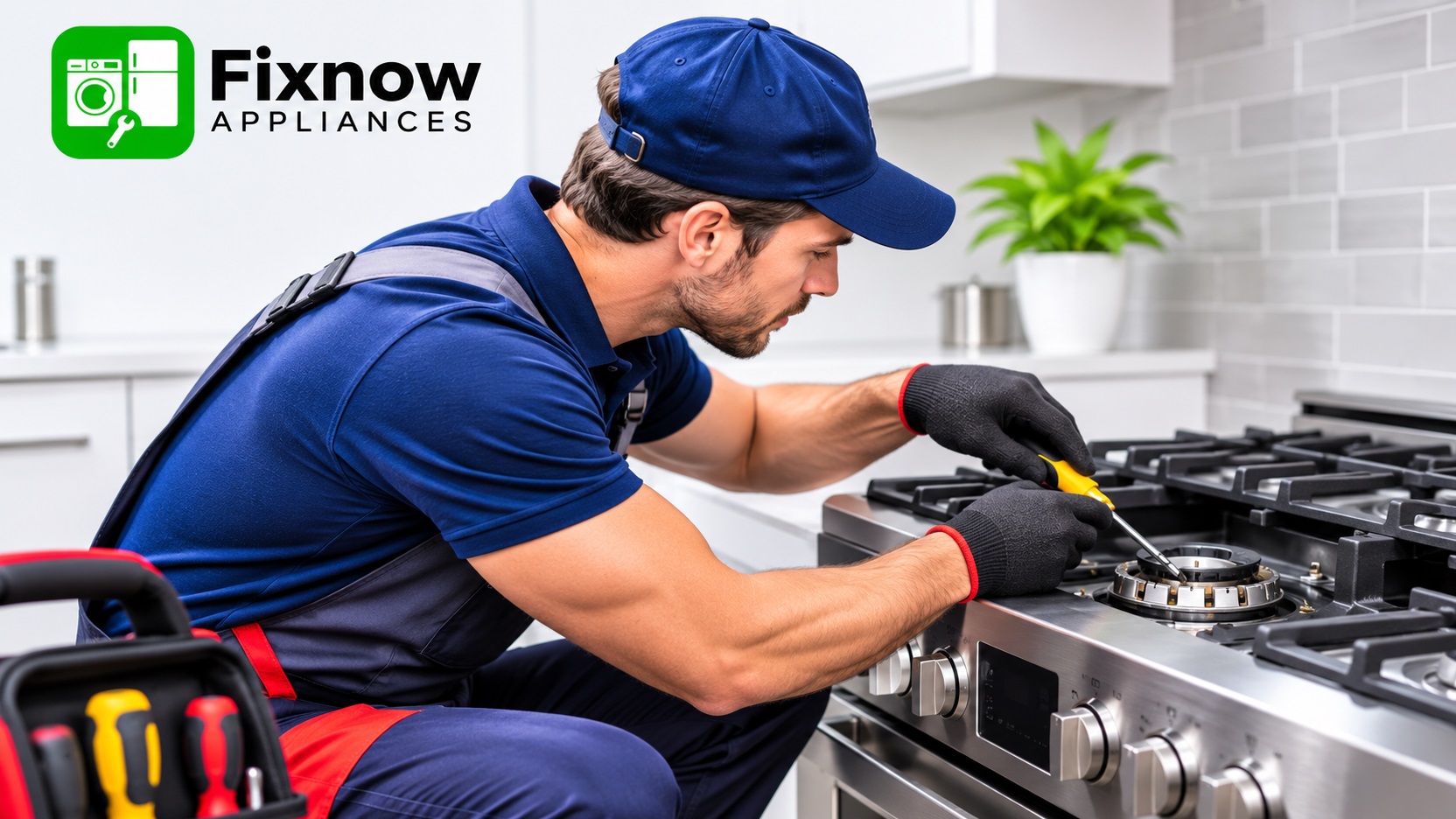
A stove is one of the most frequently used appliances in a household. From preparing everyday meals to cooking for family gatherings, homeowners rely on it to deliver consistent heat and dependable performance.
But what happens when a burner stops heating, a gas igniter keeps clicking or an electric stove takes too long to reach the desired temperature?
For homeowners in Calgary, Alberta, these problems can quickly disrupt daily routines. While some symptoms may be related to simple maintenance issues, others indicate a faulty ignition system, heating element, burner switch or electronic control.
Understanding the warning signs can help you decide when a basic check is appropriate and when professional stove repair is necessary.
This guide explains common stove problems, their possible causes, safe troubleshooting steps and what to consider before booking a stove repair technician in Calgary.
Stove problems can affect gas, electric and induction appliances differently. Identifying the exact symptom is the first step towards understanding what might be wrong.
Some common warning signs include:
One or more burners not heating.
Gas burner failing to ignite.
Electric burner heating slowly.
Stove producing uneven heat.
Continuous clicking from a gas igniter.
Temperature controls not responding.
Stove switching off unexpectedly.
Error codes appearing on the display.
Unusual smells or sounds during operation.
A stove that develops one of these symptoms may need inspection. Continuing to use an appliance that shows signs of electrical damage, gas leakage or overheating can create additional risks.
A burner that refuses to heat is one of the most common reasons homeowners look for stove repair.
The cause depends on the stove type and whether the problem affects one burner or the entire appliance.
Electric stove burners use heating elements to generate heat. If one burner stops working while the others operate normally, the fault may be isolated to that cooking zone.
Possible causes include:
Damaged heating element.
Faulty burner switch.
Loose or damaged internal connection.
Defective temperature control.
Electronic control-board malfunction.
Gas burners require an appropriate gas supply and a functioning ignition system.
Possible causes include:
Blocked burner ports.
Burner cap positioned incorrectly.
Ignition electrode problems.
Faulty ignition switch.
Gas supply issues.
Before arranging a repair:
Allow the stove to cool completely.
Check whether the affected burner is positioned correctly.
Clean accessible burner surfaces according to manufacturer instructions.
Confirm that the appliance has power.
Check whether other burners are working normally.
Do not dismantle burner assemblies or attempt internal electrical or gas repairs yourself.
If the burner continues to malfunction, professional diagnosis can help identify the actual fault.
A gas stove that keeps clicking without producing a flame can be frustrating. It may also indicate an ignition-system problem that needs attention.
Normally, the igniter produces a spark that lights the gas released through the burner.
When the burner fails to ignite, several components may be involved.
Moisture around the burner: Spills or cleaning residue can interfere with ignition.
Blocked burner ports: Food particles and grease can restrict gas flow through the burner openings.
Misaligned burner cap: A burner cap that is not seated correctly can prevent proper ignition.
Faulty ignition electrode: A damaged or worn electrode may fail to produce a consistent spark.
Ignition switch problems: A defective switch can cause repeated clicking or prevent normal ignition.
Electrical issues: Some gas stoves require electrical power for their ignition systems. A power-related fault may affect operation.
Turn the burner off.
Allow the appliance to cool.
If there has been a recent spill, follow the manufacturer's cleaning and drying instructions.
Check that removable burner caps are correctly positioned.
Make sure accessible burner surfaces are clean and dry.
If clicking continues after these checks, arrange professional inspection.
Important gas safety warning: If you smell gas, do not attempt to ignite the burner again. Do not operate electrical switches, use flames or create sparks. Leave the building and contact your gas utility or emergency services from a safe location.
An electric stove should provide consistent heat when the correct burner and temperature setting are selected.
If the cooking surface heats slowly, fails to reach the required temperature or switches between heating and not heating, a component may be malfunctioning.
Worn or damaged heating element.
Faulty infinite switch or burner control.
Temperature sensor malfunction.
Loose internal electrical connection.
Defective control board.
Power supply problems.
Food takes unusually long to cook.
Burner does not glow or heat as expected.
Heat changes unexpectedly.
One cooking zone performs differently from the others.
Controls do not respond consistently.
First, confirm that the correct cooking zone and temperature setting have been selected.
For compatible electric cooktops, also check that the cookware is suitable for the appliance.
If a burner repeatedly fails to heat, avoid attempting electrical repairs. A qualified technician can inspect the heating element, controls and related components.
Uneven heating can make cooking unpredictable. One part of a pan may become extremely hot while another remains relatively cool.
This problem can affect both gas and electric stoves.
Blocked burner openings.
Incorrectly positioned burner cap.
Uneven flame distribution.
Burner assembly problems.
Damaged heating element.
Faulty temperature control.
Incorrect cookware size.
Control-system malfunction.
Use cookware with a flat base.
Match pan size to the cooking zone.
Keep accessible burner openings clean.
Check that removable burner components are correctly positioned.
Follow the manufacturer's instructions for cookware compatibility.
If uneven heating continues despite these checks, the burner or temperature-control system may require professional inspection.
Modern stoves often use electronic controls to manage cooking temperature, timers, safety functions and operating modes.
When the control panel stops responding, the appliance may become difficult or impossible to operate.
Buttons not responding.
Display going blank.
Temperature settings changing unexpectedly.
Error codes appearing.
Stove shutting down during operation.
Touch controls responding inconsistently.
Electronic control-board failure.
Faulty touch-control panel.
Power supply interruption.
Damaged wiring.
Sensor malfunction.
Moisture affecting control components.
Check the manufacturer's instructions for the displayed error code, if one appears.
You can also confirm whether the appliance has power. If the stove has experienced repeated breaker trips, sparks or electrical smells, stop using it and arrange appropriate inspection.
Avoid removing the control panel or working on internal wiring.
Induction cooktops use electromagnetic technology to heat compatible cookware. Unlike traditional electric cooktops, they do not heat pans through a conventional exposed heating element.
This technology offers precise temperature control, but it also introduces some specific troubleshooting requirements.
Cooktop not detecting cookware.
Cooking zone not heating.
Error codes appearing.
Touch controls not responding.
Appliance switching off unexpectedly.
Uneven cooking performance.
Incompatible cookware.
Pan not centred on the cooking zone.
Overheating protection activated.
Faulty sensor.
Electronic control-board issue.
Electrical supply problem.
Confirm that the cookware is induction-compatible.
Centre the pan on the selected cooking zone.
Check the appliance's power supply.
Allow the cooktop to cool if an overheating warning appears.
Consult the manufacturer's manual for error-code explanations.
If the cooktop continues to display errors or fails to heat with compatible cookware, professional diagnosis may be necessary.
Not every stove problem is an emergency, but certain warning signs should never be ignored.
Stop using the appliance and seek appropriate assistance if you notice:
Gas smell: Do not operate switches, create flames or attempt to restart the stove. Leave the building and contact the gas utility or emergency services from a safe location.
Burning electrical smell: Stop using the appliance. An electrical component may be overheating.
Sparks or visible electrical damage: Avoid touching damaged components and arrange professional inspection.
Cracked glass cooktop: Stop using the affected surface, particularly if the crack could expose electrical components or allow liquid to enter.
Repeated breaker trips: Do not keep resetting the breaker. The appliance or electrical circuit may have a fault.
Unusual overheating: Stop operation if the stove becomes excessively hot or behaves unpredictably.
Safety should always take priority over troubleshooting.
Preparing a few details before contacting a repair company can make the booking process more efficient.
Determine whether you have:
Gas stove.
Electric stove.
Induction cooktop.
Ceramic glass cooktop.
Freestanding range.
Built-in cooking appliance.
The model number helps identify the appliance specifications and compatible replacement components. It is often located on a label around the door frame, drawer area or appliance body. Check the manufacturer's documentation if you cannot find it.
Explain exactly what happens.
For example:
The left burner does not heat.
The gas igniter keeps clicking.
The oven works but the stove burner does not.
The cooktop displays an error code.
The burner heats inconsistently.
Photographs of visible damage or error messages may help explain the issue.
Do not touch hot surfaces, damaged wiring or suspected gas leaks to take pictures.
Ask about:
Service availability in your Calgary neighbourhood.
Diagnostic or service-call charges.
Labour and replacement-part estimates.
Repair warranty conditions.
Whether the required parts are available.
Having this information ready can help you make a more informed booking decision.
The final repair estimate depends on the appliance, the fault and the components involved.
For example, cleaning an accessible burner area is very different from replacing a heating element or diagnosing an electronic control-board failure.
Factors that may influence the repair estimate include:
Stove type and brand.
Appliance model and age.
Nature of the fault.
Diagnostic requirements.
Replacement-part availability.
Labour involved.
Whether additional components are damaged.
Always request a clear estimate before approving repair work. Ask whether the quoted amount includes diagnostic charges, labour and parts.
A stove that stops working does not automatically need replacement.
In many cases, a faulty burner, ignition component or heating element can be repaired.
However, the right decision depends on the appliance's overall condition.
Consider these factors:
Age of the stove.
Frequency of previous breakdowns.
Availability of compatible parts.
Nature and extent of the damage.
Expected performance after repair.
Energy efficiency.
Repair estimate compared with replacement options.
A relatively new stove with an isolated component failure may be a good repair candidate.
An older appliance with recurring electrical problems or extensive damage may be better evaluated for replacement.
A professional inspection can help you understand the available options before making a decision.
Regular maintenance can help keep a stove in good working condition and make certain developing problems easier to identify.
Clean accessible burner surfaces as recommended.
Keep burner caps correctly positioned.
Remove food spills after the appliance cools.
Follow manufacturer cleaning instructions.
Arrange inspection if ignition becomes inconsistent.
Avoid dropping heavy cookware onto the cooking surface.
Clean spills after the appliance cools.
Use suitable cookware.
Avoid exposing electrical controls to excess moisture.
Pay attention to changes in heating performance.
Use compatible cookware.
Keep the cooking surface clean and dry.
Avoid dragging heavy pans across the glass.
Keep ventilation openings unobstructed.
Follow the manufacturer's operating guidelines.
Routine care cannot prevent every component failure, but it can support dependable operation.
A stove problem can affect more than cooking convenience. Faulty burners, ignition failures and inconsistent heating can make everyday kitchen activities difficult.
FixNow Appliances provides appliance repair services for household cooking appliances, including gas stoves, electric stoves, cooktops and other major appliances.
Whether your gas burner is not igniting, your electric stove is not heating or your cooktop controls are not responding, explaining the symptoms can help the repair team understand your service requirements.
Before booking, keep your appliance brand, model number and problem description ready. Confirm service availability for your Calgary address and ask about diagnostic charges, repair estimates and applicable warranty terms.
Phone: (587) 962-2861
Website: https://fixnowappliances.ca/
Contact FixNow Appliances to discuss your stove problem and confirm an available repair appointment in Calgary.
A stove burner may stop working because of a damaged heating element, faulty burner switch, blocked gas burner ports, ignition problems or an electronic control fault. The exact cause depends on the stove type.
Continuous clicking without ignition may be caused by moisture, blocked burner openings, a misaligned burner cap or a faulty ignition component. If you smell gas, stop using the stove, leave the building and contact the gas utility or emergency services from a safe location.
Possible causes include a damaged heating element, faulty temperature control, sensor malfunction or electrical connection problems. A technician can inspect the heating system and identify the underlying fault.
Homeowners can perform basic checks, such as cleaning accessible burner surfaces after the appliance has cooled and checking removable burner-cap positioning. Internal electrical components, gas connections and ignition assemblies should be handled by appropriately qualified professionals.
It depends on the underlying fault. If there is a gas smell, electrical burning smell, sparking, damaged wiring or repeated breaker trips, stop using the appliance and arrange appropriate assistance.
Consider the appliance's age, condition, fault type, parts availability and repair estimate. A professional diagnosis can help you compare repair and replacement options.
FixNow Appliances provides appliance repair services. Contact the company to discuss your gas or electric stove problem and confirm the availability of service for your Calgary address.
Call FixNow Appliances at (587) 962-2861 or visit https://fixnowappliances.ca/ to discuss your stove problem and ask about available appointments.
Share the stove type, brand, model number, symptoms, error codes and service address. This information can help the repair team understand the problem before the appointment.
Leave A Reply
Your email address will not be published. Required fields are marked *