-
-
-
Edmonton, Alberta, Canada
Mon – Sat: 8:00 AM – 7:00 PM
Please tap the button to book your appliance repair on WhatsApp.
Booking Enquiry on WhatsApp
FixNow Appliances provides fast, professional appliance repair across Edmonton, Sherwood Park, Beaumont, St. Albert, Stony Plain and nearby areas. Our licensed technicians repair fridges, washers, dryers, dishwashers, ovens, stoves and more using OEM parts and manufacturer-approved methods.
23
Nov
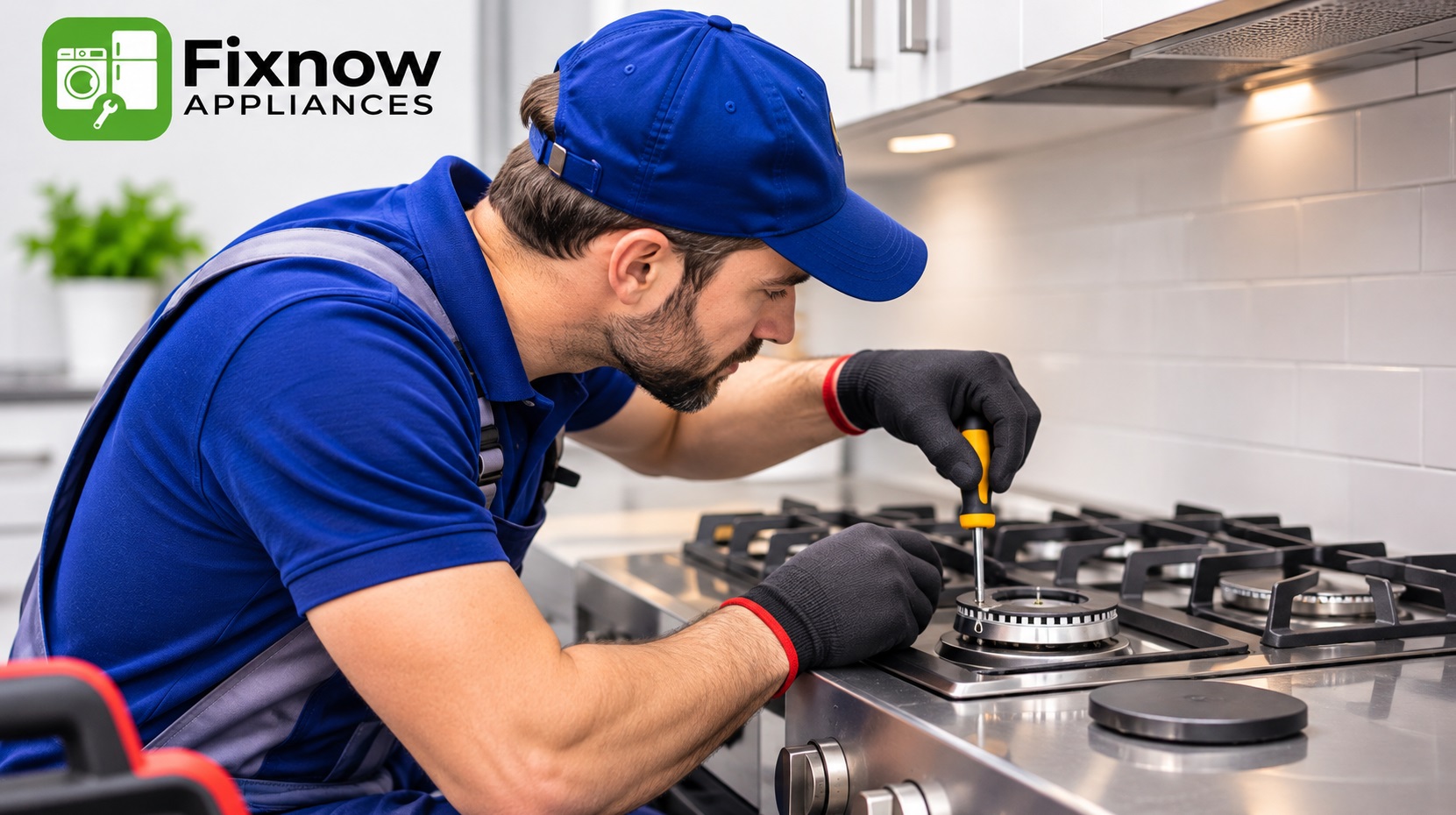
A stovetop is one of the most frequently used appliances in a kitchen. Whether you use a gas stove, an electric coil cooktop or a smooth glass-top model, a burner that suddenly stops working can interrupt your daily routine.
Sometimes the problem is related to a simple issue, such as an incorrectly positioned burner cap or a loose electric coil connection. In other cases, a faulty ignition system, damaged heating element or control switch may require professional attention.
Understanding the symptoms can help you decide what to check and when to arrange stovetop repair.
This guide from FixNow Appliances explains common reasons why stovetop burners stop working and which checks homeowners can safely perform.
A gas burner that clicks but does not ignite is a common stovetop problem.
You may hear the ignition system operating, but the burner fails to produce a flame.
Burner cap is incorrectly positioned.
Burner ports are blocked by food residue.
Moisture is affecting the ignition electrode.
Ignition electrode is damaged.
Gas supply is interrupted.
Ignition system has developed a fault.
Make sure the burner is switched off and cool.
Check whether the burner cap is correctly positioned.
Look for visible food residue around the burner.
Clean removable components according to the manufacturer's instructions.
Allow wet components to dry completely before using the burner.
If the burner continues clicking without igniting, arrange professional inspection.
Important: If you smell gas, stop using the stove, avoid flames and electrical switches, leave the building and contact your gas utility or emergency service from a safe location.
An electric stovetop burner may stop heating even when the control knob or touch panel appears to work normally.
Burned-out heating element.
Damaged burner receptacle.
Faulty control switch.
Loose internal electrical connection.
Electronic control board problem.
For a removable coil-style electric stovetop, make sure the appliance is switched off and completely cool. Check whether the coil appears correctly seated and look for visible damage.
Do not touch exposed electrical connections or attempt internal wiring repairs.
If the burner still does not heat, a technician can test the heating element and related electrical components.
Continuous clicking from a gas stovetop can indicate an ignition-related problem.
Some clicking is normal when starting a burner. However, clicking that continues after ignition or occurs when the controls are off should be investigated.
Moisture around the ignition electrode.
Food debris near the burner.
Misaligned burner cap.
Faulty ignition switch.
Damaged spark module.
Turn the burner controls off and allow the stovetop to cool. If there has been a recent spill or cleaning, let the affected area dry according to the manufacturer's instructions.
If clicking continues, stop using the affected burner and arrange professional service.
A gas burner should produce a stable flame when operating correctly.
If the flame is unusually weak, uneven or frequently goes out, there may be an issue with the burner assembly or gas supply.
Blocked burner ports.
Incorrect burner-cap positioning.
Food or grease buildup.
Gas supply pressure problem.
Damaged burner components.
Inspect the burner after it has cooled. Clean removable parts only as recommended in the appliance manual.
Avoid using sharp objects that could enlarge or damage burner openings.
If the flame remains uneven after cleaning, contact a qualified gas appliance technician.
When one burner works normally but another does not, the problem may be isolated to the affected burner or its controls.
Faulty heating element.
Damaged burner switch.
Blocked gas burner ports.
Ignition electrode problem.
Loose or damaged internal connection.
The exact cause depends on whether your stovetop uses gas, electric coils or an induction system.
A technician can inspect the affected burner and determine whether a component needs repair or replacement.
A burner that becomes excessively hot or does not respond correctly to temperature adjustments can create a safety concern.
Faulty temperature-control switch.
Damaged thermostat or sensor.
Electronic control malfunction.
Sticking control knob.
Internal wiring problem.
Stop using the affected burner if it cannot regulate heat properly.
Do not continue cooking while trying to compensate for an uncontrolled temperature setting. Arrange professional inspection.
Smooth glass-top and induction cooktops use different heating technologies, so their problems may differ from traditional gas or electric coil stoves.
Incorrect cookware for induction cooking.
Cookware not positioned correctly.
Touch-control lock activated.
Overheating protection activated.
Faulty temperature sensor.
Electronic control board problem.
Confirm that the correct cooking zone is selected.
Check whether the control lock is enabled.
Use induction-compatible cookware where required.
Make sure the cookware is positioned correctly.
Allow the cooktop to cool if an overheating warning appears.
If the cooking zone remains unresponsive, consult the appliance manual and arrange a technician's inspection.
Sometimes the burner itself is not faulty. The issue may involve the control system.
Burner does not respond when switched on.
Temperature settings do not change.
Touch controls stop responding.
Display shows an error code.
Burner switches on and off unexpectedly.
Damaged control knob.
Faulty burner switch.
Touch-panel malfunction.
Electronic control board failure.
Electrical supply problem.
Check the manufacturer's instructions for control-lock settings and basic resets. Avoid opening the control panel or attempting electrical repairs yourself.
Before arranging a service visit, you can perform a few basic external checks.
Determine whether your appliance uses gas, electric coils, a smooth glass surface or induction technology.
Make sure the correct burner and temperature setting are selected.
For gas and coil-style models, check whether removable components are correctly positioned after the appliance has cooled.
Food spills and grease can affect burner performance. Clean the surface according to the manufacturer's instructions.
Record any error code displayed on an electronic cooktop.
Do not continue using a burner that produces sparks, uncontrolled heat, unusual electrical sounds or a gas smell.
Never remove the stovetop casing, bypass safety switches or attempt internal gas or electrical repairs.
Some burner problems may be related to cleaning or positioning. Others involve electrical, gas or electronic components that require specialised attention.
Consider professional stovetop repair if:
A gas burner repeatedly fails to ignite.
An electric burner does not heat.
The ignition system keeps clicking.
The flame remains weak or uneven.
A burner becomes excessively hot.
The control panel stops responding.
The cooktop displays recurring error codes.
You notice sparks, burning smells or damaged wiring.
A proper diagnosis can help identify the faulty component and determine the most suitable repair.
A stovetop burner that stops working does not automatically mean the entire appliance needs replacement.
The decision depends on several factors:
Type of fault: A replaceable burner component may be a straightforward repair, while major control-system damage may require a more detailed assessment.
Appliance age: Older appliances may have worn components, but age alone does not determine whether repair is worthwhile.
Parts availability: Compatible replacement parts should be available for the specific model.
Overall condition: Consider the condition of the cooktop surface, controls and other burners.
Repair history: Repeated breakdowns may indicate that replacement deserves consideration.
A professional inspection can help you compare the practical repair and replacement options.
Regular maintenance can help reduce avoidable burner problems.
Clean spills after the stovetop has cooled.
Keep burner caps correctly positioned.
Avoid allowing grease to accumulate around burner openings.
Use cookware suitable for your cooktop type.
Do not place heavy objects on a glass cooking surface.
Follow the manufacturer's cleaning instructions.
Arrange inspection when burners repeatedly malfunction.
Good maintenance supports consistent performance and helps identify developing problems early.
A stovetop burner that does not work properly can affect your kitchen routine and may create safety concerns.
Whether you are dealing with a gas burner that will not ignite, an electric element that does not heat, continuous clicking or an unresponsive control panel, identifying the actual fault is the first step towards an effective repair.
FixNow Appliances provides appliance repair services for household appliances. Homeowners can visit the company website to discuss their stovetop problem and confirm current service availability.
Company: FixNow Appliances
Website: https://fixnowappliances.ca/
Common causes include a faulty heating element, blocked gas burner ports, ignition problems, damaged control switches or electronic faults.
Possible causes include moisture, food debris, an incorrectly positioned burner cap or a faulty ignition component.
A damaged heating element, burner receptacle, control switch or internal electrical connection may prevent the burner from heating.
It depends on the fault. If you notice gas odour, sparks, damaged wiring or uncontrolled heating, stop using the appliance and arrange professional inspection.
Continuous clicking may be caused by moisture, food residue, a faulty ignition switch or a damaged spark module.
Blocked burner ports, incorrect burner-cap positioning or a gas supply problem may affect flame performance.
You can clean accessible and removable components according to the manufacturer's instructions after the appliance has cooled. Avoid dismantling internal gas or electrical components.
The cookware may not be induction-compatible, may be incorrectly positioned or may not meet the cooktop's minimum size requirements.
Arrange service when a burner repeatedly fails, controls malfunction, heating becomes unpredictable or the appliance shows signs of electrical or gas-related problems.
In many cases, individual components can be replaced. The availability and practicality of repair depend on the appliance model and the specific fault.
Visit https://fixnowappliances.ca/ to discuss your stovetop issue and confirm the available repair services for your location.
Leave A Reply
Your email address will not be published. Required fields are marked *