-
-
-
Edmonton, Alberta, Canada
Mon – Sat: 8:00 AM – 7:00 PM
Please tap the button to book your appliance repair on WhatsApp.
Booking Enquiry on WhatsApp
FixNow Appliances provides fast, professional appliance repair across Edmonton, Sherwood Park, Beaumont, St. Albert, Stony Plain and nearby areas. Our licensed technicians repair fridges, washers, dryers, dishwashers, ovens, stoves and more using OEM parts and manufacturer-approved methods.
11
Nov
A washing machine is one of the most frequently used appliances in a household. When it stops working properly, laundry can quickly pile up and disrupt everyday routines.
You might notice that your washer displays an unfamiliar error code, refuses to spin, stops draining water or makes unusual noises during a cycle. Sometimes, the machine starts normally but stops before completing the wash.
These symptoms can indicate problems with water supply, drainage, load balance, door locking, sensors or internal components.
For homeowners in Calgary, Alberta, understanding common washing machine problems can help identify warning signs and determine when professional repair is necessary.
This guide explains what common washer error symptoms mean, their possible causes, safe checks you can perform at home and when to contact a washing machine repair technician.
Modern washing machines use electronic controls and sensors to monitor different stages of a wash cycle.
When the appliance detects an operating problem, it may display an error code or warning message.
The code can help identify the system that needs attention, but its meaning varies by manufacturer and model.
| Error category | What it may indicate |
|---|---|
| Water inlet error | Water is not entering the machine correctly |
| Drainage error | Water is not draining within the expected time |
| Door lock error | Door or lid locking system is not working properly |
| Unbalanced load error | Laundry is unevenly distributed |
| Motor error | Motor or drive system problem |
| Temperature error | Water temperature is not reaching the expected level |
| Sensor error | A sensor may be providing incorrect readings |
| Communication error | Electronic control components may not be communicating correctly |
Record the exact error code.
Note when it appears during the wash cycle.
Check the washing machine manual.
Identify the brand and model number.
Avoid repeatedly resetting the machine if the error keeps returning.
An error code is a diagnostic clue, not always confirmation that a particular component has failed. A technician may need to test the appliance to identify the actual cause.
A washer that finishes its wash cycle but leaves water inside the drum may have a drainage problem.
You may also notice that the machine stops before spinning or displays a drain-related error.
Blocked drain filter.
Kinked or obstructed drain hose.
Faulty drain pump.
Foreign objects inside the drainage system.
Excessive detergent residue.
Drainage installation problem.
Small objects such as coins, buttons and lint can sometimes obstruct the drainage system.
Turn off the washing machine.
Check the drain hose for visible kinks.
Consult the manual to locate the drain filter.
Follow the manufacturer's instructions before cleaning the filter.
Prepare towels and a suitable container because residual water may escape.
Never open a filter or drainage access point while the machine is operating. If water is leaking near electrical connections, stop using the appliance and arrange professional assistance.
If the washer continues to retain water, the drain pump or another internal component may need inspection.
A washing machine that washes clothes but does not spin properly can leave laundry excessively wet.
The problem may occur because the appliance cannot balance the load or because the drive system is not operating correctly.
Drum does not spin.
Clothes remain soaked after the cycle.
Spin cycle stops unexpectedly.
Washer displays an unbalanced-load warning.
Drum makes unusual sounds during spinning.
Unbalanced laundry: Heavy items concentrated on one side can prevent the washer from spinning at full speed.
Overloading: Too many clothes can place excessive strain on the drum and drive system.
Drainage problem: Some washers will not begin spinning until water has drained.
Door-lock issue: A washer may prevent spinning if the door or lid is not securely locked.
Drive-system fault: Depending on the model, a belt, motor, clutch or other drive component may be involved.
Remove some items if the drum is overloaded.
Redistribute heavy laundry evenly.
Check whether water remains inside the drum.
Confirm that the door or lid is fully closed.
Try an appropriate spin cycle after correcting the load.
If the washer still does not spin, professional diagnosis may be required.
A washer that starts a cycle but does not fill with water may display an inlet-related error or remain stuck at the beginning of the programme.
Water supply valve is closed.
Water inlet hose is kinked.
Inlet filter is blocked.
Water pressure is insufficient.
Water inlet valve is faulty.
Electronic control problem.
Confirm that the household water supply is available.
Check whether the water supply valves are open.
Inspect accessible inlet hoses for visible kinks.
Make sure the hoses are connected correctly.
Check the appliance manual for instructions about inlet-filter maintenance.
Do not remove internal panels or attempt electrical testing of the inlet valve.
If the washer still cannot fill, a technician can inspect the water inlet system and related controls.
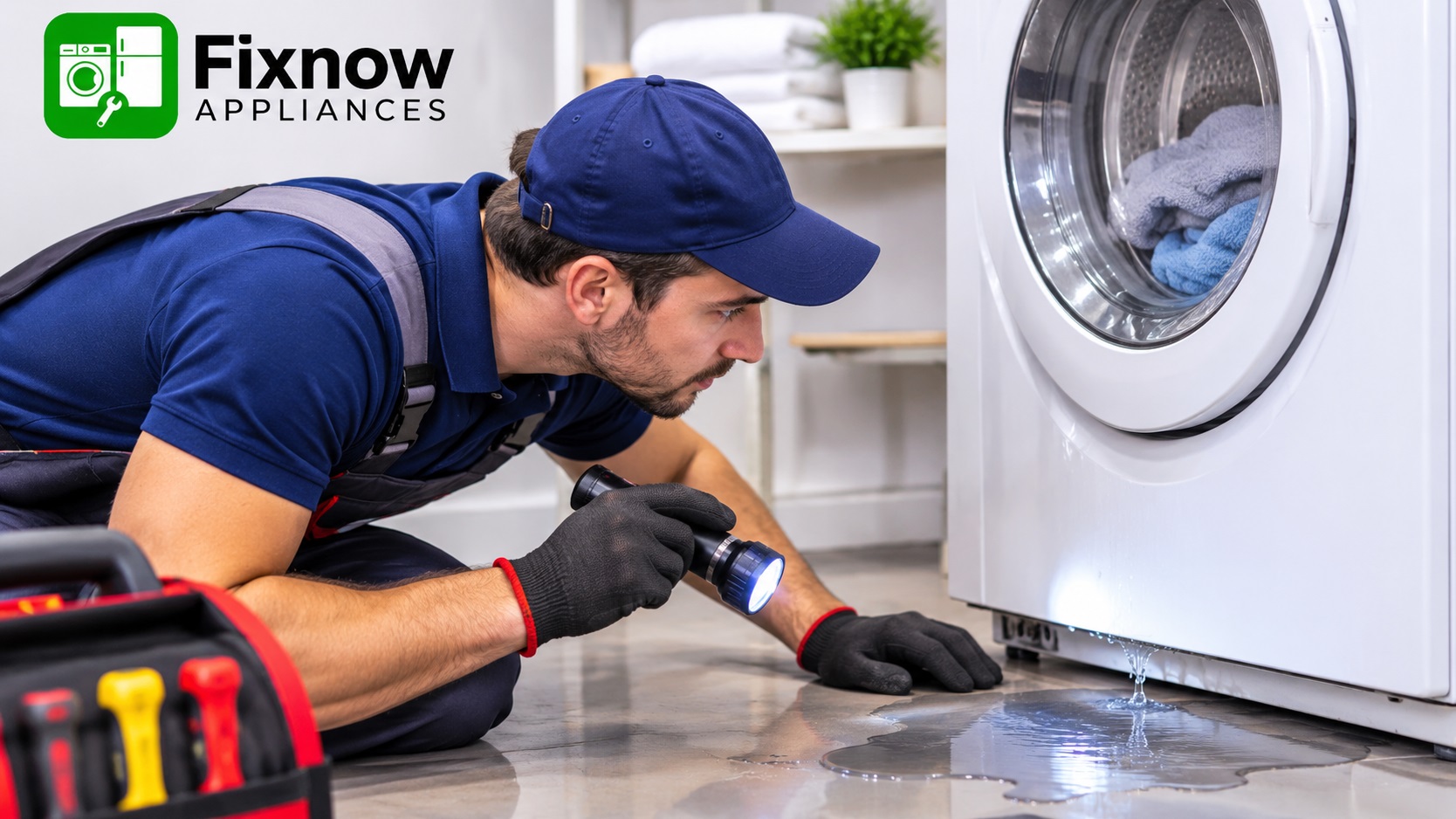
Water around a washing machine should never be ignored.
Even a small leak can damage flooring, cabinets and nearby surfaces if it continues.
Around the door.
Beneath the washer.
Near the water inlet hoses.
Around the drain hose.
Near the detergent dispenser.
Damaged door gasket.
Loose or damaged hose connection.
Blocked dispenser.
Excessive detergent use.
Cracked drain component.
Internal pump or seal problem.
Stop the wash cycle if water is actively leaking.
Turn off the water supply if it is safe to access.
Inspect visible hose connections.
Check the door gasket for visible damage.
Clean the detergent dispenser according to the manual.
If water is near the electrical supply, do not touch the plug or electrical controls while standing in water. Keep away from the affected area and seek appropriate assistance.
Persistent leaks require professional inspection to prevent further damage.
Some operating sounds are normal, but sudden grinding, banging or repeated knocking may indicate a developing fault.
| Noise | Possible explanation |
|---|---|
| Banging | Unbalanced load or washer movement |
| Grinding | Possible bearing, motor or foreign-object issue |
| Squealing | Belt or drive-system problem on applicable models |
| Clicking | Normal control operation or an obstruction |
| Rattling | Loose object or component |
| Loud vibration | Uneven flooring, installation or load-balance issue |
Make sure the washer is level.
Redistribute the laundry.
Check for loose objects in pockets.
Confirm that the machine has enough clearance from nearby surfaces.
Follow installation instructions regarding transit bolts, if the appliance was recently installed.
If the noise continues when the drum is empty, stop using the washer and arrange an inspection.
Front-load washing machines generally use a door-lock mechanism to prevent the door from opening during operation.
Top-load models may use a lid-lock system for similar safety reasons.
If the locking mechanism does not work correctly, the washer may refuse to start, pause during a cycle or display an error.
Door not fully closed.
Laundry caught between the door and gasket.
Damaged door latch.
Faulty lock assembly.
Wiring or control-system issue.
Make sure no clothing is trapped in the door.
Check for visible obstructions around the latch.
Allow the machine to complete its cycle.
Follow the manufacturer's instructions for unlocking the door.
Do not force the door open or bypass the locking mechanism. If the error continues, a technician can inspect the lock and associated controls.
A washer that repeatedly stops before completing a programme may have a problem with water supply, drainage, temperature control or electronic operation.
Water inlet interruption.
Drainage blockage.
Door-lock malfunction.
Unbalanced laundry.
Overheating protection.
Faulty sensor.
Control-board problem.
Pay attention to the exact stage where the washer stops.
For example:
Stops while filling: possible water inlet issue.
Stops during washing: possible sensor, motor or control problem.
Stops before spinning: possible drainage or load-balance issue.
Stops during draining: possible pump or hose obstruction.
Recording when the problem occurs can help a repair technician narrow down the possible causes.
Some washing machine programmes use heated water to support cleaning performance.
If the water does not reach the expected temperature, the washer may take longer to complete a cycle or display a temperature-related warning.
Faulty heating element.
Temperature sensor malfunction.
Electrical connection problem.
Control-board fault.
Incorrect wash programme.
Not every wash cycle uses heated water. Cold-water programmes are designed to operate without activating the heating element.
Check the selected programme and manufacturer's instructions before assuming that the heater has failed.
If a temperature-related error keeps returning, professional diagnosis may be necessary.
A washer that shakes or moves during the spin cycle may have an installation, load-balance or mechanical problem.
Uneven flooring.
Washer not level.
Overloaded drum.
Unevenly distributed laundry.
Worn suspension components.
Damaged shock absorbers.
Installation bolts left in place after delivery.
Redistribute the laundry.
Avoid overloading the drum.
Check that the machine is level.
Make sure the appliance is not touching nearby cabinets or walls.
Review installation instructions if the washer is new.
If excessive vibration continues, internal suspension or support components may need inspection.
Some modern washing machines monitor detergent use and foam levels.
Using too much detergent or the wrong type can create excessive foam and interfere with washing or rinsing.
Excessive foam inside the drum.
Washer taking longer to complete a cycle.
Rinsing problems.
Detergent residue on clothes.
Foam-related error message.
Use detergent suitable for your washer type.
Follow the recommended detergent quantity.
Avoid adding extra detergent to heavily soiled loads without checking the instructions.
Clean the detergent drawer periodically.
Follow the manufacturer's guidance if a foam warning appears.
If the error continues despite using the correct detergent, the washer may need further inspection.
Front-load and top-load washing machines have different designs, so their common problems can vary.
| Front-load washing machine | Top-load washing machine |
|---|---|
| Door gasket leaks | Lid-lock problems |
| Door-lock errors | Agitator or impeller issues |
| Drain filter blockage | Drainage problems |
| Excessive gasket residue | Unbalanced loads |
| Bearing or drum noise | Suspension-related vibration |
Both types can develop water inlet, drainage, motor, sensor and control-system faults.
The brand and model number are important when diagnosing any washer problem because error codes and repair procedures differ between manufacturers.
Preparing a few details before contacting a repair company can make the service process more efficient.
Determine whether your appliance is:
Front-load washing machine.
Top-load washing machine.
High-efficiency washer.
Compact washing machine.
Stackable washer-dryer unit.
The model number helps identify the washer's specifications and compatible replacement components.
It is commonly located around the door opening, beneath the lid or on a manufacturer label at the back of the appliance.
Take note of the exact error code or warning message.
Avoid relying on a general description because similar symptoms can have different causes across brands.
Explain what happens during operation.
For example:
Washer does not drain.
Drum does not spin.
Machine does not fill with water.
Water leaks during the wash cycle.
Door remains locked.
Washer stops mid-cycle.
Unusual vibration occurs.
Before confirming an appointment, ask:
Is my washing machine brand and model supported?
Is a diagnostic or service-call fee applicable?
Will I receive an estimate before repairs begin?
Are compatible replacement parts available?
What warranty applies to completed repairs?
Is an appointment available for my Calgary address?
These questions help establish expectations before the technician visits.
A washer displaying an error code does not automatically need replacement.
Many problems can be resolved by repairing an individual component. However, the right decision depends on the appliance's age, condition and repair requirements.
Consider:
Age of the washing machine.
Frequency of previous breakdowns.
Availability of replacement parts.
Extent of the damage.
Repair estimate.
Condition of the drum and motor.
Expected reliability after repair.
A relatively new washer with an isolated drain pump, door-lock or sensor problem may be a suitable repair candidate.
An older appliance with repeated breakdowns or extensive mechanical damage may require a replacement assessment.
A professional diagnosis can help you compare repair and replacement options.
Regular maintenance can help reduce avoidable washer problems and support reliable operation.
Remove detergent residue according to the manufacturer's instructions.
For front-load models, check the gasket for trapped objects, dirt and visible damage.
If your washer has an accessible drain filter, clean it at the recommended intervals and follow the correct procedure.
Follow the manufacturer's load-capacity guidance to reduce unnecessary strain on the drum and drive system.
Choose detergent suitable for your washer type and use the recommended amount.
For front-load machines, leaving the door slightly open after use can help the drum and gasket dry. Follow manufacturer safety and household guidance.
Look for visible cracks, bulges, leaks or loose connections in accessible water hoses.
A properly levelled appliance can help reduce vibration and unnecessary movement.
Maintenance cannot prevent every breakdown, but it can help identify developing problems before they become more serious.
A washing machine error code or operating problem is a sign that the appliance may need attention. However, the correct repair depends on identifying the underlying cause.
Replacing parts without proper diagnosis can lead to unnecessary expense and recurring faults.
FixNow Appliances provides appliance repair services for household washing machines and other major appliances.
Whether your washer is not draining, refusing to spin, leaking water, displaying an error code or stopping during a cycle, sharing the symptoms and model number can help the repair team understand your requirements.
Before booking, confirm service availability for your Calgary address and ask about diagnostic charges, repair estimates, compatible parts and applicable warranty conditions.
Company: FixNow Appliances
Website: https://fixnowappliances.ca/
Phone: (587) 962-2861
Contact FixNow Appliances to discuss your washing machine problem and confirm an available service appointment.
An error code may indicate a water inlet problem, drainage fault, door-lock issue, unbalanced load, sensor malfunction or electronic control problem. The exact meaning depends on the washer's brand and model.
Common causes include a blocked drain filter, kinked hose, obstructed drainage path or faulty drain pump. Follow the manufacturer's instructions before checking the accessible filter.
A washer may fail to spin because of an unbalanced load, excessive laundry, drainage problem, door-lock fault or drive-system malfunction.
Possible causes include a damaged door gasket, loose hose connection, blocked dispenser, excessive detergent or internal pump-related problem.
It usually means the laundry is unevenly distributed inside the drum, preventing the washer from spinning safely at the selected speed. Redistributing the clothes may resolve the issue.
Some manufacturers provide a specific reset procedure. Check the appliance manual first. If the error returns, the underlying fault may still be present and require diagnosis.
Possible causes include interrupted water supply, drainage problems, door-lock faults, load imbalance, sensor issues or electronic control problems.
Stop the cycle if water is actively leaking. Turn off the water supply if safe to do so. If water reaches electrical connections, stay away from the affected area and seek appropriate assistance.
Cleaning frequency depends on the model and usage. Follow the manufacturer's recommended maintenance schedule and instructions.
Arrange professional inspection if error codes repeatedly appear, the washer does not drain or spin, water leaks, unusual mechanical noises develop or the appliance stops completing cycles.
Visit https://fixnowappliances.ca/ or call (587) 962-2861 to discuss your washer problem and confirm service availability for your location.
Share the appliance brand, model number, error code, symptoms and service address. This information can help the repair team understand the issue before the appointment.
Leave A Reply
Your email address will not be published. Required fields are marked *