-
-
-
Edmonton, Alberta, Canada
Mon – Sat: 8:00 AM – 7:00 PM
Please tap the button to book your appliance repair on WhatsApp.
Booking Enquiry on WhatsApp
FixNow Appliances provides fast, professional appliance repair across Edmonton, Sherwood Park, Beaumont, St. Albert, Stony Plain and nearby areas. Our licensed technicians repair fridges, washers, dryers, dishwashers, ovens, stoves and more using OEM parts and manufacturer-approved methods.
25
Nov
A clothes dryer is designed to make laundry easier by delivering consistent heat and airflow. When it runs normally but leaves clothes damp, the problem can quickly become frustrating. You may notice that drying cycles take longer, towels remain wet or the appliance produces little to no warm air.
A dryer that is not heating does not always mean the entire appliance has failed. The issue could involve restricted airflow, a blown thermal fuse, a faulty heating element, a temperature sensor or an ignition problem.
Understanding the possible causes can help you identify warning signs and decide when professional dryer repair is necessary.
This guide explains why dryers stop heating, which checks homeowners can safely perform and when to contact an appliance repair technician.
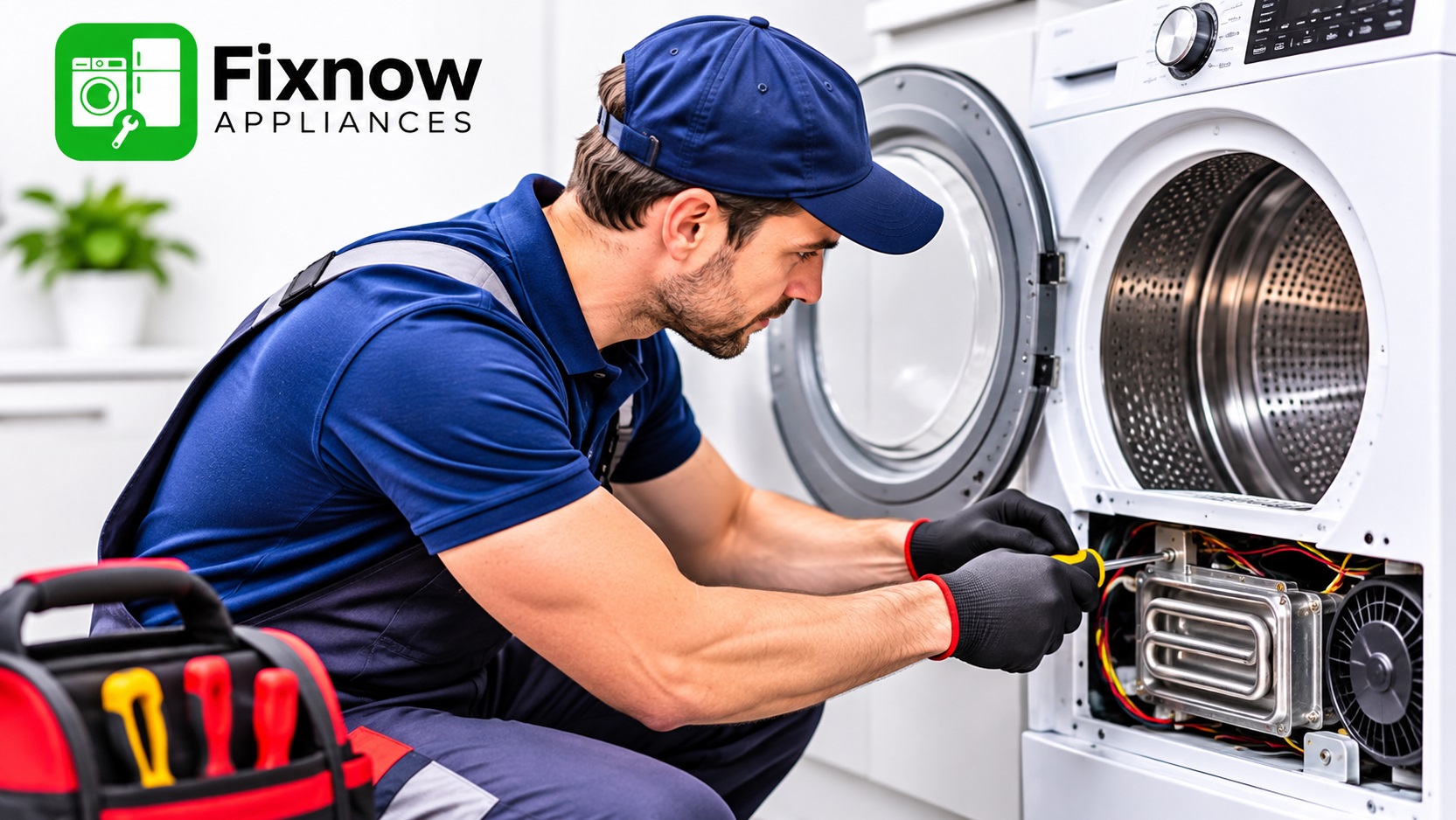
When a dryer runs but produces no heat, the motor and drum may still be functioning while the heating system has developed a fault.
The exact cause depends on whether the appliance is electric or gas-powered.
Common reasons include:
Clogged lint filter.
Blocked exhaust vent.
Faulty heating element.
Blown thermal fuse.
Defective thermostat or temperature sensor.
Gas ignition system malfunction.
Electrical supply problems.
Faulty control board.
Before assuming that a major component has failed, check the basic operating conditions and airflow. Restricted ventilation is one of the important issues to investigate because it can reduce drying performance and create overheating risks.
A dryer needs proper airflow to remove moisture from clothing and release warm, humid air through its exhaust system.
When lint accumulates inside the vent, airflow becomes restricted. The dryer may take longer to dry clothes, overheat or activate a safety device that interrupts heating.
Clothes remain damp after a complete cycle.
Drying cycles take longer than usual.
The dryer becomes unusually hot.
The laundry area feels warmer or more humid.
Little air comes from the exterior exhaust outlet.
A burning smell or unusual heat develops near the appliance.
You can perform a few basic maintenance checks:
Switch off the dryer and allow it to cool.
Clean the lint filter according to the manufacturer's instructions.
Check the accessible exhaust area for visible lint or obstructions.
Make sure the external vent outlet is not visibly blocked.
Follow the manufacturer's guidance for vent cleaning.
Do not push objects deep into the vent or dismantle the appliance to reach internal ductwork.
If airflow remains weak, arrange a proper inspection and cleaning. A severely restricted vent can create a fire hazard.
Electric dryers use a heating element to warm the air circulating through the drum.
If the heating element becomes damaged or fails, the dryer may continue tumbling without producing sufficient heat.
Dryer runs but produces cold air.
Clothes remain wet after a normal cycle.
Drying performance becomes inconsistent.
The appliance takes significantly longer to complete laundry.
Heating stops completely.
Heating element burnout.
Damage caused by overheating.
Electrical connection problems.
Wear over time.
Related thermostat or safety-device failure.
First, confirm that the dryer is set to a heated drying cycle rather than an air-only or no-heat setting.
Also check whether the appliance has power and whether the circuit breaker appears tripped.
Do not remove the rear panel or attempt to test the heating element while the appliance is connected to electricity. Internal electrical components should be inspected by an appropriately qualified technician.
A thermal fuse is a safety component designed to interrupt operation when the dryer reaches an unsafe temperature.
If the appliance overheats, the fuse may open and prevent the heating system from operating.
Restricted dryer ventilation.
Lint accumulation.
Blocked exhaust duct.
Poor airflow.
Other overheating-related faults.
A blown thermal fuse is not necessarily the original cause of the problem. The underlying reason for overheating should also be identified.
Do not bypass a thermal fuse or replace it without checking why it failed.
A technician can inspect the fuse, airflow system and related components to determine whether another fault is contributing to the overheating.
Dryers use temperature-control components to monitor heat and regulate the drying process.
If a thermostat or temperature sensor provides incorrect readings, the appliance may not heat correctly.
Dryer produces inconsistent heat.
Clothes remain damp.
Drying cycles become unusually long.
The appliance overheats.
Heating stops before clothes are dry.
Defective thermostat.
Faulty temperature sensor.
Damaged wiring.
Control-system malfunction.
Restricted airflow affecting temperature regulation.
These components are generally located inside the appliance. Their electrical condition should be checked by a trained technician rather than through home disassembly.
Gas dryers use a burner system to generate heat. When the ignition system fails, the drum may continue rotating without producing the required warm air.
Faulty igniter: The igniter may fail to reach the required temperature to start the burner.
Defective flame sensor: A malfunctioning sensor may prevent the burner from operating correctly.
Gas valve problem: A faulty gas valve assembly can interfere with the heating process.
Gas supply issue: An interruption in the gas supply may prevent normal heating.
Control-system fault: Electronic components may fail to send the correct signals to the ignition system.
Confirm that the dryer is set to a heated cycle.
Check the manufacturer's instructions for normal operation.
Look for visible error messages.
Do not remove panels or inspect internal gas components.
Do not attempt to adjust gas connections or valves.
Gas safety warning: If you smell gas, do not operate electrical switches, create flames or attempt to restart the dryer. Leave the building and contact your gas utility or emergency services from a safe location.
Gas-related repairs should be handled by an appropriately qualified professional.
Some electric dryers require a dedicated 240-volt electrical supply to operate their heating system.
In certain situations, the dryer may receive enough power for the drum and control panel to function while the heating system does not operate correctly.
Drum rotates but no heat is produced.
Dryer display works normally.
Heating stops unexpectedly.
Circuit breaker trips.
Appliance performance changes after an electrical interruption.
Confirm that the dryer is connected properly.
Check the electrical panel for a visibly tripped breaker, if safe to access.
Follow the manufacturer's instructions for power-related troubleshooting.
Avoid repeatedly resetting a breaker that trips again.
Do not remove the electrical outlet, test live wiring or attempt internal electrical repairs.
If the power supply appears unstable or the breaker repeatedly trips, arrange inspection by an appropriately qualified professional.
Sometimes, the dryer is not actually malfunctioning. The selected cycle may simply be designed to use little or no heat.
Modern dryers offer different operating modes for different fabric types and drying requirements.
Examples include:
Air Dry.
No Heat.
Delicate.
Low Heat.
Energy-saving cycles.
Timed Dry.
Automatic Sensor Dry.
If the appliance is set to an air-only or no-heat cycle, cold air may be normal.
Check the selected drying programme.
Confirm the temperature setting.
Review the manufacturer's instructions.
Try an appropriate heated cycle with a suitable load.
If the dryer still produces no heat on a normal heated programme, further diagnosis may be required.
A dryer that becomes excessively hot before losing heating performance may have an airflow or temperature-control problem.
Overheating should never be ignored because lint and restricted ventilation can increase fire risk.
Clogged lint filter.
Blocked exhaust vent.
Faulty thermostat.
Damaged temperature sensor.
Restricted internal airflow.
Malfunctioning control system.
Exterior surfaces feel unusually hot.
Laundry becomes excessively hot.
Drying cycles stop unexpectedly.
Burning smell develops.
Dryer shuts down during operation.
Stop using the appliance if you notice a burning smell, smoke or excessive heat. If there is smoke or fire, leave the area and contact emergency services.
Do not continue running the dryer to see whether the problem disappears.
A dryer does not have to stop heating completely to indicate a problem.
Sometimes, the appliance still produces warm air but takes much longer than usual to dry a normal load.
Restricted exhaust airflow.
Dirty lint filter.
Overloaded drum.
Incorrect cycle selection.
Faulty moisture sensor.
Weak heating performance.
Damaged door seal on applicable models.
Clean the lint filter before each load.
Avoid overloading the drum.
Separate heavy items from lightweight clothing.
Check the selected drying cycle.
Ensure that the accessible vent outlet is not obstructed.
Follow the manufacturer's maintenance instructions.
If drying times remain unusually long, a technician can inspect the airflow, heating and moisture-sensing systems.
Preparing a few details before contacting an appliance repair company can make the service process more efficient.
Determine whether your appliance is:
Electric dryer.
Gas dryer.
Ventless dryer.
Condenser dryer.
Heat pump dryer.
Stackable washer-dryer unit.
Different dryer designs use different heating and ventilation systems.
The model number helps identify the appliance specifications and compatible replacement components.
It is commonly located around the door opening, inside the door area or on a manufacturer label.
When contacting a repair company, explain what happens during operation.
For example:
Dryer runs but produces cold air.
Clothes remain damp after a complete cycle.
Dryer overheats and stops.
Heating works intermittently.
Dryer displays an error code.
Gas dryer does not ignite.
Before confirming an appointment, ask:
Is my dryer brand and model supported?
Is a diagnostic or service-call fee applicable?
Will I receive an estimate before repairs begin?
Are compatible replacement parts available?
What warranty applies to completed repairs?
Is same-day service available in my area?
Having these details ready can help set clear expectations.
The final repair estimate depends on the type of dryer, the failed component and the work required.
For example, cleaning an accessible lint filter is different from replacing a heating element or diagnosing an internal control-board problem.
Factors that may affect the estimate include:
Dryer brand and model.
Electric or gas heating system.
Nature of the fault.
Diagnostic requirements.
Replacement-part availability.
Labour involved.
Additional damage caused by overheating or restricted airflow.
Before approving a repair, request a clear estimate covering applicable diagnostic charges, parts and labour.
A dryer that stops heating does not automatically need replacement.
Many heating problems can be addressed by repairing an individual component. However, the best decision depends on the appliance's age, condition and repair requirements.
Consider these factors:
Age of the dryer.
Frequency of previous breakdowns.
Availability of compatible parts.
Extent of the damage.
Expected reliability after repair.
Energy efficiency.
Repair estimate compared with replacement options.
A relatively new dryer with an isolated heating-element or sensor problem may be a good repair candidate.
An older appliance with recurring electrical faults, extensive damage or multiple failing components may require a replacement assessment.
A professional diagnosis can help you compare both options before making a decision.
Regular maintenance helps support efficient drying and reduces avoidable airflow problems.
Remove lint after every load. A clean filter supports proper airflow and helps the dryer operate efficiently.
Inspect the accessible vent outlet and arrange periodic vent cleaning according to the manufacturer's recommendations.
Overloading restricts movement inside the drum and can affect drying performance.
Select a cycle and temperature appropriate for the fabric type and load size.
Pay attention to grinding, squealing, burning smells or changes in operating temperature.
Use the recommended cleaning procedures and maintenance intervals for your specific model.
Routine maintenance cannot prevent every component failure, but it can help identify developing issues before they become more serious.
A dryer that runs without producing heat can indicate anything from restricted airflow to a faulty heating component or ignition-system problem.
The right repair begins with identifying the underlying cause rather than replacing parts without proper diagnosis.
FixNow Appliances provides appliance repair services for household appliances, including clothes dryers. Whether your electric dryer is producing cold air, your gas dryer is not igniting or your appliance takes too long to dry clothes, explaining the symptoms can help the repair team understand your requirements.
Before booking, keep your dryer brand, model number and problem description ready. Ask about service availability for your location, diagnostic charges, repair estimates and applicable warranty conditions.
Website: https://fixnowappliances.ca/
Contact FixNow Appliances to discuss your dryer heating problem and confirm the availability of a suitable service appointment.
A dryer may run without heating because of a faulty heating element, blown thermal fuse, blocked vent, thermostat problem, electrical supply issue or gas ignition fault. The exact cause depends on the appliance type.
Yes. Restricted airflow can cause overheating and may activate a safety device that interrupts heating. A blocked vent can also make drying cycles much longer.
Possible causes include a damaged heating element, faulty thermal fuse, defective thermostat, electrical supply problem or control-board malfunction.
A gas dryer may stop heating because of an ignition-system fault, defective flame sensor, gas valve problem or gas supply interruption. Gas-related components should be inspected by an appropriately qualified professional.
No. Stop using the dryer if you notice a burning smell, smoke or excessive heat. A lint or electrical fault may be involved. Do not continue operating the appliance until the cause has been assessed.
Clean the lint filter after every load. Regular cleaning supports airflow and helps reduce lint accumulation.
Replacing a heating element involves internal electrical components and appliance disassembly. Unless you are appropriately qualified, arrange professional repair rather than attempting the replacement yourself.
Possible reasons include restricted airflow, an overloaded drum, incorrect cycle settings, a faulty moisture sensor or weak heating performance. Persistent problems may require professional diagnosis.
Consider the appliance's age, condition, repair requirements and replacement-part availability. A professional inspection can help determine whether repair is a practical option.
Visit https://fixnowappliances.ca/ to contact FixNow Appliances, describe the dryer problem and confirm service availability for your location.
Share the dryer brand, model number, appliance type, symptoms, error codes and service address. These details can help the repair team understand the problem before the appointment.
Leave A Reply
Your email address will not be published. Required fields are marked *